

Phosphorus in water (P)
Phosphorus is an essential nutrient, but in natural and treated water it is found mainly in phosphate compounds and phosphorus-bearing particles—not as dissolved elemental phosphorus. Its chemical form, concentration and availability to organisms matter for water quality, eutrophication control and treatment.
“Phosphorus” is an analytical umbrella. Results may refer to orthophosphate, total phosphorus, or phosphorus reported “as P.” These measures are not interchangeable. Confirm the laboratory method, filtered or unfiltered basis, and units before comparing results or designing treatment.
Phosphorus forms in water
Orthophosphate is the most readily measured inorganic form. Depending on pH, it occurs mainly as dihydrogen phosphate (H2PO4−) and hydrogen phosphate (HPO42−); phosphate (PO43−) becomes more important at high pH. Natural and process waters can also contain organic phosphorus, condensed phosphates such as polyphosphates, and phosphorus attached to suspended particles. Some condensed phosphates can transform into orthophosphate over time.
Total phosphorus includes dissolved and particulate forms measured by the specified analytical method. A filtered orthophosphate result therefore cannot be read as total phosphorus, and neither result alone identifies every phosphorus compound in the sample.
Where phosphorus occurs
Phosphate minerals weather naturally, while agricultural fertilisers, manure, soil erosion, wastewater and some industrial processes can add phosphorus to surface water or groundwater. A substantial share may travel attached to soil, sediment or other particles. Concentrations vary by geology, land use, season and treatment conditions.
Phosphorus supports plant and algal growth. Excess nutrient inputs can contribute to eutrophication and harmful algal blooms; decomposition of excess biomass can reduce dissolved oxygen. The severity depends on the receiving water and other limiting conditions, so phosphorus is not the sole cause in every ecosystem.
How phosphorus is controlled or removed
- Biological phosphorus removal: enhanced biological phosphorus removal uses specialised microbial activity to transfer phosphorus into biomass, which must then be separated in the sludge process.
- Chemical precipitation: iron or aluminium salts, or lime in suitable conditions, can convert dissolved phosphate into solids. Clarification or filtration is needed to remove those solids; dose and pH are site-specific.
- Phosphorus recovery: in suitable nutrient-rich streams, controlled crystallisation—such as struvite formation—can recover phosphorus as a solid product. Feed chemistry and residual handling determine feasibility.
- Polishing: adsorption, ion exchange or membrane processes may be evaluated for particular low-level targets or stream conditions. They are not universal replacements for solids separation and require checks for competing ions, fouling and residuals.
For examples of common phosphate salts and compounds, their qualitative solubility behaviour and treatment options, see common phosphorus-containing salts in water. Related Lenntech information: dissolved phosphate.
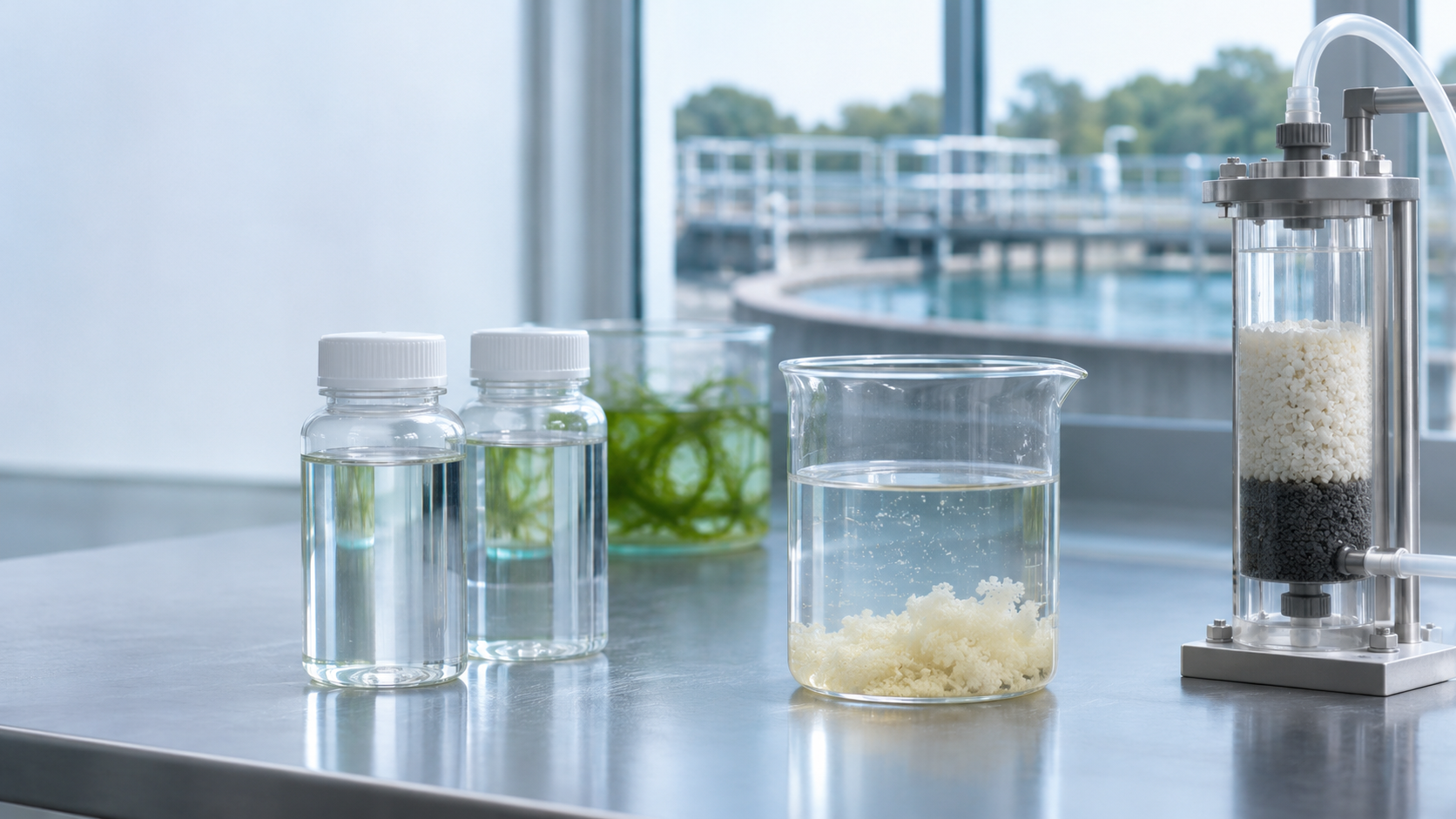
Discuss a phosphorus-treatment challenge
Process selection depends on the phosphorus measurement and target, pH, alkalinity, suspended solids, competing ions, flow and the residuals to be managed. Share the treatment objective and relevant water analysis with Lenntech to discuss potential options.
Discuss a water-treatment challenge
Contact Lenntech at info@lenntech.com.
Last reviewed: by Lenntech.
Sources and further reading