

Praseodymium (Pr) and water
Praseodymium (Pr) and water: occurrence, chemistry and removal
Praseodymium is a rare-earth element used in alloys, glass and permanent-magnet materials. In water, it is relevant mainly where geology, ore processing or mine waste supplies rare-earth minerals. Acid mine drainage can mobilize mixed rare earths, but praseodymium concentrations vary from site to site and should be measured rather than inferred from another element.
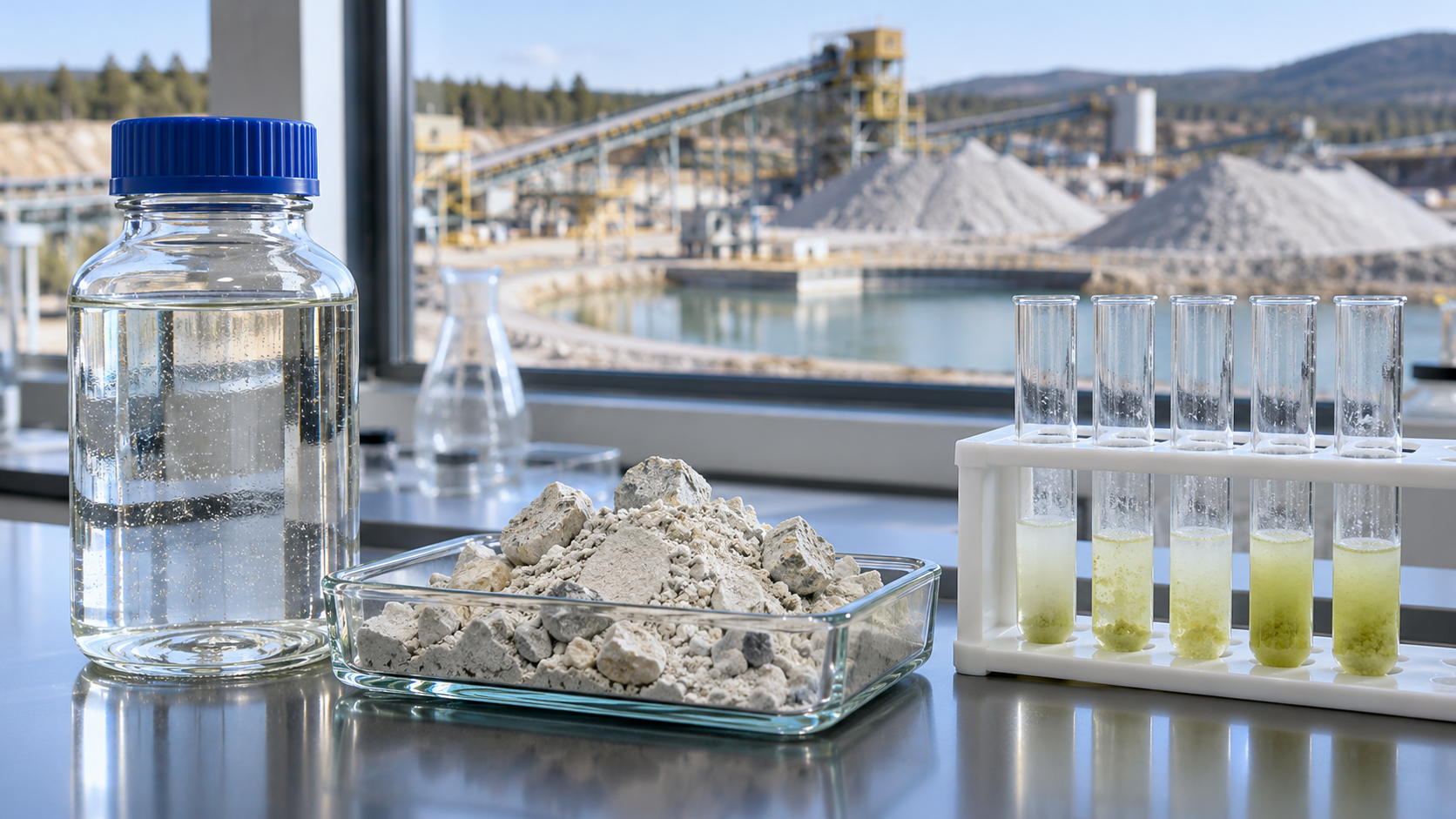
How does praseodymium enter water?
Praseodymium occurs with other light rare-earth elements in minerals such as monazite, bastnaesite and apatite. SGU describes rare-earth-bearing apatite in Swedish iron-ore tailings, illustrating one potential source in iron-apatite mining. Weathering, acidic drainage or process-water contact with ore and tailings may release a fraction of the mineral inventory. The presence of praseodymium in a mineral or tailings sample does not establish that it is dissolved in nearby water.
Pr chemistry in water
Praseodymium in water is generally expected in the +3 oxidation state (Pr(III)). Its dissolved fraction depends on pH and on ligands such as sulfate, carbonate and dissolved organic matter. As pH rises, adsorption to and coprecipitation with iron- or aluminium-rich solids can reduce the dissolved fraction. This behavior is broadly shared with other trivalent rare earths, but exact partitioning differs with water chemistry and mineral surfaces.
How can praseodymium be removed or recovered?
Mine-water neutralization and solids separation can remove part of the dissolved praseodymium by transferring it to precipitates. The resulting sludge may contain a mixture of rare earths and other metals and needs appropriate characterization and management. Research on acidic mine waters has examined ion exchange and oxalate precipitation to concentrate mixed rare-earth products. These methods require process-specific testing; they should not be described as a proven praseodymium-only treatment or assumed to meet a discharge or drinking-water target without verification.
Assessment should distinguish dissolved material from suspended and settled solids and include pH, redox conditions, sulfate, carbonate, organic matter and other major ions where relevant. Read more about ion exchange and elements and their interaction with water.
Last reviewed: 31 October 2026 by Lenntech.
Sources and further reading
- Geological Survey of Sweden: Metals and minerals in mining waste.
- Stewart et al. (2017): Rare earth element resources in coal mine drainage and treatment precipitates in the Appalachian Basin.
- Valente et al. (2018): Mineralogical controls on mobility of rare earth elements in acid mine drainage environments.
- Separation and Purification Technology (2024): Recovery of rare earth elements from acidic mine waters using selective precipitation and ion exchange.
- Cleaner Engineering and Technology (2026): Rare-earth recovery from acid mine water by ion exchange and oxalic-acid precipitation.
- Environment and Climate Change Canada: Draft federal environmental quality guidelines for selected rare earth elements.