

Neodymium (Nd) and water
Neodymium (Nd) and water: occurrence, chemistry and removal
Neodymium is a rare-earth element used in high-strength permanent magnets. It is usually present in minerals rather than as the pure metal in water. Acidic drainage from some mining and processing sites can mobilize neodymium and other rare earths; the amount that remains dissolved depends on pH, mineral surfaces and dissolved ligands.
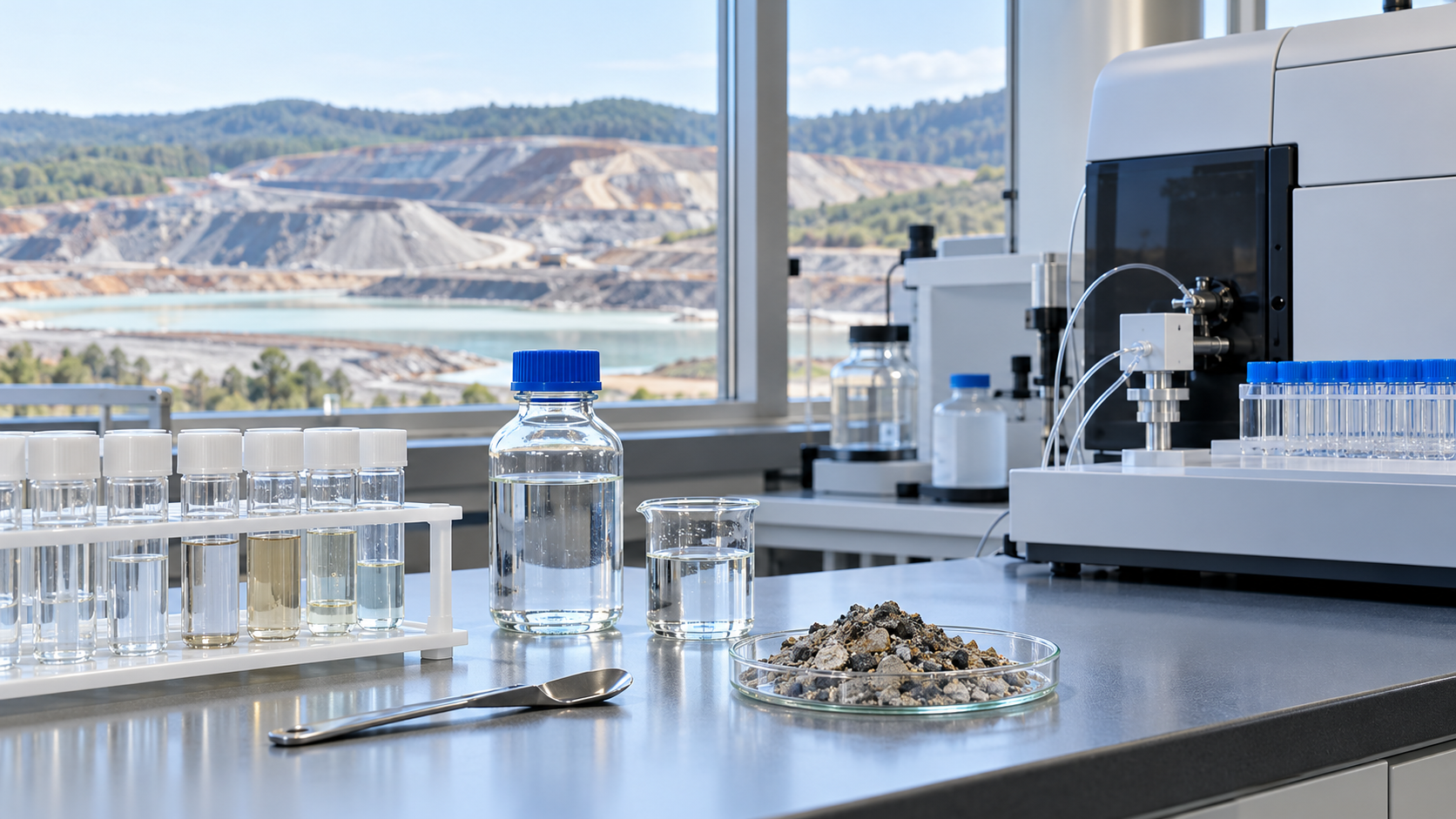
How does neodymium enter water?
Neodymium occurs in rare-earth-bearing minerals, including apatite associated with some iron ores. SGU notes that apatite separated during Swedish apatite-iron-ore enrichment contains rare-earth metals and follows the tailings. Water contacting exposed ore, tailings or process residues can therefore be a site-specific pathway, especially where sulfide oxidation creates acidic drainage. Coal-mine drainage studies have also identified neodymium among rare earths of interest in selected mine waters. This does not mean neodymium is common in all mine effluents.
Nd chemistry in water
In most natural waters, neodymium is expected mainly as Nd(III). It can form dissolved complexes with sulfate, carbonate and organic ligands, and it can adsorb to or coprecipitate with iron- and aluminium-rich solids. Lower pH often favors mineral dissolution and greater dissolved rare-earth concentrations, but the trend is not universal: mineralogy, sulfate, carbonate, organic matter and secondary solids all matter.
How can neodymium be removed or recovered?
Conventional acidic mine-water treatment commonly neutralizes acidity and separates iron- and aluminium-rich precipitates. Neodymium may transfer from water to these solids, so a lower dissolved result can mean concentration in treatment sludge rather than destruction of the element. For resource recovery, ion exchange followed by controlled precipitation, including oxalate precipitation, has been investigated for mixed rare-earth concentrates from particular acidic mine waters. It is not a guaranteed neodymium-selective or drinking-water treatment. Characterize dissolved and total neodymium, competing ions and residual solids before selecting a process.
Assessment should distinguish dissolved material from suspended and settled solids and include pH, redox conditions, sulfate, carbonate, organic matter and other major ions where relevant. Read more about ion exchange and elements and their interaction with water.
Last reviewed: 31 October 2026 by Lenntech.
Sources and further reading
- Geological Survey of Sweden: Metals and minerals in mining waste.
- Stewart et al. (2017): Rare earth element resources in coal mine drainage and treatment precipitates in the Appalachian Basin.
- U.S. Geological Survey (2024): Evaluation of coal mine drainage and associated precipitates for radium and rare earth element concentrations.
- Separation and Purification Technology (2024): Recovery of rare earth elements from acidic mine waters using selective precipitation and ion exchange.
- Cleaner Engineering and Technology (2026): Rare-earth recovery from acid mine water by ion exchange and oxalic-acid precipitation.
- Environment and Climate Change Canada: Draft federal environmental quality guidelines for selected rare earth elements.