

Gadolinium (Gd) and water
Gadolinium (Gd) and water: occurrence, chemistry and removal
Gadolinium can enter water from both natural mineral sources and human activities. Mining and mine waste can release geogenic gadolinium, while gadolinium-based contrast agents used for MRI can enter wastewater. The chemical form matters: a strongly chelated contrast agent behaves differently from free Gd(III) or gadolinium in mineral particles.
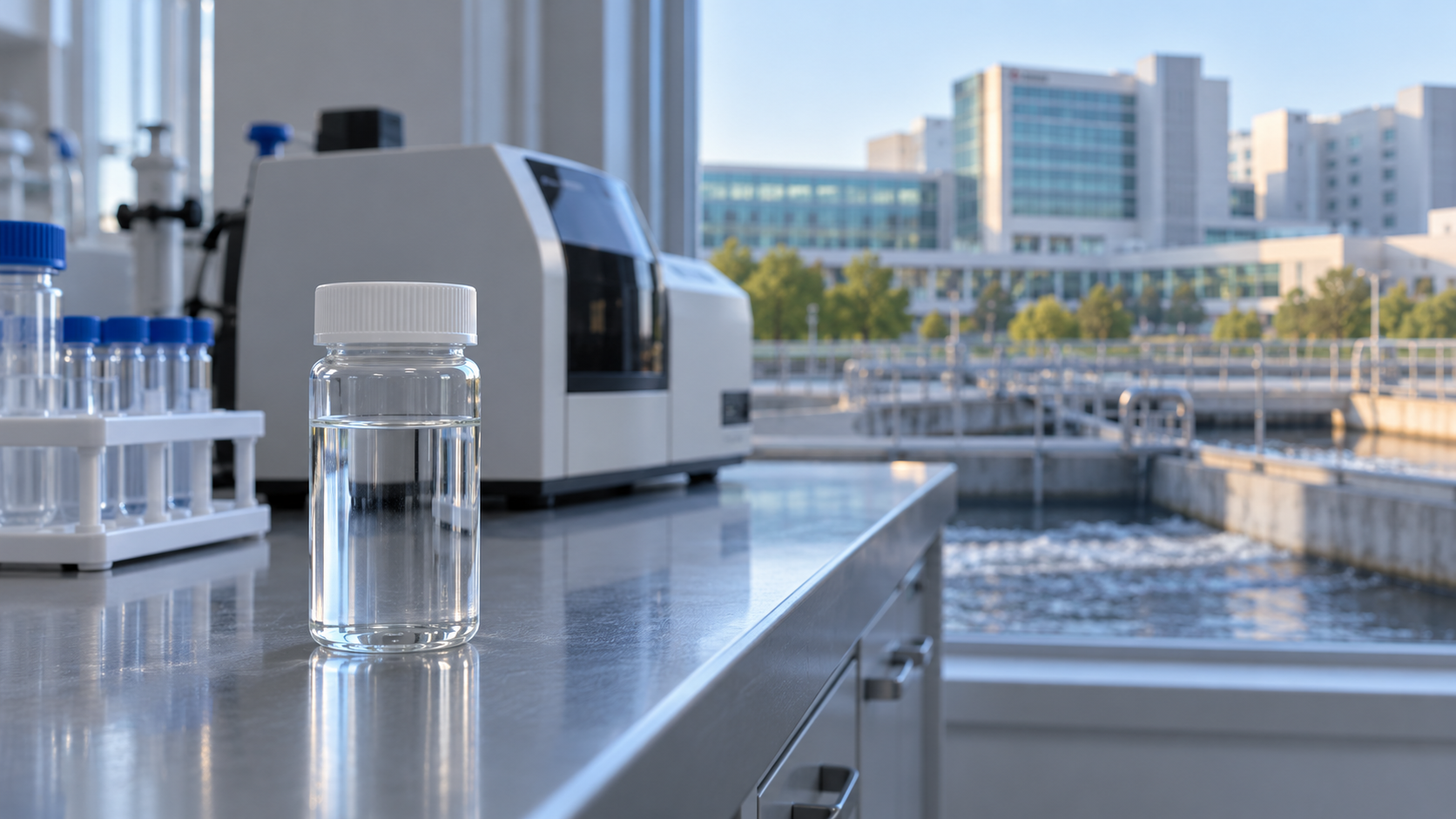
How does gadolinium enter water?
Gadolinium occurs in rare-earth minerals and may be present in ore-processing residues and acidic mine drainage. A separate urban source is the use of gadolinium-based contrast agents (GBCAs) in magnetic resonance imaging. Some is excreted and enters sewage; studies have detected anthropogenic gadolinium signatures downstream of wastewater pathways. GBCAs are coordination complexes, so this source should not be described simply as free gadolinium metal dissolved in water.
Gd chemistry in water
Natural dissolved gadolinium is commonly present as Gd(III), with speciation controlled by pH, carbonate, sulfate and organic matter. In contrast, many medical contrast agents bind Gd in a chelate designed to limit release of the free ion. Some complexes can persist through conventional wastewater treatment, while environmental transformation and stability vary with compound and conditions. Measuring total Gd alone does not identify whether the source is geological or anthropogenic; rare-earth patterns and source context can help.
How can gadolinium be removed or recovered?
For mining waters, neutralization and solids separation may transfer geogenic gadolinium to iron/aluminium-rich precipitates, and ion exchange followed by oxalate precipitation has been studied for mixed REE recovery. These approaches do not establish removal of intact medical chelates. Conventional wastewater treatment may not fully eliminate GBCAs; performance depends on the specific compound and process. Distinguish the source and chemical form before selecting treatment, and verify residuals and effluent with appropriate analytical methods.
Assessment should distinguish dissolved material from suspended and settled solids and include pH, redox conditions, sulfate, carbonate, organic matter and other major ions where relevant. Read more about ion exchange and elements and their interaction with water.
Last reviewed: 31 October 2026 by Lenntech.
Sources and further reading
- Geological Survey of Sweden: Metals and minerals in mining waste.
- Radiology (2024): Contrast media-driven anthropogenic gadolinium: knowns and unknowns.
- Water Research (2020): Anthropogenic gadolinium in freshwater and drinking-water systems.
- Separation and Purification Technology (2024): Recovery of rare earth elements from acidic mine waters using selective precipitation and ion exchange.
- Cleaner Engineering and Technology (2026): Rare-earth recovery from acid mine water by ion exchange and oxalic-acid precipitation.
- U.S. Geological Survey (2024): Evaluation of coal mine drainage and associated precipitates for radium and rare earth element concentrations.