

Selenium (Se) and water
Selenium (Se) in water: sources, chemistry and removal
Selenium is a naturally occurring trace element and an essential nutrient at low intake, but excessive exposure can harm people and aquatic ecosystems. It can enter water through weathering, irrigation drainage, mining and industrial discharges. Its mobility and treatment depend strongly on its chemical form, especially whether it is present as selenate or selenite.
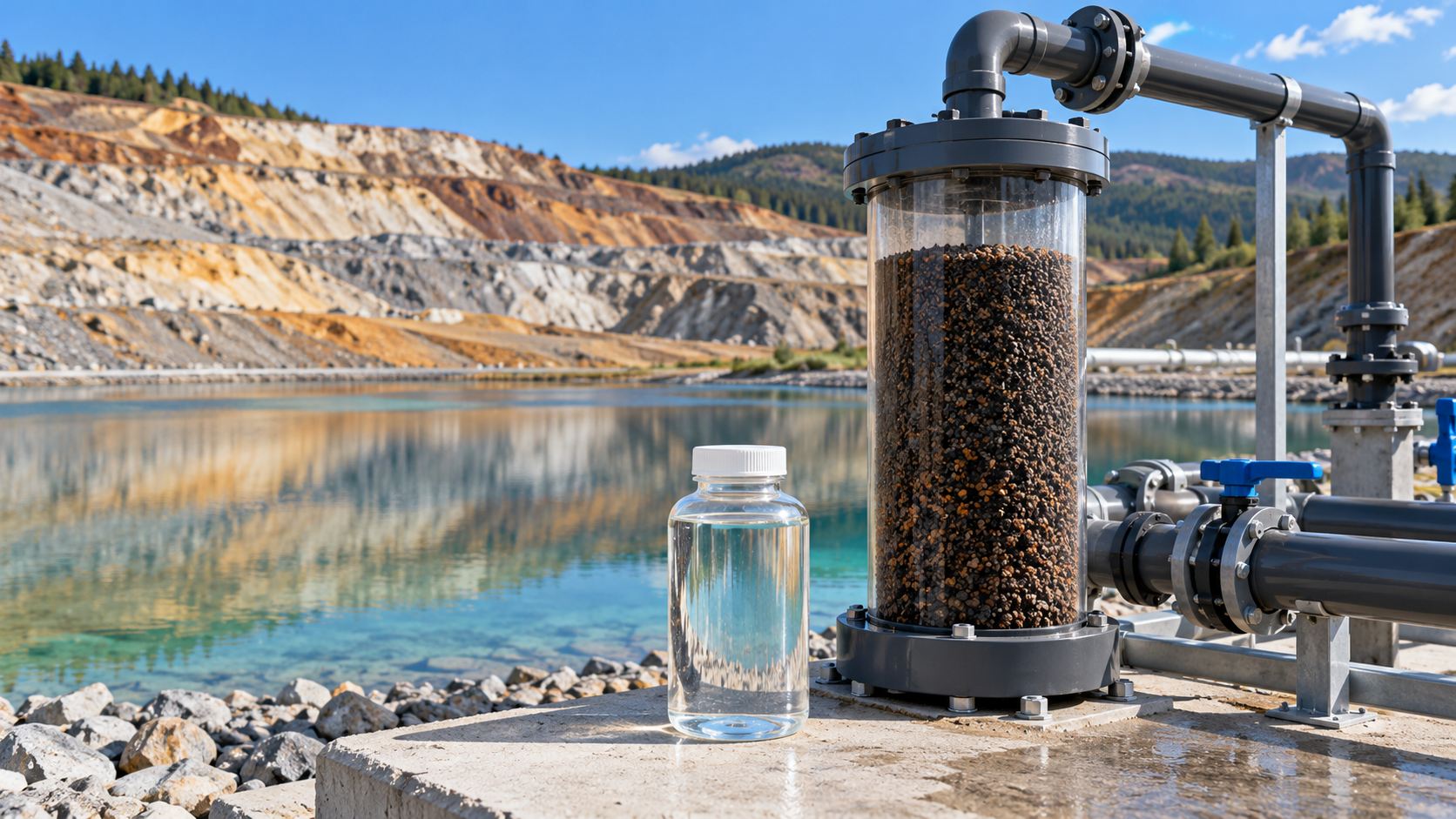
How does selenium enter water?
Selenium occurs naturally in rocks and soils, including some sedimentary formations, coal and phosphate deposits. Weathering and groundwater flow can release it into surface water and aquifers. Irrigation drainage can mobilize selenium from selenium-bearing soils, while mining, ore processing, coal combustion residues, refining and other industrial activities may add selenium to water. Concentrations vary greatly by geology, land use and process; a single typical value does not describe all waters.
Selenium chemistry in water
In oxygen-rich water, dissolved selenium is commonly present as selenate (SeO42−) and selenite (SeO32−). Selenate is generally more soluble and mobile and often adsorbs less strongly to mineral surfaces. Selenite can bind more readily to iron oxyhydroxides and other particles. pH, redox conditions, sulfate, iron minerals and microbial activity influence which forms are present. Reduced or organic forms can also occur in sediments and biological systems.
Because selenium can enter aquatic food webs, assessment may need to consider dissolved concentrations as well as selenium in sediment and organisms. Sampling should identify the analytical fraction and, where relevant, distinguish selenium species rather than relying only on total selenium.
How can selenium be removed from water?
Several treatment approaches are used or studied for selenium-bearing waters. Suitability depends on selenium species and concentration, competing ions, pH, salinity and required effluent quality. Pilot or treatability testing is needed before selecting a process.
- Adsorption and iron-based coagulation: Iron salts or iron-rich media can capture selenium, particularly selenite, by adsorption or co-precipitation. Selenate is often more difficult to capture this way, so pH, iron dose and contact conditions matter. Lenntech describes adsorption and coagulation and flocculation.
- Anion exchange: Strong-base anion resins can remove dissolved selenate and, depending on conditions, selenite. Sulfate and other anions compete for exchange sites. Regeneration creates a selenium-bearing brine that needs recovery or controlled management. See Lenntech’s ion exchange overview.
- Reverse osmosis or nanofiltration: Membranes can separate dissolved selenium oxyanions from the product stream, subject to feed chemistry and membrane selection. Pretreatment may be needed, and selenium is transferred to a concentrate that must be handled. See reverse osmosis.
- Biological reduction: Under suitable wastewater conditions, microorganisms can reduce selenate or selenite to less-soluble elemental selenium. The resulting particles and biomass must then be separated and managed; performance depends on water chemistry and reactor operation.
- Chemical reduction and combined treatment: Reduction, coagulation, precipitation and filtration can be combined for difficult streams. The sequence and residuals management should be established by testing the actual water.
These are general options, not a design recommendation for a particular source. Selection begins with analysis of total and dissolved selenium, speciation where relevant, pH, redox conditions, sulfate, iron, salinity and suspended solids.
Last reviewed: 31 October 2026 by Lenntech.
Sources and further reading
- U.S. Geological Survey: Geochemistry and occurrence of selenium—an overview.
- U.S. Geological Survey Professional Paper 1802, chapter Q: Selenium.
- U.S. Geological Survey: Selenium hazards in the Salton Sea environment—summary of current knowledge.
- Treatment technologies for selenium-contaminated water: a critical review (2022).
- U.S. Geological Survey: Selenium mobilization in a surface coal mine, Powder River Basin, Wyoming.