

Copper (Cu) and water
Copper occurs naturally in rocks and soils, but elevated copper at a household tap commonly results from corrosion of copper-containing plumbing materials. Copper is also deliberately used in some copper-based algaecides for managing algae in reservoirs and other water bodies.
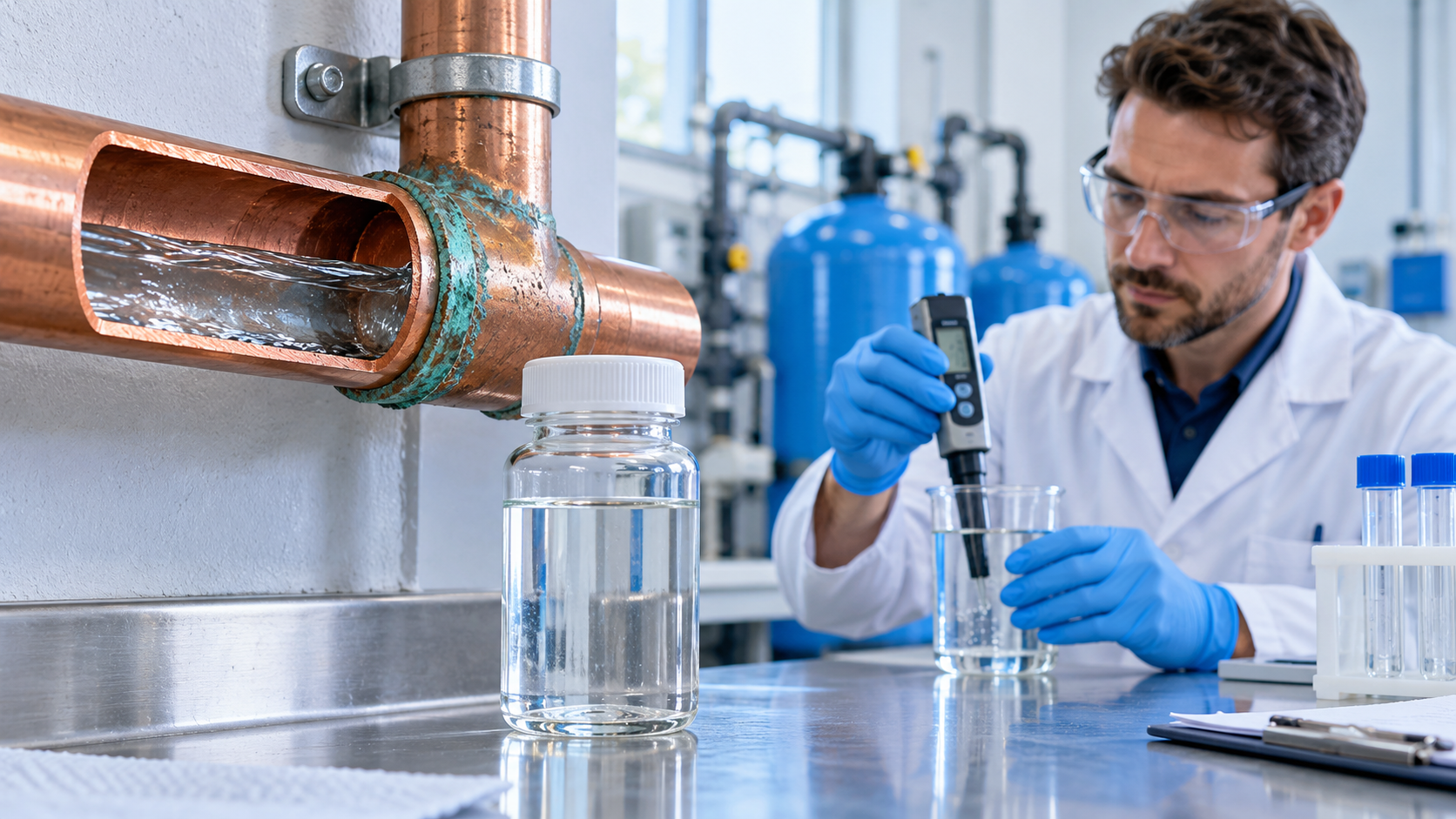
Copper from plumbing
The amount of copper released from pipes, fittings and other plumbing components depends on water chemistry and conditions such as pH, alkalinity, stagnation time and temperature. A change in source water or treatment can affect corrosivity, so copper measurements at the treatment plant may not represent concentrations at every tap. Tap sampling and a review of plumbing materials can help identify the source.
Drinking-water limits and health context
High copper concentrations can cause a metallic taste and may cause gastrointestinal effects. Regulatory values are jurisdiction-specific and may use different sampling and compliance rules. As one example, the U.S. EPA Lead and Copper Rule uses a copper action level of 1.3 mg/L, assessed at the 90th percentile of monitored tap samples; this is a U.S. regulatory action level, not a universal limit or a treatment-plant outlet target. Check the requirements of the relevant local authority.
Copper in reservoirs and source water
Copper sulfate and other copper-based products have been used as algaecides in some managed water bodies. Their use requires careful assessment: copper can harm aquatic organisms, and killing cyanobacteria can release cell contents, including toxins, into the water. Product approvals, permits and operational guidance vary by location. Source-water managers should follow local requirements and consider the effect on downstream drinking-water treatment.
Managing copper in water
For plumbing-related copper, water suppliers may assess and manage corrosivity at the system level, while building owners may need to investigate local plumbing conditions. Where copper must be removed from a process or water stream, possible approaches include precipitation and filtration, ion exchange, adsorption or membrane treatment. The suitable method depends on copper concentration and speciation, pH, competing ions, flow and residuals management; confirm performance by testing the treated water.
Last reviewed: 31 October 2026 by Lenntech.