

Manganese (Mn) and water
Manganese occurs naturally in many surface waters and groundwaters, often alongside iron. In oxygen-poor or reducing groundwater it is commonly present as dissolved Mn(II); after oxidation, less-soluble manganese oxides can form particles and deposits.
Manganese forms and water quality
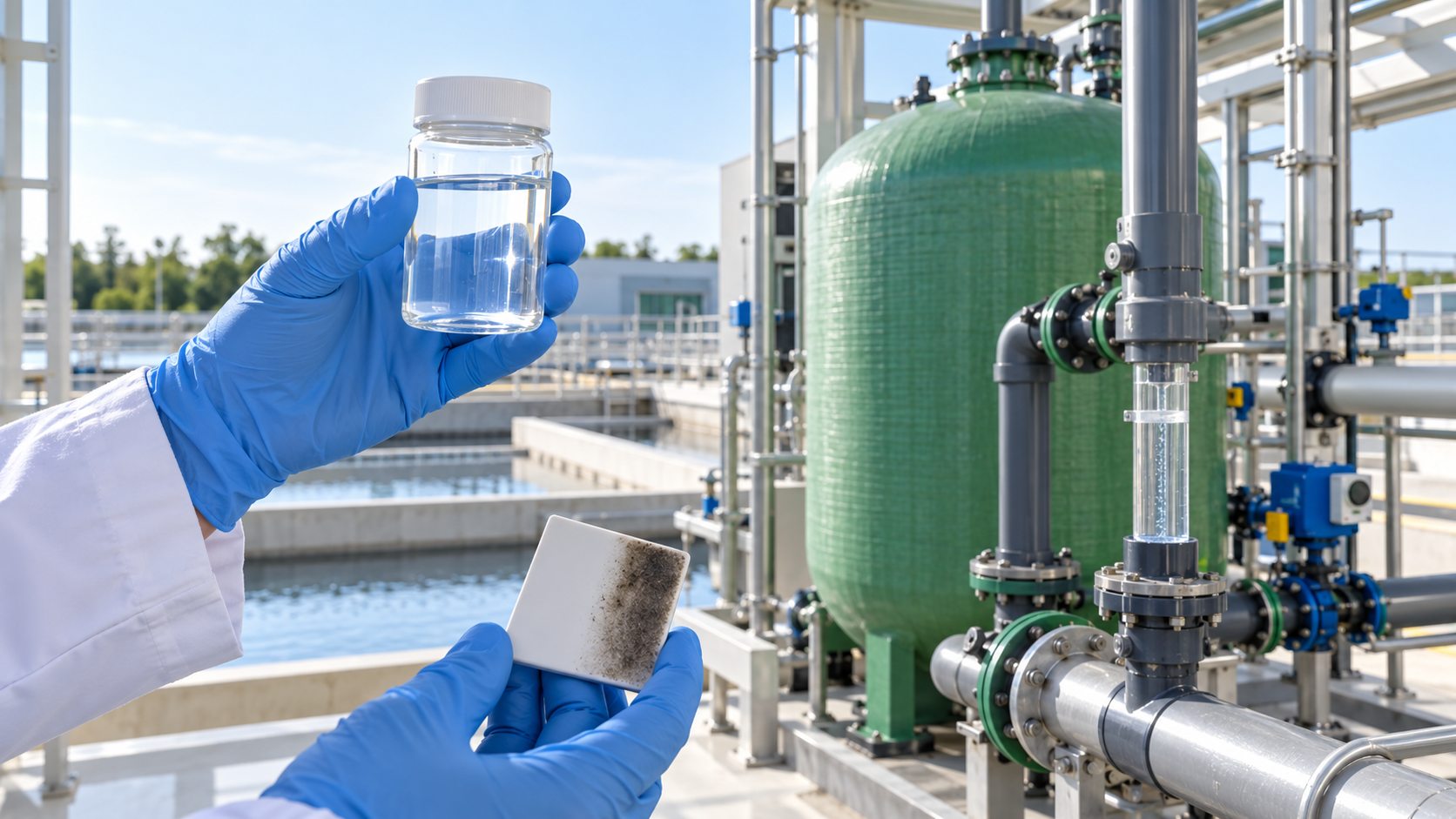
Manganese concentration and form depend on geology, pH and redox conditions. Dissolved manganese may be inconspicuous in a clear sample, then oxidize during treatment or in a distribution system. The resulting dark particles can discolor water and leave black or brown staining on fixtures, laundry and plumbing. Deposits can also create operational problems in affected filters and pipes.
Health guidance and aesthetic effects
Appearance and health guidance are separate considerations. WHO’s provisional guideline value for total manganese in drinking-water is 0.08 mg/L. WHO technical guidance reports that concentrations above about 0.02 mg/L have been associated with complaints about discoloration and staining; this is an aesthetic and operational observation, not the WHO health-based guideline value. Applicable limits and monitoring requirements vary by jurisdiction.
Manganese removal from water
Treatment commonly converts dissolved Mn(II) into an insoluble oxide that can be retained by filtration. Oxidants may include air, chlorine, ozone or potassium permanganate; the required conditions depend on pH, contact time, manganese concentration and other constituents such as iron. Catalytic manganese-oxide media and manganese greensand are also used in oxidation-filtration systems. Media selection, regeneration and backwashing must be matched to the water analysis and process design. Testing total and dissolved manganese helps identify the appropriate treatment step and verify performance.
Last reviewed: 31 October 2026 by Lenntech.