

Rhenium (Re) and water
Rhenium (Re) and water: occurrence, chemistry and removal
Rhenium is an extremely rare trace element, but it can be measured in rivers and seawater and may enter water near rhenium-bearing mining or processing operations. In oxygenated water, dissolved rhenium is generally present as the soluble perrhenate ion (ReO4−). The chemistry of the water and the source determine how it moves and which removal or recovery options may work.
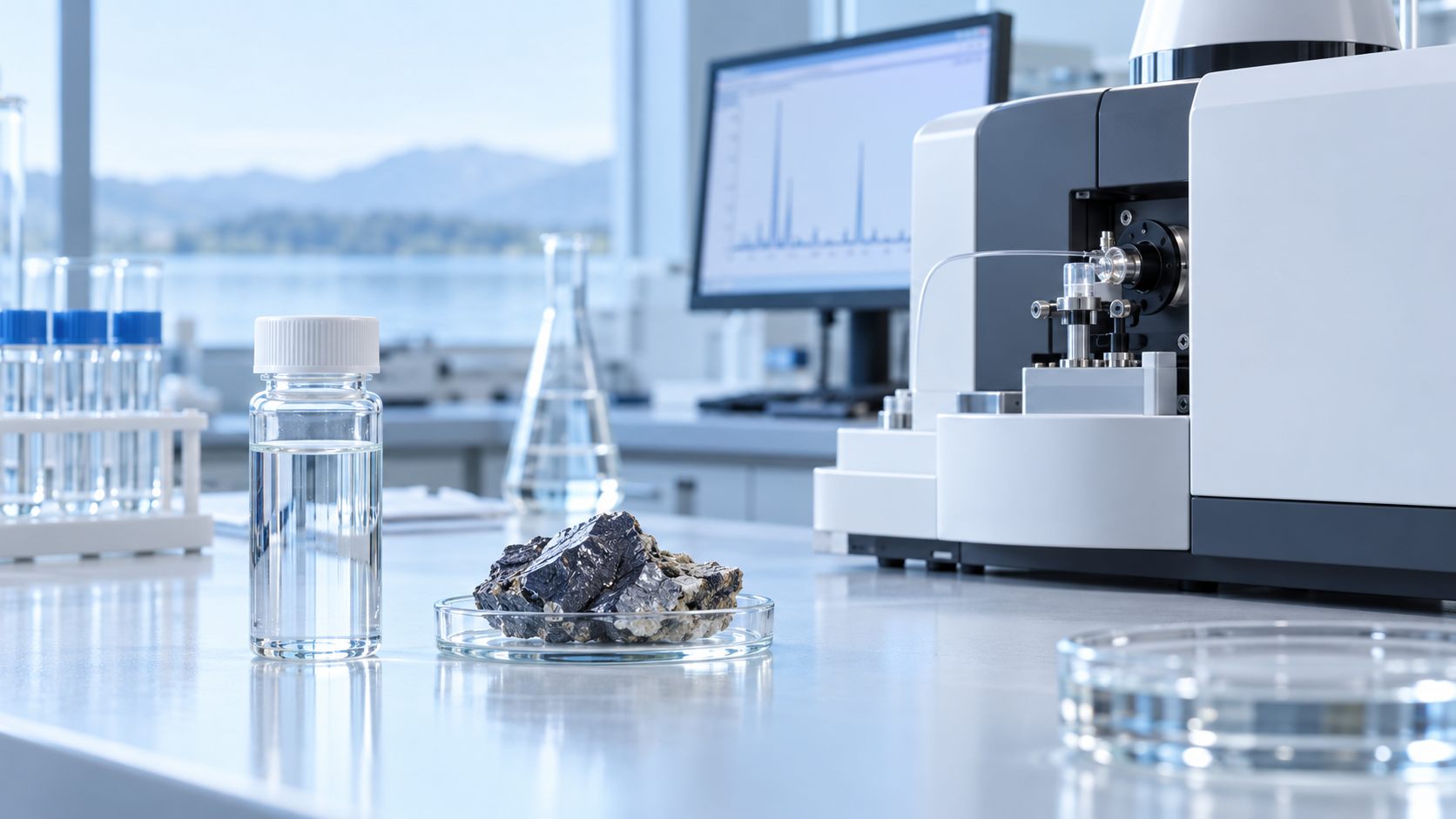
How can rhenium enter water?
Rhenium is one of the rarest elements in the Earth's crust and is commonly recovered as a by-product from molybdenum concentrates associated with porphyry copper-molybdenum deposits. Natural weathering can release trace amounts into streams. Mining, ore concentration, tailings seepage, leaching and metallurgical processing can also create site-specific pathways to surface water or groundwater where rhenium-bearing material is handled.
The U.S. Geological Survey reports that rhenium-containing products are produced as by-products of roasting molybdenum concentrates. This makes mining and processing areas relevant places to assess, but it does not mean that rhenium contamination is widespread. Any concern should be based on site-specific sampling of water and process residuals.
Rhenium concentrations in water
Published measurements show that aquatic rhenium is generally present at nanogram-per-litre levels, although concentrations vary widely among watersheds and can be much higher near specific geologic or industrial sources. A 2024 global review estimated an average of about 16 pmol/L (approximately 3 ng/L) in rivers draining to the ocean. Open-ocean concentrations are around 7 ng/kg. These are broad geochemical observations, not drinking-water standards or predictions for an individual well or river.
Rhenium chemistry in water
Rhenium behaves differently depending on oxidation-reduction conditions. In most oxygenated waters it occurs mainly as the perrhenate oxyanion, Re(VII)O4−, which is soluble and can remain mobile over a broad pH range. In reducing, low-oxygen environments, rhenium can be converted to less soluble forms and accumulate in sediments. Redox conditions, sulfide, organic matter and mineral surfaces can therefore influence whether rhenium stays dissolved or is retained.
This distinction is important for sampling and treatment: measuring total rhenium alone may not explain how readily it moves through a particular process stream. Water chemistry and, where needed, oxidation state or dissolved-versus-particulate measurements should be considered during site assessment.
Health and drinking-water guidance
Rhenium is a trace metal, not one of the radionuclides for which the U.S. drinking-water rule cited below sets a limit. The World Health Organization's drinking-water chemical fact-sheet compilation and the U.S. EPA's National Primary Drinking Water Regulations cited here do not list a rhenium-specific guideline value or maximum contaminant level. This absence is not a finding that any concentration is safe. Where rhenium is detected, assess the result with the responsible drinking-water or environmental authority and consider the source, concentration, exposure route and applicable local requirements.
How can rhenium be removed or recovered from water?
For mining and metallurgical process waters containing dissolved perrhenate, strong-base anion-exchange resins have been studied and used in rhenium recovery flowsheets. The resin captures ReO4− from solution; the rhenium can then be eluted and recovered as a concentrated product. Published wastewater studies include simulated process streams, so their results should not be treated as a general performance guarantee for natural water or drinking-water systems.
Resin selection and performance depend on perrhenate concentration, pH, redox state and competing anions such as sulfate and molybdate. For a real mining or industrial stream, characterize the water, conduct bench or pilot testing, and plan for the spent resin or regeneration solution, which may contain concentrated rhenium and other metals. A treatment process should be selected for the required discharge or recovery objective and verified against applicable permits.
Read more about ion exchange and elements and their interaction with water.
Last reviewed: 31 October 2026 by Lenntech.
Sources and further reading
- U.S. Geological Survey: Mineral Commodity Summaries 2026 — Rhenium.
- Ghazi et al.: The Global Biogeochemical Cycle of Rhenium (2024).
- Royal Society of Chemistry: Rhenium in natural-water reference materials (2022).
- Separation and Purification Technology: Capture of perrhenate from wastewater using anion-exchange resins (2025).
- World Health Organization: Guidelines for drinking-water quality, chemical fact sheets.
- U.S. Environmental Protection Agency: National Primary Drinking Water Regulations.