

Uranium - U
Uranium (U)
Uranium is a dense, naturally radioactive metal. Natural uranium consists mainly of uranium-238, with smaller amounts of uranium-235 and uranium-234. It occurs in minerals and can also be present in groundwater as a result of natural geology or human activity.
| Atomic number | 92 |
|---|---|
| Standard atomic weight | 238.02891 |
| Electron configuration | [Rn] 5f3 6d1 7s2 |
| Density | 19.1 g/cm3 |
| Melting point | 1135 °C |
| Boiling point | 4131 °C |
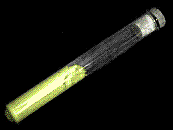
Uses and applications
Uranium is used as nuclear fuel after specialised processing and enrichment. Uranium compounds have also been used in some glass and ceramic materials; handling is subject to radiological and chemical safety controls.
Uranium and water management
Uranium is relevant to drinking-water treatment because it may dissolve into groundwater. WHO gives a provisional guideline value of 30 µg/L for uranium, while legal standards vary by jurisdiction. Depending on water chemistry and system conditions, treatment options can include anion exchange and reverse osmosis. Treatment residuals or concentrate may also require appropriate management.
Occurrence and environmental context
Uranium is an actinide, and its occurrence and environmental behaviour depend on isotope, chemical form, and source. Natural geology, mineral processing, and nuclear-related activities can each affect whether an actinide is present in a water or waste stream. Monitoring should distinguish chemical concentration from radioactive activity where relevant.
Health and safety
Uranium requires careful handling because of its radioactive properties; for some elements, chemical toxicity is also relevant. Exposure depends on isotope, activity, chemical form, and route. Follow applicable radiation-protection procedures and substance-specific safety information.
Back to the periodic table of elements
Read more about uranium in water
Sources and further reading
- Royal Society of Chemistry: Uranium
- CIAAW: Standard atomic weights and radioactive elements
- WHO: Uranium in drinking water
- US EPA: Drinking-water treatment technologies
Element page last reviewed: 24 October 2026 by Lenntech.