

Platinum - Pt
Platinum — chemical properties and water context
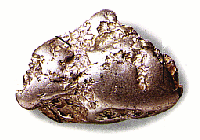
Platinum is a dense, silvery, corrosion-resistant transition metal and a member of the platinum-group metals. Its water-treatment relevance is strongest in catalyst manufacture, electroplating, mining and precious-metal recovery streams.
| Atomic number | 78 |
|---|---|
| Standard atomic weight | 195.084 g/mol |
| Density | 21.5 g/cm3 |
| Melting point | 1768.2 °C |
| Boiling point | 3825 °C |
| Electron configuration | [Xe] 4f14 5d9 6s1 |
Chemical properties
Platinum is in Group 10 and Period 6. The metal is relatively unreactive under ordinary conditions, but platinum compounds can form soluble complexes, especially in chloride-bearing process solutions. Therefore, elemental platinum properties do not predict the behaviour of dissolved platinum in process water.
Uses and applications
Platinum is used in catalytic converters, chemical catalysts, laboratory equipment, electronics and jewellery. Spent catalysts and industrial liquors can contain recoverable platinum-group metals.
Platinum in water treatment
In platinum-bearing process water, determine dissolved and particulate platinum and characterize pH, chloride, oxidation state and co-occurring metals. Ion exchange is used or studied to recover platinum-group metals from specific leach and industrial solutions; resin selectivity depends on metal speciation and competing ions. Recovery and treatment performance should be tested on the actual stream.
Environmental and health context
Platinum is rare in natural waters, while industrial processing can create localized sources. Environmental assessment should consider the particular platinum compound, its concentration and exposure route rather than treating all platinum forms as equivalent.
Back to the periodic table of elements
Sources and further reading
- CIAAW: Standard atomic weights
- Royal Society of Chemistry: Platinum properties and uses
- Nikoloski et al.: Recovery of platinum-group metals from acidic chloride solutions
Platinum page last reviewed: by Lenntech.