

Palladium - Pd
| Atomic number | 46 |
|---|---|
| Group / period / block | 10 / 5 / d |
| Relative atomic mass | 106.42 |
| Density at 20 °C | 12.0 g/cm3 |
| Melting point | 1554.8 °C |
| Boiling point | 2963 °C |
| Electron configuration | [Kr] 4d10 |
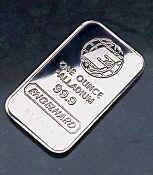
Palladium
Palladium is a silvery-white platinum-group metal that resists corrosion in air. It is widely used in catalytic converters, electronics and jewellery. Palladium absorbs hydrogen, and finely divided palladium is an effective catalyst for several reactions.
In water, palladium may occur as dissolved ions or complexes depending on process chemistry; this differs from the elemental metal in products and catalysts. Potential sources include catalyst manufacture, refining, plating and other metal-processing operations.
Palladium in water treatment
Water-treatment context: Characterize dissolved versus particulate palladium, oxidation state, ligands and competing metals. Recovery may be an important design objective alongside effluent treatment. A suitable separation train is site-specific and should be supported by treatability testing.
Elemental metals and dissolved metal species behave differently in water. Water chemistry and the exact compound or complex must be considered when assessing treatment.
Back to the periodic table of elements
Sources and further reading
Palladium page last reviewed: by Lenntech.