

Bromine - Br
Bromine (Br) is a reactive halogen used in chemical manufacture and disinfection. For water treatment, the distinction between elemental bromine, bromide and bromate is essential: they have different properties, risks and treatment requirements.
Chemical properties · Uses and occurrence · Health effects · Environmental effects · Water and treatment
Chemical properties of bromine
| Symbol / atomic number | Br / 35 |
|---|---|
| Group / period / block | 17 / 4 / p |
| Standard atomic weight interval | [79.901, 79.907] |
| Electron configuration | [Ar] 3d10 4s2 4p5 |
| Elemental molecular form | Br2 |
| Density (liquid, near room temperature) | 3.1028 g cm−3 |
| Melting point | −7.2 °C |
| Boiling point | 58.8 °C |
| Electronegativity (Pauling) | 2.96 |
| Non-bonded atomic radius | 0.185 nm |
| Covalent radius | 0.117 nm |
| First ionisation energy | 1139.9 kJ mol−1 |
| Naturally occurring isotopes | 79Br and 81Br |
| Discovery | Carl Löwig prepared it in 1825; Antoine-Jérôme Balard published its discovery in 1826 |
| CAS registry number | 7726-95-6 |
Atomic weight follows CIAAW; parentheses indicate uncertainty in the final digits. Physical properties follow the Royal Society of Chemistry unless noted. Atomic radii depend on their definition. The atomic-weight interval reflects natural variation in isotope abundance.
Uses, occurrence and chemical forms
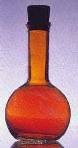
Bromine is a halogen, alongside fluorine, chlorine and iodine. Elemental bromine is a volatile, reddish-brown liquid at room temperature and gives off irritating vapour.
In nature, bromine is commonly present as bromide ions in seawater and concentrated brines. Elemental bromine is produced from bromide-rich resources. Bromine-containing substances have applications in chemical manufacture, pharmaceuticals, flame retardants and disinfection; uses and restrictions depend on the particular substance.
Three forms are especially important in water engineering:
- Bromine (Br2): the reactive elemental substance.
- Bromide (Br−): a dissolved ion that can occur naturally in source water.
- Bromate (BrO3−): an oxidised by-product that can form during treatment.
These names describe different chemicals. A concentration measured as bromide must not be interpreted as the same concentration of active bromine disinfectant or bromate.
Health effects of bromine
Elemental bromine can cause skin and eye burns. Inhalation can irritate and injure the respiratory tract, causing coughing and difficulty breathing; serious exposures can have lasting effects. Exposure severity depends on concentration, duration and route. Significant exposure requires prompt medical assessment and removal from the source.
Bromide salts, bromate and organic bromine compounds have different toxicological profiles. It is inaccurate to assign identical health effects to every bromine-containing chemical or to assume that all organic bromine compounds are synthetic and equally hazardous. Identify the substance before interpreting an exposure or analytical result.
Environmental effects of bromine compounds
Bromide is naturally present in saline waters, while industrial discharges and other human activities can alter local concentrations. The environmental significance of a bromine-containing material depends on its identity, concentration, persistence and exposure pathways.
Water disinfection can transform bromide into more reactive bromine species and brominated by-products. Monitoring should therefore address the relevant individual chemicals, rather than treating total bromine as a complete measure of ecological or health risk.
Bromine, bromide and bromate in water treatment
Bromine-based disinfectants produce active species including hypobromous acid in water. They are used in applications such as swimming pools and some industrial water systems. See bromine as a disinfectant for further background.
During ozonation, bromide-containing source water can form bromate. Formation depends on bromide concentration, ozone dose, pH and other water characteristics. Bromide can also contribute to brominated organic disinfection by-products when oxidants react with natural organic matter.
WHO's provisional guideline for bromate in drinking water is 10 µg/L (0.010 mg/L). This value applies to bromate, not to all bromine species, and is not a universal legal limit.
Preventing bromate formation is generally preferable to removing it after it forms. Assess source-water bromide, optimise the disinfection process, and verify both microbial treatment and by-product control. Reducing disinfection simply to lower bromate must not compromise microbiological safety.
Where removal is necessary, membrane or ion-exchange options require assessment for the specific contaminant and water composition. A process effective for bromide should not automatically be assumed to have the same performance for bromate. Confirm performance through testing and ongoing monitoring.
Bromine page last reviewed: by Lenntech.
Back to the periodic table of elements.
Sources and further reading
- RSC: bromine properties, uses and history
- CIAAW: bromine atomic weight and isotopes
- USGS: bromine occurrence and supply
- CDC: elemental bromine exposure and health effects
- WHO: bromate in drinking-water
- Health Canada: bromate formation, prevention and treatment
- EPA: brominated trihalomethanes in drinking water (PDF)