

Phosphorus - P
Phosphorus (P) is an essential element in living organisms and a key nutrient in fertilisers. In natural and treated water, it is usually measured and managed as phosphate compounds rather than as elemental phosphorus.
Chemical properties · Uses and occurrence · Health effects · Environmental effects · Water and treatment
Chemical properties of phosphorus
| Symbol / atomic number | P / 15 |
|---|---|
| Group / period / block | 15 / 3 / p |
| Standard atomic weight | 30.973761998(5) |
| Electron configuration | [Ne] 3s2 3p3 |
| Common oxidation states | −3, +3 and +5 |
| Density (white phosphorus) | 1.823 g cm−3 |
| Melting point (white phosphorus) | 44.15 °C |
| Boiling point (white phosphorus) | 280.5 °C |
| Electronegativity (Pauling) | 2.19 |
| Non-bonded atomic radius | 0.180 nm |
| First ionisation energy | 1011.8 kJ mol−1 |
| Stable isotope | 31P |
| Discovery | Hennig Brand, 1669 |
| CAS registry number | 7723-14-0 |
Atomic weight follows CIAAW. Intervals reflect natural isotopic variation; parentheses indicate uncertainty in the final digits. Other properties follow RSC unless noted. Atomic radii depend on their definition.
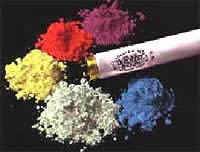
Properties, uses and occurrence
Elemental phosphorus has several forms, including white and red phosphorus, with very different properties. White phosphorus is poisonous and can ignite spontaneously in air; red phosphorus is less reactive but still requires appropriate handling. Phosphorus is not found free in ordinary natural environments because it readily forms compounds.
Phosphate minerals are mined for fertilisers and other products. Phosphorus is also part of DNA, cell membranes and ATP, a molecule used in cellular energy transfer.
Health effects of phosphorus compounds
Health effects depend on the compound. White phosphorus can cause severe burns and systemic poisoning. Phosphate in food and water is not the same material as elemental phosphorus. Exposure to individual industrial organophosphorus compounds requires its own hazard assessment.
Phosphorus and aquatic environments
Phosphorus is an essential nutrient, but excess phosphorus can contribute to eutrophication: increased algal and plant growth that may reduce light and, as biomass decomposes, lower dissolved oxygen. The effect depends on the receiving water and other limiting nutrients. Agricultural runoff and wastewater can carry phosphorus to rivers and lakes.
Phosphate in water and wastewater treatment
Water analyses may report orthophosphate, total phosphorus or phosphorus “as P.” These are different measurements. Check the analytical method and units before comparing results or selecting a process.
Wastewater phosphorus can be removed biologically by enhanced biological phosphorus removal or chemically by adding iron, aluminum or lime to form precipitates. Effective removal also depends on solids separation; the phosphorus is transferred into sludge or another residual that needs management. Chemical feed, pH, mixing and separation should be selected for the actual wastewater and discharge requirements.
See Lenntech’s dissolved phosphate information and EPA's phosphorus-removal guidance in the sources below.
Phosphorus page last reviewed: by Lenntech.
Back to the periodic table of elements.