

Boron - B
Boron (B) is important in glass, materials and plant nutrition. In water treatment, its behaviour as boric acid and borate makes removal more demanding than that of many dissolved salts.
Chemical properties · Uses and occurrence · Health effects · Environmental effects · Water and treatment
Chemical properties of boron
| Symbol / atomic number | B / 5 |
|---|---|
| Group / period / block | 13 / 2 / p |
| Standard atomic weight interval | [10.806, 10.821] |
| Electron configuration | [He] 2s2 2p1 |
| Common oxidation state | +3 |
| Density (near room temperature) | 2.34 g cm−3 |
| Melting point | 2077 °C |
| Boiling point | 4000 °C |
| Electronegativity (Pauling) | 2.04 |
| Non-bonded atomic radius | 0.192 nm |
| First ionisation energy | 800.6 kJ mol−1 |
| Naturally occurring stable isotopes | 10B and 11B |
| Early isolation | Gay-Lussac, Thénard and Davy, independently in 1808 |
| CAS registry number | 7440-42-8 |
Atomic weight follows CIAAW. Intervals reflect natural isotopic variation; parentheses indicate uncertainty in the final digits. Other properties follow RSC unless noted. Atomic radii depend on their definition.
Uses, occurrence and history
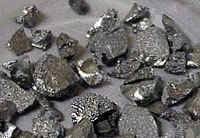
Boron is commonly classified as a metalloid. It occurs in crystalline and amorphous forms, while natural deposits mainly contain borates rather than the free element. Borax, colemanite and other borate minerals are important resources.
Boron compounds are used in borosilicate glass, glass fibres, ceramics and detergents. Elemental boron and boron-containing materials also have specialised applications in composites and neutron absorption. Boron-10 is particularly effective at capturing neutrons.
In 1808, Louis-Joseph Gay-Lussac and Louis-Jacques Thénard in France, and Humphry Davy in Britain, independently obtained impure boron. These early products should not be confused with modern high-purity material.
Health effects of boron
Boron is essential to plant growth, but it is not classified as an essential human nutrient: a clear required biological function has not been established. Normal exposure comes from food, drinking water and some consumer products. Plant foods are important dietary sources.
Excessive ingestion of boron compounds can cause adverse effects. Reproductive and developmental effects at high exposure are important considerations in health assessments. Risk depends on the compound, dose and duration of exposure.
Borate dust can irritate exposed tissues, while concentrated products require handling appropriate to their composition. Nutritional reference information does not establish that supplementation is beneficial. See the dietary reference information and NIH source below.
Environmental effects of boron
Boron enters water through weathering, geothermal activity and human sources such as some industrial and wastewater discharges. Its concentration varies with geology and water use; it should not be assumed to be negligible in every groundwater source.
Boron is a plant nutrient, but excessive concentrations can damage sensitive crops. For irrigation assessments, evaluate crop tolerance, soil conditions and the irrigation regime as well as water concentration. Environmental risk cannot be inferred from the name “boron” without considering exposure.
Boron in water and treatment
WHO's drinking-water guideline is 2.4 mg/L as boron. This is not a universal legal limit or an irrigation-water target; applicable requirements depend on jurisdiction and use.
At ordinary drinking-water pH, much of the dissolved boron is neutral boric acid, B(OH)3. At higher pH, the proportion of negatively charged borate, B(OH)4−, increases. This distinction is important in desalination and purification.
Conventional clarification and chlorination do not significantly remove boron. Options include appropriately designed reverse osmosis and boron-selective resins. RO rejection depends on pH, temperature, membrane choice and operating conditions; a second pass or other process adjustment may be needed. Raising pH also requires evaluation of scaling and downstream water stability.
Select treatment using representative-water tests and verify residual boron. Manage regeneration waste or concentrate appropriately. Further information: Boron in water (B + H2O) and drinking-water standards.
Boron page last reviewed: by Lenntech.
Back to the periodic table of elements.