

Iodine - I
| Atomic number | 53 |
|---|---|
| Group / period / block | 17 / 5 / p |
| Relative atomic mass | 126.90447 |
| Density at 20 °C | 4.933 g/cm3 |
| Melting point | 113.7 °C |
| Boiling point | 184.4 °C |
| Electron configuration | [Kr] 4d10 5s2 5p5 |
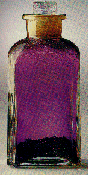
Iodine
Iodine is a dark, shiny solid that forms a violet vapour when heated. It is a halogen and a trace nutrient needed for thyroid-hormone production. Iodine compounds are used in medicine, photography and chemical manufacturing.
Natural iodine in water is often present as iodide; treatment can also produce small amounts of other iodine species. Molecular iodine has occasionally been used to disinfect water in the field or during emergencies, but the World Health Organization does not recommend iodine disinfection for long-term use.
Iodine in water treatment
Water-treatment context: Distinguish iodine used as a disinfectant from naturally occurring iodide or other iodine species being measured in a source water. Emergency disinfection should follow authoritative public-health instructions; it is not a substitute for a designed, routinely operated treatment process.
Elemental substances and dissolved or gaseous species behave differently in water. Water chemistry and the exact chemical form must be considered when assessing treatment.
Back to the periodic table of elements
Sources and further reading
Iodine page last reviewed: by Lenntech.