

Selenium - Se
Selenium (Se) is an essential trace nutrient that can become toxic at excessive exposure. Its chemical form also matters in water treatment and ecological assessment. This guide explains its properties, uses and behaviour in water.
Chemical properties · Uses and occurrence · Health effects · Environmental effects · Water and treatment
Chemical properties of selenium
| Symbol / atomic number | Se / 34 |
|---|---|
| Group / period / block | 16 / 4 / p |
| Standard atomic weight | 78.971(8) |
| Electron configuration | [Ar] 3d10 4s2 4p4 |
| Common oxidation states | −2, +4, +6 |
| Density (grey selenium, near room temperature) | 4.809 g cm−3 |
| Melting point | 220.8 °C |
| Boiling point | 685 °C |
| Electronegativity (Pauling) | 2.55 |
| Non-bonded atomic radius | 0.190 nm |
| Covalent radius | 0.118 nm |
| First ionisation energy | 941.0 kJ mol−1 |
| Naturally occurring isotopes | 74Se, 76Se, 77Se, 78Se, 80Se, 82Se |
| Discovery | Jöns Jacob Berzelius, 1817 |
| CAS registry number | 7782-49-2 |
Atomic weight follows CIAAW; parentheses indicate uncertainty in the final digits. Physical properties follow the Royal Society of Chemistry unless noted. Atomic radii depend on their definition.
Uses, occurrence and history
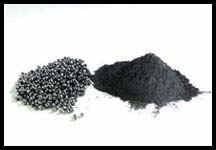
Selenium is a nonmetal in the same group as sulfur and tellurium. It has several allotropes, including grey crystalline selenium and red forms. Grey selenium is photoconductive: its electrical conductivity changes with illumination.
Applications include glass manufacture, pigments, alloys and selected electronic and photovoltaic materials. Selenium compounds are also used in nutritional products and some anti-dandruff preparations. These compounds should be distinguished from elemental selenium; their properties and intended uses differ.
Commercial selenium is recovered mainly from anode residues generated during electrolytic copper refining. Jöns Jacob Berzelius discovered it in 1817 while investigating material from sulfuric acid production. Current supply data are available from the US Geological Survey.
Health effects of selenium
Selenium is an essential nutrient used in selenoproteins involved in thyroid hormone metabolism, reproduction and protection against oxidative damage. Intake varies with diet and with the selenium content of the soils where food is produced. Deficiency can occur, but taking more selenium than needed does not automatically improve health.
Chronically excessive intake can cause selenosis, characterised by hair loss and brittle or lost nails. Other effects can include garlic-like breath, metallic taste, skin changes, nausea, diarrhoea and nervous-system abnormalities. Severe poisoning can be life-threatening. Requirements and upper intake levels depend on age and life stage; consult the dietary reference information and NIH guidance below for context.
Assessment of industrial exposure should identify the selenium compound, concentration and route of contact. Dietary exposure, dust, fumes and corrosive process chemicals should not be treated as interchangeable hazards.
Environmental effects of selenium
Selenium enters water through weathering and through activities such as mining, coal-fired power generation and irrigated agriculture. Its mobility depends on chemical form, pH, dissolved oxygen, redox conditions and interactions with minerals and organic matter. It does not simply become harmless selenium and water after release.
Selenium can accumulate through aquatic food webs. Chronic dietary exposure can impair reproduction in fish, including effects on eggs and developing offspring, and can harm birds eating contaminated aquatic organisms. Water concentration alone may not describe the full risk: EPA's freshwater criterion includes fish-tissue measurements as well as water-column elements.
Selenium in water and treatment
WHO's provisional drinking-water guideline is 40 µg/L (0.040 mg/L). This is not a universal legal limit; applicable national and local values may differ. See also drinking-water standards.
Measure total selenium and assess its forms before selecting treatment. Selenite, Se(IV), and selenate, Se(VI), behave differently. Selenite generally binds more readily to iron-based adsorbents and can be removed by suitable coagulation and filtration. Selenate is often less amenable to conventional coagulation; anion exchange or reverse osmosis may be appropriate depending on water chemistry.
Oxidation can convert Se(IV) to Se(VI) and make some adsorption or coagulation processes less effective. Treatment should therefore be selected around the actual species and process sequence, rather than assuming oxidation always improves removal.
For some industrial and mining wastewaters, biological reduction can convert dissolved selenium oxyanions to elemental selenium, followed by solids separation. Validate performance with representative water and assess residual dissolved selenium, particles and competing constituents. Removed selenium remains in sludge, spent media or concentrate and requires appropriate management.
Further information: heavy-metal removal and periodic-table information resources.
Selenium page last reviewed: by Lenntech.
Back to the periodic table of elements.
Sources and further reading
- RSC: selenium properties, uses and history
- CIAAW: selenium atomic weight and isotopes
- USGS: selenium occurrence, recovery and supply
- NIH: selenium nutrition, deficiency and excessive intake
- WHO: selenium in drinking-water
- EPA: selenium and aquatic-life protection
- Health Canada: selenium speciation and treatment
- EPA: treatment of mining-influenced water, including biological selenium reduction (PDF)