

Rhenium - Re
Rhenium — chemical properties and water context
Rhenium is a rare, silvery transition metal with a very high melting point. Its water-treatment relevance is mainly in specialized process streams from ore processing and metal refining.
| Atomic number | 75 |
|---|---|
| Standard atomic weight | 186.207 g/mol |
| Density | 20.8 g/cm3 |
| Melting point | 3185 °C |
| Boiling point | 5590 °C |
| Electron configuration | [Xe] 4f14 5d5 6s2 |
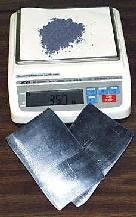
Chemical properties
Rhenium is in Group 7 and Period 6. It is dense, has a high melting point and occurs in trace amounts in some molybdenum and copper ores. In oxygenated aqueous systems, it may occur as perrhenate (ReO4−), a dissolved oxyanion; its concentration and behaviour depend on source and water chemistry.
Uses and applications
Rhenium is added to nickel-based superalloys and tungsten- or molybdenum-based alloys for high-temperature service. It is also used in some catalysts and electrical contacts. Much rhenium is recovered as a by-product of processing other metal ores.
Rhenium in water treatment
Where rhenium is present in mining or refining water, identify whether it occurs as dissolved perrhenate or in suspended solids. Ion-exchange and sorption approaches have been studied for perrhenate capture and rhenium recovery, but selection depends on competing anions, acidity and concentration. Characterize and test the actual stream before design.
Environmental and health context
Rhenium occurs at very low levels in the Earth's crust, and its environmental behaviour is less documented than that of common water contaminants. A detected concentration should be interpreted in relation to the industrial source, chemical form and analytical method.
Back to the periodic table of elements
Read more about rhenium in water
Sources and further reading
- CIAAW: Standard atomic weights
- Royal Society of Chemistry: Rhenium properties and uses
- PubMed: Perrhenate capture from wastewater
Rhenium page last reviewed: by Lenntech.