

Vanadium - V
Vanadium (V) is a silvery transition metal used mainly to improve the properties of steel and other alloys. Its compounds also serve as catalysts and as active materials in rechargeable flow batteries. In water, its chemical form influences mobility, toxicity and the choice of treatment.
Chemical properties · Applications · Vanadium in water and treatment · Health effects · Environmental effects
| Symbol / atomic number | V / 23 |
|---|---|
| Standard atomic weight | 50.9415(1) |
| Group / period / block | 5 / 4 / d |
| Electron configuration | [Ar] 3d3 4s2 |
| Electronegativity (Pauling) | 1.63 |
| Density | 6.0 g cm−3 at room temperature |
| Melting point | 1910 °C |
| Boiling point | 3407 °C |
| Covalent radius | 0.144 nm |
| Non-bonded radius | 0.207 nm |
| Common oxidation states in compounds | +2, +3, +4 and +5 |
| Naturally occurring isotopes | 51V (about 99.75%) and 50V (about 0.25%) |
| First ionisation energy | 650.9 kJ mol−1 |
| First discovery | Andrés Manuel del Río, 1801 |
Physical and atomic data follow the Royal Society of Chemistry; atomic weight and isotopic abundances follow CIAAW. Atomic weight is dimensionless; the corresponding molar mass is approximately 50.9415 g mol−1. The number in parentheses indicates uncertainty in the final digit. 50V is extremely long-lived and radioactive; 51V is stable. Ionic radii depend on oxidation state and coordination.
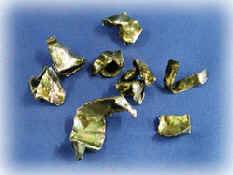
Vanadium: occurrence and history
Vanadium occurs in minerals and in some fossil-fuel deposits. Sources include vanadium-bearing iron ores, vanadinite, carnotite and patronite. Commercial supply can come from ore processing and recovery from industrial materials such as slags, spent catalysts and petroleum residues. Production routes differ between deposits and countries.
Andrés Manuel del Río first identified the element in Mexico in 1801, but subsequently withdrew his claim after the material was incorrectly identified as chromium. Nils Gabriel Sefström independently rediscovered vanadium three decades later. Its name refers to Vanadis, a name associated with the Norse goddess Freyja.
Applications of vanadium
- Steel: small additions of vanadium can improve strength, toughness and fatigue resistance. Applications include tools, axles, gears and structural components.
- Titanium alloys: vanadium and aluminium are alloying additions in materials used for demanding aerospace components.
- Catalysts: vanadium compounds, including vanadium pentoxide (V2O5), are used in chemical production, notably sulphuric acid manufacture.
- Energy storage: all-vanadium redox flow batteries store energy using dissolved vanadium species in different oxidation states. Their electrolytes are process chemicals and require suitable handling and containment.
- Glass and ceramics: vanadium compounds are used to modify colour and other material properties.
Vanadium in water and water treatment
Sources and chemical forms
Weathering of rocks can introduce vanadium into groundwater and surface water. Industrial discharges and deposition of particles from fossil-fuel combustion can contribute additional inputs. Vanadium may be dissolved or associated with suspended solids and sediments.
In oxygenated fresh water near neutral pH, dissolved vanadium commonly occurs as vanadium(V) oxyanions called vanadates. These are negatively charged, oxygen-containing ions. Their distribution depends on pH and oxidation–reduction conditions, as well as concentration and interactions with other substances. A total-vanadium result alone does not identify the species present.
Removal options
Published studies identify several treatment options for vanadate. Their suitability depends on the actual water and treatment target:
- Iron-based adsorption: vanadium binds to the surface of media such as granular ferric hydroxide. A waterworks study demonstrated effective removal, but media capacity and replacement intervals depend on raw-water quality.
- Ferric coagulation and filtration: iron salts form iron (hydr)oxide flocs that capture vanadium. The solids must then be separated; jar tests and pilot trials help establish dosing and filtration conditions.
- Ion exchange: suitable anion-exchange resins are a potential option for negatively charged vanadate. Competing ions and the management of regenerant require assessment.
- Membranes: nanofiltration and reverse osmosis are potential options identified in the literature. Rejection and concentrate management need evaluation for the proposed feed water and membrane.
Process assessment should consider pH, vanadium speciation, phosphate and other competing solutes, solids separation and breakthrough monitoring. Removal transfers vanadium to media, sludge, regenerant or concentrate; these residual streams also need appropriate management. See Lenntech's heavy metal removal overview for related treatment processes.
Health effects of vanadium
For most people, food is the main source of low-level vanadium exposure. An essential biological role in humans has not been established, and the US Institute of Medicine did not set a Recommended Dietary Allowance or Adequate Intake for vanadium. Biological roles in some microorganisms, including enzymes involved in nitrogen fixation, do not establish a human dietary requirement.
Health effects depend on the compound, dose, duration and route of exposure. Breathing high levels of vanadium pentoxide can irritate and damage the respiratory system. Ingestion of some vanadium compounds has caused gastrointestinal symptoms. Animal studies have also found effects on blood and development; these findings do not by themselves establish the same effects in people at ordinary environmental exposure levels.
IARC classifies vanadium pentoxide as possibly carcinogenic to humans (Group 2B), with sufficient evidence in experimental animals and inadequate evidence in humans in its evaluation. This classification concerns the compound V2O5 and does not quantify risk from a particular exposure or apply automatically to every vanadium-containing material.
Workplace controls should address the actual dust, fumes and compounds present, using the relevant safety data sheet. For general nutritional context, see recommended daily intake of vitamins and minerals; upper intake limits, where given, are not recommended doses.
Environmental effects of vanadium
Vanadium is naturally present in soils, sediments and organisms. Its transport is influenced by water chemistry and binding to particles. Dissolved species can be taken up by aquatic organisms, and experimental studies show adverse effects at sufficient exposures.
Accumulation varies with species and conditions; a single large concentration factor cannot describe every ecosystem. Environmental assessment should consider the chemical form, bioavailability, concentration and duration of exposure, together with local background levels. Monitoring industrial releases and managing treatment residuals help limit additional inputs.
Vanadium page last reviewed: by Lenntech.
Back to the periodic table of elements.
Sources and further reading
- RSC: vanadium properties, applications and history.
- CIAAW: vanadium atomic weight, isotopes and discovery.
- USGS: vanadium resources, production and uses.
- ATSDR: vanadium exposure and health effects.
- IARC: vanadium pentoxide evaluation.
- Institute of Medicine: dietary reference intakes, including vanadium.
- Environment Canada and Health Canada: vanadium pentoxide assessment.
- Bahr, Jekel and Amy: vanadium removal by granular ferric hydroxide.
- Roccaro and Vagliasindi: pilot-scale vanadium removal with iron(III) (PDF).
- US Department of Energy: vanadium redox flow batteries (PDF).