

Titanium - Ti
Titanium (Ti) is a strong, relatively light transition metal with excellent corrosion resistance in many environments. Its metal, alloys and compounds have different properties and uses: titanium metal is used in demanding equipment, while titanium dioxide (TiO2) is widely used as a white pigment.
Chemical properties · Applications · Titanium and water treatment · Health effects · Environmental effects
| Symbol / atomic number | Ti / 22 |
|---|---|
| Standard atomic weight | 47.867(1) |
| Group / period / block | 4 / 4 / d |
| Electron configuration | [Ar] 3d2 4s2 |
| Electronegativity (Pauling) | 1.54 |
| Density | 4.506 g cm−3 at room temperature |
| Melting point | 1670 °C |
| Boiling point | 3287 °C |
| Covalent radius | 0.148 nm |
| Non-bonded radius | 0.211 nm |
| Common oxidation states | +4 and +3 |
| Naturally occurring isotopes | 46Ti, 47Ti, 48Ti, 49Ti and 50Ti |
| First ionisation energy | 658.8 kJ mol−1 |
| Discovery | William Gregor, 1791 |
Property values follow the Royal Society of Chemistry; the standard atomic weight follows CIAAW. Atomic weight is dimensionless; the corresponding molar mass is approximately 47.867 g mol−1. The number in parentheses indicates uncertainty in the final digit. Ionic radii depend on oxidation state and coordination and are therefore not given as a single value.
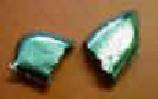
Titanium: properties and occurrence
Titanium has a high strength relative to its weight. A thin, adherent oxide film forms on its surface in air and helps protect the underlying metal from corrosion. This passive film explains why a chemically reactive element can perform well in many corrosive service conditions. Resistance is not universal: titanium grade, temperature, water chemistry and equipment design all matter.
Titanium occurs in minerals rather than as free metal. Important mineral sources include ilmenite (FeTiO3) and rutile (TiO2). Anatase and brookite are other crystalline forms of titanium dioxide. Mining, pigment manufacture and titanium-metal production are distinct stages and should not be confused.
William Gregor identified the element in a Cornish mineral in 1791. Martin Heinrich Klaproth independently identified it and gave it the name titanium in 1795.
Applications of titanium and its compounds
- Metal and alloys: aerospace components, chemical-processing equipment and marine applications benefit from titanium's strength, relatively low density and corrosion resistance.
- Medical devices: suitable titanium grades and alloys are used in dental and orthopaedic implants. Device performance depends on the material, surface, design and clinical application.
- Titanium dioxide: its optical properties make it an important white pigment in paints, plastics and paper. Pigment-grade material and nanoscale photocatalysts are not interchangeable products.
- Functional materials: titanium compounds are also used in ceramics and other specialised materials.
Titanium and water treatment
For reactions, occurrence and water-quality information, see Titanium in water (Ti + H2O).
Corrosion-resistant equipment
Titanium is used in seawater condensers and heat exchangers, including equipment for desalination. Here it serves as a construction material; it does not itself remove salt from water. Material selection must consider the full operating and cleaning conditions rather than relying on a general corrosion-resistance claim.
Coated titanium electrodes
Titanium can provide the supporting substrate for mixed-metal-oxide-coated anodes used to protect steel structures in water. The active coating gives the electrode its intended electrochemical performance. Bare titanium and a purpose-designed coated anode should not be treated as equivalent.
Titanium dioxide photocatalysis
Under suitable illumination, TiO2 can act as a photocatalyst and promote oxidation of organic contaminants. Government research has investigated this approach for contaminated-water treatment. Performance depends on the light source, catalyst, contaminant and water matrix; a successful demonstration for one compound does not establish removal of every contaminant. Treatment claims require validation for the proposed application.
When investigating titanium in a water sample, distinguish dissolved titanium from titanium-bearing particles and TiO2. The analytical method and sample preparation affect what is measured. Treatment selection should follow characterisation and testing rather than an assumption that every form behaves alike.
Health effects of titanium
Titanium has no established essential biological role in humans. Bulk metal, soluble compounds, pigment particles and nanoscale TiO2 can present different exposure conditions. The use of titanium in medical devices does not establish that every titanium-containing material is harmless by every route of exposure.
IARC classifies titanium dioxide as possibly carcinogenic to humans (Group 2B), based on sufficient evidence in experimental animals and inadequate evidence in humans in its evaluation. This classification concerns TiO2; it is not a classification of all titanium materials. A hazard classification alone does not quantify the risk from a particular product or exposure.
In workplaces, inhalation of airborne TiO2 dust deserves attention. NIOSH distinguishes fine from ultrafine, including nanoscale, particles in its exposure assessment. Use appropriate dust controls and the safety data sheet for the actual material. Finely divided titanium metal can also pose serious fire and dust hazards even though a solid component behaves very differently.
Environmental effects of titanium
Titanium-bearing minerals occur naturally in soils and sediments. Environmental behaviour depends on chemical form, particle characteristics and exposure conditions. Natural occurrence is not evidence that every release is harmless, and the effects of nanoscale TiO2 should not be inferred directly from those of bulk metal or mineral grains.
For industrial wastewater and treatment residuals, identify the titanium-containing material and any associated contaminants before selecting treatment, reuse or disposal arrangements. Environmental assessments need to consider the specific material and receiving environment.
Titanium page last reviewed: by Lenntech.
Back to the periodic table of elements.
Sources and further reading
- RSC: titanium properties, applications and history.
- CIAAW: titanium atomic weight and isotopes.
- USGS: titanium minerals, production and uses.
- IARC: titanium dioxide evaluation and rationale.
- NIOSH: occupational exposure to titanium dioxide.
- NOAA CAMEO: titanium powder hazards.
- De Nora: coated titanium anodes for corrosion protection.
- Sandia National Laboratories: solar photocatalytic water-treatment research.