

Scandium - Sc
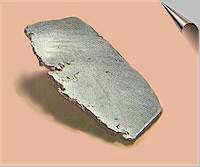
Scandium (Sc) is a silvery metal in group 3 of the periodic table. It is widely dispersed in minerals but seldom concentrated in readily recoverable deposits. Its water-treatment relevance is mainly in specialised industrial separation and resource recovery.
Properties · Uses · Health and safety · Environment and water
| Atomic number | 21 |
|---|---|
| Standard atomic weight | 44.955907(4) |
| Electronegativity (Pauling scale) | 1.36 |
| Density at 20 °C | Approximately 2.99 g cm−3 |
| Melting point | 1541 °C |
| Boiling point | 2836 °C |
| Non-bonded atomic radius | 0.215 nm |
| Common oxidation state | +3 |
| Stable isotope | 45Sc |
| Electron configuration | [Ar] 3d1 4s2 |
| First ionisation energy | 633.088 kJ mol−1 |
| Second ionisation energy | 1234.99 kJ mol−1 |
| Third ionisation energy | 2388.655 kJ mol−1 |
| Discovery | Lars Fredrik Nilson, 1879 |
Property sources: Royal Society of Chemistry and CIAAW. Standard atomic weight is dimensionless; the corresponding molar mass is approximately 44.955907 g mol−1. Parentheses express uncertainty in the final digits.
Properties and occurrence of scandium
Scandium was discovered in 1879 by Lars Fredrik Nilson. Its name derives from Scandia, the Latin name for Scandinavia. Its identification supported Mendeleev's earlier prediction of an element he called eka-boron.
Natural scandium is monoisotopic, consisting of stable 45Sc. Radioactive scandium isotopes also exist, so one stable isotope does not mean that only one isotope is known. The common oxidation state in compounds is +3.
Scandium occurs in trace amounts in many minerals, including some nickel- and titanium-bearing resources, and can be present in processing residues. USGS describes its supply as mainly a by-product of other processing streams. Availability therefore depends on the host material and on economical separation, rather than crustal abundance alone.
Uses of scandium
Important applications include aluminium–scandium alloys and scandium-containing materials used in solid oxide fuel cells. Alloys can benefit from changes in grain structure and mechanical properties; performance depends on composition and processing.
Scandium iodide is used in certain metal-halide lamps. Radioisotopes such as 46Sc have specialised tracer applications. These uses involve different chemical forms and, for radioisotopes, separate radiation-protection requirements.
Health effects and safe handling
Scandium has no known essential biological role. Toxicological information is limited for many scandium materials, and risk assessment must consider the specific compound, physical form, exposure route and concentration. A lack of data should not be treated as proof that a material is harmless.
Metal, powder, salts and radioisotopes require different assessments. Scandium powder can be flammable, and operations that generate dust or fumes need suitable exposure controls. Consult the current safety data sheet for the exact product and form being handled.
Use appropriate containment, ventilation, hygiene and protective equipment for the task. Exposure incidents should be assessed by a medical or occupational-health professional using the product information. Industrial scandium products should not be used as nutritional supplements.
Scandium in the environment and water
Scandium-bearing minerals and industrial residues can be sources of scandium in aqueous processing streams. Dissolved, colloidal and particle-associated scandium can behave differently. Acidity, complexing substances and other metals affect separation; a single total-metal concentration is not enough to select a treatment process.
Environmental assessment should consider the entire stream, including acidity, salinity, suspended solids and co-contaminants. Recovering scandium does not automatically make the remaining water suitable for discharge or reuse. Avoid extrapolating a result for one compound or laboratory solution to every receiving environment.
Industrial treatment and resource recovery
Scandium separation has been investigated in acidic nickel-processing solutions, copper-leach raffinate and other mineral-processing streams. These applications combine water treatment with recovery of a valuable metal. Relevant approaches include:
- Selective ion exchange or adsorption: specialised media capture scandium from solution. Published work with chelating resins shows that iron(III) can behave similarly to scandium, so selectivity, capacity and elution must be established for the actual feed.
- Controlled precipitation: changing chemical conditions, including pH, can concentrate scandium in a solid phase. Other metals may precipitate at the same time, and the recovered solids can require further purification.
- Solvent extraction: some hydrometallurgical flowsheets use an extractant-containing organic phase to separate metals. Further recovery steps and management of solvents and aqueous residuals are part of the process.
Research results are specific to the tested feed and operating conditions; they are not universal removal guarantees. A conventional hardness softener should not be assumed to provide selective scandium recovery.
Assessing a scandium-bearing water stream
Establish the treatment objective first: contaminant reduction, discharge compliance, water reuse or metal recovery. Use an analytical method with suitable sensitivity and distinguish dissolved from particle-associated material where that distinction affects design. Assess pH, competing metals and relevant complexing agents alongside scandium.
Bench or pilot testing can establish whether a process achieves the required separation and what residual streams it creates. Spent media, eluates, precipitates and other concentrates need appropriate management. Drinking-water decisions should use applicable local requirements and a competent health-risk assessment.
Explore the water treatment glossary for explanations of ion exchange, adsorption, precipitation, concentrate and other process terms.
Scandium page last reviewed: by Lenntech.
Back to the periodic table of elements.
Sources and further reading
- RSC: scandium properties, applications and history.
- CIAAW: scandium atomic weight and isotope composition.
- USGS: Mineral Commodity Summaries 2026 — scandium (PDF).
- MilliporeSigma: safety data sheet for scandium powder.
- Thermo Fisher Scientific: scandium(III) carbonate safety data sheet.
- Original research: scandium recovery from sulfuric-acid solutions using ion exchange.
- Original research: scandium recovery from copper-leach raffinate.
- Original research: scandium separation from nickel-laterite processing streams.