

Protactinium - Pa
Protactinium (Pa)
Protactinium is a rare, radioactive actinide. Trace quantities occur naturally in uranium ores as part of radioactive decay series; most protactinium of practical interest is handled in specialised research settings.
| Atomic number | 91 |
|---|---|
| Representative isotope mass number | [231] (representative isotope mass number) |
| Electron configuration | [Rn] 5f2 6d1 7s2 |
| Density | 15.4 (reported) g/cm3 |
| Melting point | 1572 (estimated) °C |
| Boiling point | about 4000 (estimated) °C |
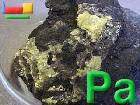
Uses and applications
Protactinium has few practical applications outside scientific research. Its rarity, radioactivity, and the difficulty of isolating it limit its use.
Protactinium and water management
Protactinium is not a water-treatment reagent. If it is present in a process or waste stream, it calls for radionuclide-specific characterisation and controls; ordinary dissolved-metal treatment alone does not establish radiological safety.
Occurrence and environmental context
Protactinium is an actinide, and its occurrence and environmental behaviour depend on isotope, chemical form, and source. Natural geology, mineral processing, and nuclear-related activities can each affect whether an actinide is present in a water or waste stream. Monitoring should distinguish chemical concentration from radioactive activity where relevant.
Health and safety
Protactinium requires careful handling because of its radioactive properties; for some elements, chemical toxicity is also relevant. Exposure depends on isotope, activity, chemical form, and route. Follow applicable radiation-protection procedures and substance-specific safety information.
Back to the periodic table of elements
Sources and further reading
Element page last reviewed: 24 October 2026 by Lenntech.