

Germanium - Ge
Germanium (Ge) is a metalloid used in optical and electronic technologies. This guide distinguishes the solid element from its compounds, explains relevant health concerns and introduces considerations for germanium-bearing water streams.
Chemical properties · Uses and occurrence · Health effects · Environmental effects · Water and treatment
Chemical properties of germanium
| Symbol / atomic number | Ge / 32 |
|---|---|
| Group / period / block | 14 / 4 / p |
| Standard atomic weight | 72.630(8) |
| Electron configuration | [Ar] 3d10 4s2 4p2 |
| Common oxidation state | +4 |
| Density (near room temperature) | 5.3234 g cm−3 |
| Melting point | 938.25 °C |
| Boiling point | 2833 °C |
| Electronegativity (Pauling) | 2.01 |
| Non-bonded atomic radius | 0.211 nm |
| Covalent radius | 0.120 nm |
| First ionisation energy | 762.2 kJ mol−1 |
| Naturally occurring isotopes | 70Ge, 72Ge, 73Ge, 74Ge, 76Ge |
| Discovery | Clemens Winkler, 1886 |
| CAS registry number | 7440-56-4 |
Atomic weight follows CIAAW; parentheses indicate uncertainty in the final digits. Physical properties follow the Royal Society of Chemistry. Atomic radii depend on their definition.
Uses, occurrence and history
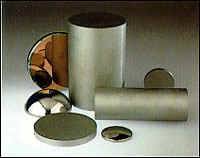
Germanium is a hard, brittle, greyish-white metalloid and semiconductor. It belongs to group 14, together with silicon, tin and lead. Its diamond-type crystal structure and optical properties are important to its applications.
Germanium and its compounds are used in fibre-optic communications, infrared optics and night-vision systems, semiconductors, solar cells and polymerisation catalysts. High-purity germanium is also used in radiation detectors. Although germanium was central to early transistors, it is misleading to describe ordinary modern integrated circuits as being made mainly from germanium.
Semiconductor behaviour can be modified by controlled addition of dopants, including arsenic and gallium. The solid element, germanium dioxide and the gas germane have different properties and uses.
Germanium is mainly recovered as a by-product of zinc processing and can also be recovered from certain coal-derived materials. It occurs in minerals including argyrodite and germanite. Clemens Winkler identified it in argyrodite in 1886, confirming another of Mendeleev's predicted gaps in the periodic table.
Health effects of germanium
Germanium has no established essential nutritional role in humans. Germanium-containing supplements have been associated with serious kidney injury, including renal failure, after prolonged intake. Proposed benefits such as improved oxygen supply or protection against disease do not establish clinical effectiveness or safety. Ordinary trace dietary exposure should not be equated with taking concentrated germanium products.
Germane, also called germanium tetrahydride (GeH4), is a separate chemical substance: a highly hazardous, flammable gas that may ignite spontaneously in air. Inhalation can affect the blood, kidneys and central nervous system. These gas hazards should not be presented as the properties of a piece of solid germanium.
Industrial assessment should identify the particular germanium compound, exposure route and process conditions. Germane handling requires specialist gas controls; dust or process-liquid exposure calls for controls appropriate to those materials.
Environmental effects of germanium
Germanium is naturally dispersed in rocks and mineral deposits. Mining, metal processing and manufacturing can produce germanium-bearing wastes. Environmental behaviour depends on the chemical form and water chemistry; classifying the material simply as a “heavy metal” does not establish its ecological effects.
Laboratory studies show that dissolved germanium can adsorb onto goethite, an iron oxyhydroxide, and be incorporated during iron hydroxide precipitation. These interactions help explain how germanium can partition between water and solid material. Their extent depends on conditions such as pH and the available mineral surface.
Germanium in water and treatment
Investigations of a germanium-bearing water stream should distinguish dissolved germanium from particles and identify other contaminants from the process. Total concentration, pH and the composition of the water provide the starting point for a treatment assessment.
Iron-based adsorption or coprecipitation may be evaluated through treatability tests, drawing on the laboratory evidence for germanium interactions with iron hydroxides. Such research does not establish a universal full-scale removal efficiency. Tests should use representative water, assess residual dissolved germanium and confirm how the separated solids will be managed.
For concentrated manufacturing streams, assess recovery and reuse alongside effluent treatment. Further background: heavy-metal removal processes.
Germanium page last reviewed: by Lenntech.
Back to the periodic table of elements.
Sources and further reading
- RSC: germanium properties, applications and history
- CIAAW: germanium atomic weight and isotopes
- USGS: germanium uses, occurrence and supply
- Geoscience Australia: germanium applications and occurrence
- Health Canada: assessment including germanium exposure and kidney toxicity
- NIOSH: germane (germanium tetrahydride)
- Pokrovsky and colleagues: germanium adsorption and coprecipitation with iron hydroxide