

Bismuth - Bi
Bismuth — chemical properties and water context
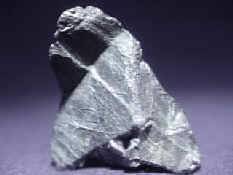
Bismuth is a brittle, silvery metal with a pinkish sheen. It is often recovered as a by-product of refining other metals and has relatively few direct applications in water treatment.
| Atomic number | 83 |
|---|---|
| Standard atomic weight | 208.98040 g/mol |
| Density | 9.79 g/cm3 |
| Melting point | 271.406 °C |
| Boiling point | 1564 °C |
| Electron configuration | [Xe] 4f14 5d10 6s2 6p3 |
Chemical properties
Bismuth is in Group 15 and Period 6. It most commonly forms compounds in the +3 oxidation state. The solubility of bismuth compounds varies; some hydrolyse or form low-solubility solids in water. Elemental bismuth should not be treated as chemically equivalent to dissolved bismuth salts or particles.
Uses and applications
Bismuth is used in selected alloys, pigments, cosmetics and medicines. It can be recovered during processing of lead, copper, tin, silver and gold ores. Its compounds have specific uses, so environmental or occupational assessment should identify the compound involved.
Bismuth in process water
Bismuth is not generally a routine drinking-water treatment target. If it occurs in a metal-refining or manufacturing stream, characterize its dissolved and particulate fractions, pH and co-occurring metals. The appropriate treatment depends on the actual chemical form and process matrix; confirm separation and residual handling through site-specific testing.
Environmental and health context
Bismuth is sometimes described as having low toxicity compared with some neighbouring heavy metals, but that should not be generalized to every bismuth compound or exposure route. Assess the specific compound, concentration and applicable waste or water-quality requirements.
Back to the periodic table of elements
Sources and further reading
Bismuth page last reviewed: by Lenntech.