

Iron - Fe
Iron (Fe) is a widely used metal and an essential nutrient. It is the main constituent of steel and occurs naturally in rocks, soils and water. For water-treatment engineers, iron is both a substance to control and a useful component of coagulants and treatment media.
Chemical properties · Applications · Iron in water and treatment · Health effects · Environmental effects
| Symbol / atomic number | Fe / 26 |
|---|---|
| Standard atomic weight | 55.845(2) |
| Group / period / block | 8 / 4 / d |
| Electron configuration | [Ar] 3d6 4s2 |
| Electronegativity (Pauling) | 1.83 |
| Density | 7.87 g cm−3 at room temperature |
| Melting point | 1538 °C |
| Boiling point | 2861 °C |
| Covalent radius | 0.124 nm |
| Non-bonded radius | 0.204 nm |
| Common oxidation states in compounds | +2 and +3 |
| Naturally occurring isotopes | 54Fe, 56Fe, 57Fe and 58Fe |
| First ionisation energy | 762.5 kJ mol−1 |
| Discovery | Known since antiquity |
Physical and atomic data follow the Royal Society of Chemistry; atomic weight and natural isotopes follow CIAAW. Atomic weight is dimensionless; the corresponding molar mass is approximately 55.845 g mol−1. The number in parentheses indicates uncertainty in the final digit. Ionic radii depend on oxidation state, coordination and spin state.
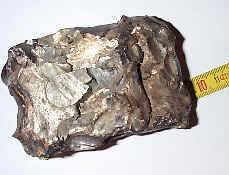
Iron: properties and occurrence
Iron is a grey, workable metal that corrodes in the presence of moisture and oxygen. Its common compound forms include iron(II), also called ferrous iron, and iron(III), also called ferric iron. These oxidation states have different behaviour in water.
Important iron minerals include hematite (Fe2O3) and magnetite (Fe3O4). Taconite is an iron-bearing rock rather than a single mineral. Iron has been used since ancient times and has no single recorded discoverer.
Applications of iron
Steel and cast iron are used in structures, vehicles, machinery, pipes, valves and many other products. Their properties depend on composition, processing and heat treatment. Iron oxides are compounds, distinct from these metallic materials. Iron also serves as a catalyst in major chemical processes, including ammonia production.
In water and wastewater treatment, iron salts can support coagulation and phosphorus removal. Their purpose is to form or assist separable solids; dosing and solids separation are both important.
Iron in water and water treatment
See Iron in water (Fe + H2O), iron removal by physical and chemical processes and the iron and manganese treatment overview.
Dissolved, particulate and complexed iron
Low-oxygen groundwater can contain dissolved Fe(II). On contact with oxygen or another oxidant, it can form Fe(III)-bearing solids. Iron can also occur as colloids or in association with organic substances. These forms do not all respond equally to treatment.
Rusty colour, staining, sediment and metallic taste are common operational concerns. Corroding pipes and accumulated distribution-system deposits can also contribute iron. Total-iron analysis, with a dissolved fraction where useful, helps identify the problem; appearance alone cannot establish drinking-water safety.
Removal options
- Oxidation and filtration: aeration or a suitable chemical oxidant converts dissolved iron into particles for removal. Contact time, pH and temperature affect the reaction.
- Coagulation and clarification: can assist separation of fine or colloidal iron before filtration.
- Adsorptive or biological filtration: appropriate media surfaces or biological activity can support iron removal.
- Ion exchange: can remove dissolved Fe(II), but precipitation within the bed can foul the resin.
Process testing should consider iron form, organic matter, alkalinity and co-occurring manganese. Oxidising iron is only one step: the resulting solids must be removed. For process-water systems, the required residual depends on downstream equipment and product quality.
Iron added as a treatment chemical
Ferric chloride and other iron salts are used as coagulants and for chemical phosphorus removal. Jar tests and process monitoring help establish the dose. Treatment also produces iron-bearing sludge, and residual iron must be controlled.
Sequestration can help keep iron in solution and limit staining, but does not remove the element. It should be distinguished from removal processes.
Health effects of iron
Iron is part of haemoglobin, which carries oxygen in the blood, and supports other essential functions. Foods supply haem and non-haem iron; absorption depends on the form and the rest of the diet. Deficiency can progress to iron-deficiency anaemia.
Requirements vary by age, sex and life stage. For example, US recommended dietary allowances for adults aged 19–50 are 8 mg/day for men and 18 mg/day for women, increasing to 27 mg/day during pregnancy. These are nutritional reference values, not drinking-water limits or treatment targets. See recommended daily intake of vitamins and minerals for general context.
Excess iron can be harmful, including from high-dose supplements or iron-overload disorders. Accidental ingestion of iron supplements can cause serious poisoning, especially in children. A nutrient's essential role does not imply that any dose is safe.
Occupational inhalation of iron oxide dust or fumes can cause siderosis, a form of pneumoconiosis. Assessment of welding or metalworking exposure must also consider the other substances present. Controls should follow the actual process and material safety information.
Drinking-water appearance and health
EPA's secondary standard for iron is 0.3 mg/L, addressing effects such as colour, taste, sediment and staining. It is not a health-based threshold and is not federally enforceable as a secondary standard; states may adopt requirements. Local drinking-water rules and process specifications should be checked separately.
Environmental effects of iron
Iron cycles naturally between dissolved forms, mineral phases and particles. Oxygen availability, pH and organic matter influence its movement. Corrosion, mining, industrial discharges and treatment chemicals can add to local iron loads.
Iron deposits can accumulate other contaminants, so iron-bearing solids should be assessed in the context of their source and composition. Co-occurring metals or other contaminants can affect the suitability of treatment, reuse and disposal options.
Water treatment transfers iron into sludge, backwash water, spent media or regenerant. Managing these streams and controlling residual iron are part of the overall treatment process.
Iron page last reviewed: by Lenntech.
Back to the periodic table of elements.
Sources and further reading
- RSC: iron properties and applications.
- CIAAW: iron atomic weight and isotopes.
- USGS: taconite and iron-ore processing.
- NIH: iron nutrition, deficiency and excessive intake.
- NIOSH: iron oxide dust and fume.
- Health Canada: iron in drinking water — chemistry, treatment and distribution.
- EPA: secondary drinking-water standards.
- EPA: nutrient control and iron-salt phosphorus removal (PDF).
- US Forest Service: iron and manganese control (PDF).