

Arsenic - As
Arsenic (As) occurs naturally in rocks, soils and water. Its inorganic forms are a major drinking-water concern. Understanding the chemical form, source and exposure is essential when assessing health risks and choosing treatment.
Chemical properties · Uses and occurrence · Health effects · Environmental effects · Water and treatment
Chemical properties of arsenic
| Symbol / atomic number | As / 33 |
|---|---|
| Group / period / block | 15 / 4 / p |
| Standard atomic weight | 74.921595(6) |
| Electron configuration | [Ar] 3d10 4s2 4p3 |
| Common oxidation states | −3, +3, +5 |
| Density (grey arsenic, near room temperature) | 5.75 g cm−3 |
| Phase change at atmospheric pressure | Sublimes at approximately 616 °C |
| Electronegativity (Pauling) | 2.18 |
| Non-bonded atomic radius | 0.185 nm |
| Covalent radius | 0.120 nm |
| First ionisation energy | 944.5 kJ mol−1 |
| Naturally occurring stable isotope | 75As |
| History | Compounds known in antiquity; isolation traditionally attributed to Albertus Magnus, around 1250 |
| CAS registry number | 7440-38-2 |
Atomic weight follows CIAAW; parentheses indicate uncertainty in the final digits. Physical properties follow the Royal Society of Chemistry. Atomic radii depend on their definition.
Uses, occurrence and chemical forms
Arsenic is a metalloid. Its stable grey form is a brittle, silver-grey solid; other allotropes include yellow and black arsenic. At atmospheric pressure it sublimes, changing directly from solid to vapour. A melting point measured under elevated pressure should not be confused with an ordinary atmospheric-pressure melting point.
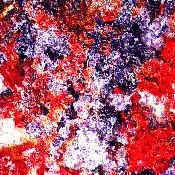
Arsenic occurs in minerals such as arsenopyrite, realgar and orpiment, and can be associated with copper, lead and zinc ores. Uses include compound semiconductors such as gallium arsenide and some specialised industrial processes. Historical uses in pigments, pesticides and wood preservatives have left contamination at some sites.
Arsenic in water is commonly present as inorganic arsenite, As(III), or arsenate, As(V). These labels describe oxidation states, not simply free As3+ and As5+ ions. Organic arsenic compounds contain carbon and vary substantially in toxicity.
Health effects of arsenic
Arsenic and inorganic arsenic compounds are established human carcinogens. Long-term exposure through contaminated drinking water and food can cause skin lesions and increases the risk of cancers of the skin, bladder and lung. Exposure has also been associated with cardiovascular disease, developmental effects and other health problems. There is no established human nutritional requirement for arsenic.
Acute poisoning can cause vomiting, abdominal pain and diarrhoea, and severe exposure can be fatal. Suspected acute poisoning requires urgent medical assessment. Chronic arsenic poisoning is also known as arsenicosis; symptoms and severity depend on the amount and duration of exposure.
Many seafoods contain arsenobetaine, an organic form of relatively low toxicity. This does not mean that every organic arsenic compound is harmless. IARC classifies some methylated compounds, including dimethylarsinic acid and monomethylarsonic acid, as possibly carcinogenic to humans. Total arsenic in a food or biological sample therefore does not, by itself, identify the toxic forms present.
For drinking-water exposure, ingestion is the main concern. Routine skin contact with household water is generally a much smaller exposure route. Occupational dusts, fumes and arsenic-containing process chemicals require a separate exposure assessment.
Environmental effects and groundwater contamination
Arsenic is naturally present in the Earth's crust. Weathering, volcanic activity, mining, smelting and historical chemical uses can introduce or redistribute it in soils, sediments and water. Elevated groundwater arsenic can arise from natural geology without a nearby industrial source.
Its mobility depends on pH, oxidation–reduction conditions and interactions with minerals. Arsenic can bind to iron oxides, but changes in conditions can release it: for example, dissolution of iron oxides under reducing conditions can mobilise associated arsenic. It is therefore incorrect to assume that natural mobility prevents local hotspots.
Arsenic does not disappear through ordinary biological degradation, although its chemical form can change. It can be taken up by plants and aquatic organisms. Ecological effects depend on the species present, exposure and local conditions; uptake does not mean that every contaminated food chain will cause fatal poisoning.
Arsenic in drinking water and treatment
WHO's provisional guideline value for arsenic in drinking water is 10 µg/L (0.010 mg/L). This is a guideline, not a universal legal limit or a guarantee of zero risk. Applicable national and local standards must be checked, and concentrations should be kept as low as reasonably practicable. Arsenic cannot reliably be identified by the taste or smell of water; laboratory testing is needed.
For process selection, determine total arsenic and assess As(III)/As(V), pH, iron, phosphate, silica and other relevant constituents. At typical drinking-water pH, much of As(III) is uncharged, while As(V) occurs mainly as negatively charged species. As(III) is generally more difficult to remove with several common treatment processes.
Suitable treatment can include:
- Oxidation followed by removal: converting As(III) to As(V) can improve subsequent treatment. Oxidation alone changes its form and does not remove total arsenic.
- Iron-based adsorption: arsenic binds to a suitable medium; contact time, competing substances and breakthrough affect performance.
- Coagulation and filtration: arsenic is captured with metal hydroxide flocs, which must then be separated.
- Anion exchange: suitable resins remove arsenate; competing anions and regeneration require consideration.
- Reverse osmosis: membrane treatment can reduce arsenic, with performance dependent on arsenic form, water chemistry and the selected system.
Validate treatment with representative water and monitor the treated supply. Spent media, sludge and concentrate retain the removed arsenic and require appropriate handling. Boiling does not remove arsenic and may concentrate it as water evaporates. Ordinary softeners or sediment filters should not be assumed to remove dissolved arsenic.
Further Lenntech information: Arsenic in water (As + H2O), arsenic in water: background and removal, and arsenicosis.
Arsenic page last reviewed: by Lenntech.
Back to the periodic table of elements.
Sources and further reading
- RSC: arsenic properties, applications and history
- CIAAW: arsenic atomic weight and isotopes
- WHO: arsenic exposure, health effects and drinking-water guideline
- ATSDR: arsenic forms, exposure and clinical assessment
- IARC: arsenic and inorganic and organic arsenic compounds
- National Research Council: arsenic essentiality and therapeutic uses
- USGS: redox conditions and groundwater contaminants
- EPA: arsenic speciation and treatment technologies (PDF)
- Health Canada: arsenic treatment considerations
- NIEHS: testing for arsenic and limits of boiling