
Water supply in small communities By Lara Fabrizi
|
Introduction |
| ||||||||||||||||||||||||||||||||||||||||||||||||||||||||||||||||||||||||||||||||||||||||||||||||||||||||||||||||
|
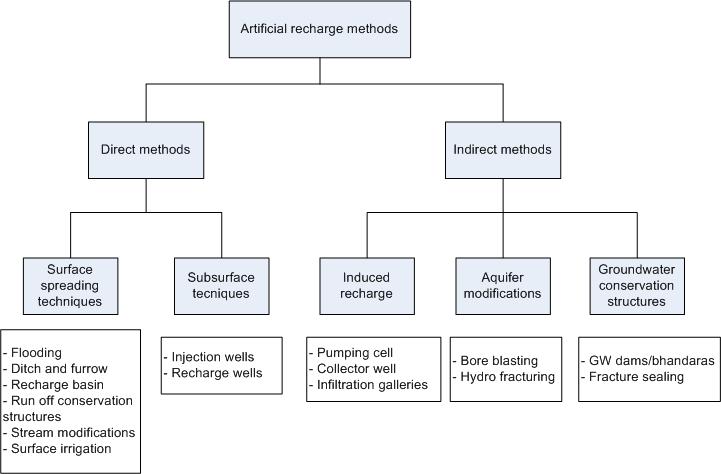
IntroductionAs everybody knows water is essential for life of man, plants and animals. From the beginning of civilization humans have settled close to water sources. Unfortunately in many countries water is scarce or contaminated. Providing a better water supply can significantly improve the quality of life and is a source of, and the condition for, a socio-economic development. Some diseases in poor or developing countries are related to insufficient or unsafe water, together with local factors as climate, density of population, local practices etc. Click here for more information on waterborne diseases. To control these diseases a sufficient amount of safe drinking water is important. This implies not only improve the design and planning of water supplies, but also sanitation and hygiene behaviour. This can be obtained raising the demand and introducing sanitation programs. Improvements in water services can be made by outsiders (politicians, planners, engineers) but they have to operate in partnership with the community. Better water distribution allows avoiding the presence of stagnant water or wastewater, where insects carrying the above mentioned diseased can be present. Better water distribution can also bring no need for women or children for carrying water. This allows more free time to dedicate to better activities, as childcare, animal rising or vegetable gardening. In developing countries communities that want to establish and run an improved water supply vary greatly. It is important not to overlook the different nature and history of small communities. There is no standard solution, but different solutions for different communities. Planning and making decisions on the pros and cons, the implications of each option and choosing the best option considering the kind of community is crucial for the success of the project. During the last two decades it has been recognized that water supply improvements alone do not bring optimum health and development impact in developing countries. Other complementary activities needed are better sanitation provisions, changes in hygiene provisions and linkages with other livelihood inputs. Community participation in water projects is certainly very important. There is need of inclusive approach avoiding marginalization of the poor. This can be gained through programs, that are series of integrated activities directed to the establishment and continue functioning and use of water supply services. The challenge of a program is social, organizational and administrative. It is important that agencies and partners work together with communities group and users and plan their activities on a mutual agreement. To meet long-term health benefits of environmental engineering it is important to enhance the demand for better water use, sanitation and hygiene. The new systems have to be and remain better than the alternatives in terms of economic and social costs and benefits. Program teams have to seek the values of local experiences and viewpoints to understand what local people really want and can use and sustain. The community water supply designs should be holistic, so to meet all the basics needs of people, expandable, in view of community growth with access to the community improved water supply, and upgradeable, in view of a socio-economic growth and a need of later upgrading. Standardization, even if often more cost-effective, is not always a good choice because it can imply competition between different brands, poor incentive for the involvement in the private sector and the technology may not respond to the needs and preference of the users. 1.1 FundingSmall communities often find it difficult to obtain the capital to construct improved water supplies. Usually the central or provincial government organize and finance multi-communities programs and the fund may be partly revolving, using repayments or earlier loans. The communities candidates for a loan or a grant, or a combination of both, are asked to submit a pre-proposal to the program. Communities are not homogeneous entities, they often consist in the middle classes and the poor, marginalized groups. To help and support all the groups it is important to identify all of them at the very start of the project and to ensure their equal participation. All the groups should participate to the formulation of the preliminary plans to the program level. Projects must be based on the existing water supply already available for the community. Once a proposal has been selected and resources have been assigned, the next stage is detailed planning and design. When each community has developed its own detailed plan, through the decision making process at a program level it is decided which plans are financed though a loan, a grant or a combination of the two. The project funds are then transmitted in instalments to the special project bank account that each community has established 1.2 MaintenanceThe staff in charge of management and maintenance of the water supply varies depending on the size of the project. For small water supply systems, selected technicians and the management committee are trained during and after the construction. For larger and multi-village systems with a community base management staff are generally professionally trained and hired by the community water board. 1.3 SupportAll team members must be conscious of gender and poverty conditions, and they should be able to overcome or reduce inequalities between women and men and rich and poor. The team needs to be able to combine specific knowledge, expertise and skills of local people with those of the team itself. Technical options will have socio, cultural and organizational implications that the technical staff must take into account. On the other end social staff needs to have a basic understanding of the technical implications of community choices. At the support level, technical-social teams from the private sector can be chosen by a program to support work with communities. For technical work the community may decide to use their own procurements, use their own artisans and/or hire contractors, who will be guided by the support program. At the higher level, managers and other superiors should support and reward the ability of the personnel to integrate local people, the quality of process work and the nature of long-term results. 2. Small communities water services in Central and Eastern European countries Ten countries are usually referred to as Central and Eastern European countries: Bulgaria, Check Republic, Estonia, Hungary, Latvia, Lithuania, Poland, Romania, Slovakia and Slovenia. Their geographical location, their political history after the WWII and their current socio-economical changes in the same direction link them to each other. The fraction of rural population is similar in 8 out of the 10 countries (30-38%). It is higher in Romania (40%) and Slovenia (50%). Check Republic, Poland and Slovakia are the countries with the lowest water availability per inhabitant (less than 1600 m3 per capita per year). The water usage per inhabitant varies greatly: between about 93 m3 per capita per year in Latvia and 1554 in Bulgaria. With respect to the availability of water and wastewater services some statistics have shown that in rural areas populations of small municipalities are a in worst situation than town population as far as access to water supply and sewage disposal services is concerned. After the WWII until 1990 these services were provided by the state and managed centrally. After 1990 water supplies and sewage disposal systems became the property of municipalities and communities, which operated trough different institutional forms. Nowadays the situation is still the same: the communities do not want to sell these assets and participation to the private sector in that field is very limited. 2.1 DevelopmentsThe aim of the CEETAC (Central and Eastern Europe Technical Advisory Committee) is to create in two to three decades sufficient, safe, clean and healthy water and people living in stable societies in the CEE region. This requires complex activities of water resource management. It is important to develop the water supply networks, especially in small municipalities and rural areas, and at the same time to improve the quality of the supplied water. This has to be accompanied by an adequate development of sewage disposal and water treatment systems. The main task is to ensure that in future the water tariffs make it possible to recover the costs of water services. In meeting these considerable challenges the CEE countries has the advantage to have qualified professionals able to design, build and maintain water supply infrastructure. For CEE countries, the approaches and technologies are traditionally similar to the solutions used in Western Europe and drinking water regulations are based on WHO (World Health Organisation) guidelines. As all the countries intend to join the EU, new regulations on drinking water are being implemented in line with the EU Directive on drinking water. The availably of a clean and safe water supply is essential for public health. 3.1 Quantity (Water quantity FAQ)The amount of water a person needs each day depends on many factors. Climate, standard of living, hygiene awareness, and workload influence the human water consumption, that for normal functioning varies from 3 to 10 litres of water per day. Part of this water may be derived from food. A factor influencing water consumption is also its availability and distribution methods. The data for obtaining a first estimate of the water demand of a community is the number of households from and aerial survey, average size family, and studies on water supply systems for existing water communities. An alternative approach is to draw a social map of the community interviewing men and women in the community and taking into account the presence in that area of schools, hospitals etc. Another important factor that has to be taken into consideration is whether the water is or is not used for irrigation, even if in general priority is given to domestic water supply. It is often very difficult to estimate the future water demand of a community accurately. The water usage figures should also include about 20% allowable for further losses and wastage. Individual house connections provide a higher level of service than a tap places in the house yard. In the selection of the type of the type of service, finance is usually an important facto together with the location and size of the community. As a rough estimation, the water supply for a centralised community settlement would need to have a capacity of 0.3 LT/sec per 1000 people when the water is mainly distributed by means of public standpipes and about 1.5 LT/sec per 1000 people or more when yard and house connections predominate. 3.2 Quality (Water quality FAQ)The basic requirements for drinking water are that it should be clear (low turbidity), not salty, free from offensive taste or smell, free from chemicals that may cause corrosion or encrustation, free of heavy metals, with not excessive sodium, sulphate and nitrate but above all free from pathogenic organisms as bacteria and viruses which may cause disease. The WHO has published guidelines to help counties to set qualities standards with which domestic water supplies should comply. These standards are often considered as long-term goals rather than rigid standards. High turbidity implies the presence of particles or colloidal material, which provide adsorption sites for chemicals that might be harmful. Colour is often due to natural organics or dissolved inorganic compound such as iron and manganese. Organic colour when disinfected with chlorine will produce harmful chlorinated organics, iron or manganese in high quantities in drinking water, making it not healthy to drink. Low pH can increase corrosion of pipe works, while a too high pH can lead to calcium carbonate deposition and encrustations. Some chemicals as ammonia, calcium, chloride, fluoride, magnesium, nitrates, sodium, potassium, sulphate and zinc can be present in large quantities. Excessive levels have a harmful effect on health, but in many cases limited quantities are necessary for the maintenance of living organisms and low concentrations are therefore desirable in water supplies. In assessing an existing or potential water supply, efforts should be made to take suitable samples of the water and to have them analysed as fully as possible. 4. Integrated water resource management (IWRM) IWRM deals with the management of sustainable water resource taking into account the inexorable increase in global population and the use of the water for economic purpose. Water use should be seen as a pyramid, with domestic use representing the smallest, but most important amount at the pyramid’s apex. IWRM was developed as a philosophical structure to bring together the different sectors. It is important because helps to avoid competition between users in those countries where the water resources are scarce. Water is a flux, not a given resource located at some fixed place in space and time. It is a finite but renewable resource and the rate at which water is used in particular place in comparison with the rate at which is replenished that determines whether there is a scarcity (drought) or a surplus. If water is used in one location, this can affect its abundance and the ability of people to use it in another location. Large-scale examples of water resources misuse has increased the political and scientific attention on improved IWMR as a means of conflict resolution. At the heart of IWRM lie the so-called Dublin principles, first set out in 1992 during the Dublin National Conference on Water and Environment and then ratified in through incision in Chapter 18 of the 1992 UN Conference of Environment and Development in Rio de Janeiro. These principles state: 1. Fresh water is a finite and vulnerable resource, essential to sustain life, development and the environment. 2. Water development and management should be based on a participatory approach, involving users, planners and policy makers at all levels 3. Women play a central part in provision, management and safeguarding of water. 4. Water has an economic value in all its competing uses and should be recognised as an economic good. IWRM is part of a wider effort to manage the world resources in a sustainable manner, so it attempts to work within a framework of the whole hydrological cycle. As such, IWRM includes all the different phases of the water flow. Before considering how to implement IWRM for community based and sanitation projects, we will consider briefly the reasons for doing so. Domestic water use is often a relatively minor part of the total water demand. It is anyway essential to have a drinking water reserve: an amount of water held in storage for domestic use, which is not allowed to be used for non-domestic purposes. Both estimating and safeguarding a reserve is extremely complex but essential. The ideal situation is found in countries where IWRM is fully mainstreamed in national strategy and active demand is managed at local levels. There are 6 key principles that can ensure that the IWMR principles are met. They are listed and briefly explained here below: 1) Catchment management and source protection are essential to ensuring sustainability of supply: the water resources should be adequate for current and future domestic use, reliable through the years and the community should own them. If it is not so, action will need to be taken to ensure an adequate supply. This may include involvement of the community in water management; development of a framework for deciding on allocation issues, where a common source is shared by more communities; effective monitoring, to know how much water is available and when. 2) Water use efficiency and demand management must be addressed to minimise the need for new source development: it is necessary, in collaboration with the community, to identify all the uses to which water is put and all the potential actions that can limit excess water consumption within these various uses. An important element of demand management is water reuse and multiple uses of water. 3) Multiple uses of water should be acknowledged and encouraged: communities should differentiate between water for domestic use and water for non-domestic purposes (irrigation, food production, laundry services, domestic livestock). It is important to differentiate the ways in which water is used within people’s livelihoods. A water system should be design that meets as many of these needs as possible. 4) All stakeholders should be involved in decision-making, but particular emphasis should be put on the active participation of users: IWRM decision-making is complex. Where a national IWRM framework exists, the main activity is ensuring representation of water committee on water management bodies al local/regional levels. Where there is no national framework the project may need to develop new institutions to deal with the management of the water. This will be a complicated process with the need to involve all users groups within a community. 5) Gender and equity issues must be addressed throughout the project cycle: burdens and benefits should be equally shared between men and women, poor and rich people. This require particular efforts to enable women and poor people to claim their right in decision-making. 6) Water provision should be priced so as to discourage wasteful use, while ensuring the right to access of a necessary minimum for all: money paid for water can be used for cost recovery and for operation and maintenance, but the pricing should be intended only for ensure waste minimisation. Water pricing is a complex issue and it will not be discussed in more details here. These six principles can be used as the basis for an assessment of an individual projects’ success in achieving best IWRM practice. Each community must be dealt with in a manner tailored to its own social, economic and physical reality, including also the other sectors that may require water. Artificial recharge is the process by which the ground water reservoir is augmented at a rate exceeding natural replenishment. Community participation is essential at the following stages: during the planning basic parameters are explained to community representatives, to make them understand the options available with their advantages and disadvantages; at the implementation stage community men and women can take charge of the material transportation to site and of training execution and quality control. Men and women in the communities themselves can also carry out routine operation and maintenance. The community should than be involved in developing the local rules for new water resource management. Artificial recharge methods can be classified in two broad groups: direct methods and indirect methods. Direct methods are subdivided into surface spreading techniques and sub-surface techniques. Indirect methods adopt the technique of induced recharge (pumping wells, collector wells and infiltrating galleries). They require highly skilled manpower for aquifer modifications and groundwater conservation structures. The recharge methods are summarized in the following scheme:
The aquifer to be recharged should be unconfined and thick, the surface soil should be sufficiently permeable, free from clay lenses, groundwater levels in the freatic zone should be deep enough to accommodate the water table rise, the aquifer material should have moderate hydraulic conductivity. In selected areas where the hydrogeology favours recharging by spreading surplus surface water flooding techniques are very useful. In areas with irregular topography maximum water contact area for recharge water form the source stream or canal can be provided building ditches or furrows. Ditch can be used also for direct artificial recharge in shallow aquifers with a high infiltration rate. Artificial recharge basins are either excavated or enclosed by dykes. In alluvial areas multiple recharge basins are generally constructed parallel to the stream. To increase infiltration and spreading the flow over a wider area is it possible to modify a natural drainage channel. Modification methods are generally applied in alluvial areas. Surface irrigation tends often to flood the fields contributing to ground water recharge. Surface irrigation systems have thus caused an unintended recharge in many areas and groundwater capacity has increased. However, the use of pumping systems for lifting the groundwater for irrigation has caused substantial drops in water levels. To penetrate less permeable horizons making the aquifer directly accessible when freatic aquifers are not hydraulically connected to surface water, recharge pits and shaft can be built. Rainwater harvesting aims to conserve the surface run-off by collecting it in reservoirs, both surface and sub-surface. The methods have to be site-specific, the choice and effectiveness of a particular method is governed by local geology, hydrogeology, terrain conditions, total rainfall and intensity, etc. The rooftop harvesting consists in the collection of rainwater from roofs of buildings and collection in a groundwater reservoir for beneficial use in future. The recharge can take place through an abandoned dug well, an abandoned borehole, a recharge pit, a recharge trench a recharge borehole. Rainwater can be collected also through surface catchments, large-scale communal schemes that collect and store water running of a specific part of the local landscape. Water can also be stored by building dams, semi-circular or curved banks of earth, built mainly by manual labour, animal traction and light machines. Sub-surface barriers are used to retain seasonal sub-surface flows and facilitate the abstraction of water through wells and boreholes. To achieve this, an impermeable barrier is built across the riverbed from the surface down to an impermeable layer below. Its construction should start immediately after the main rainy season. The dam should be located where the riverbed is narrower and the sand layer becomes thinner. Another solution for storing rainwater is percolation tanks. They are artificially created surface water bodies that are submerging a land area with adequate permeability to facilitate sufficient percolation or impounded surface run-off to recharge the groundwater. The tank can be located either across small streams by creating low elevation check dams or in uncultivated land adjoining streams, by constructing a delivery canal connecting the tanks and the stream. Rainwater harvesting consist in capturing the rain where it falls or capturing and storing the runoff in farms, villages and towns. Measures should also be taken to keep the water clean. This technique was used widely for the provision of drinking water in Europe and Asia particularly in rural areas. Where piped water supplies have been provided, the importance of rainwater has a source has diminished. On some tropical islands rainwater continues to be the only source of domestic water supply. Rainwater harvesting should be considered as a source of domestic water in countries where rain comes in storms of considerable intensity. It is used in many different ways: in some parts of the world only a small storage capacity is required, in arid areas a sufficient large collection surface area and storage capacity will be required to provide enough water. Rainwater harvesting can consist of a collection surface, a storage tank, and guttering or channels to transport the water from one to the other. Sometimes it includes a first-flush system to divert the initial dirty water that contains roof debris built up during prolonged dry periods, filtration equipments and settling chambers. A wide variety of systems are available for treating water before, during and after storage. The level of sophistication also varies from extremely high-tech to very simple techniques. Filters are often use for filtering water entering a tank and use sand, stone, gravel or charcoal or a combination of these as filter material. The storage tank is usually the biggest capital investment element of a rainwater harvesting system for domestic water, it therefore require the most careful design to provide the best capacity with the lowest cost as possible. For larger storage volumes, tanks or cisterns constructed of brick or stone masonry are used most. When designing a water harvesting system the main calculation is to size the water tank, cistern or dam correctly to give adequate storage capacity. The storage requirements depend upon local rainfall data, collection surface, runoff coefficient, user numbers and consumption rates or water needs for productive use. The simplest method to calculate the required water volume is to use the following formula: V = (t x n x q) Where: V: volume of the tank Rainwater harvesting has a beneficial effect for family heath, because women and other drawers of water spend less time collecting water so to save time for other households tasks, water is available at the home yard, so the risk of accident for children and women is lower, and finally the use of more, clean and safe water has several health benefits. Contamination of water might arise from the roofing material itself or from substances that have accumulated on a roof or in a gutter. A common strategy is to divert to waste the first litres of runoff at the beginning of every rainfall. The main goal of watershed management that includes rainwater catchments is to hold the water where it falls as precipitation. Water becomes available for domestic and productive uses and this can significantly contribute to poverty alleviation in rural areas and small towns. The initial capital costs of rainwater harvesting may be high, but it yields benefits whose value may overcome the cost of the system. In view of the water and food crisis in both rural and urban areas, domestic rainwater harvesting systems might be included in all new public housing projects. Governments should also promote these systems in private housings. A spring can be defined as a place where a natural groundwater flow occurs. Spring water is usually fed by and aquifer or a water flow through fissured rock. Water is forced up flow to the surface where solid or clay layer block the underground flow and the water can easily be tapped where it emerges. The engineers can help to design the water supply system and the community members will have to look after it. The first step is the identification of the spring source. There are many types of different springs, classified according to the conditions under which water flows to them. The most important distinction is between gravity and artesian springs. Gravity springs occur in unconfined aquifers, where the ground surface dip below the water table or where an outcrop of impervious soil, prevents the downward flow of the groundwater and it forces it up to the surface. Artesian springs occur in confined aquifers: an overlaying impervious layer prevent it from rising to its free water table level. The artesian groundwater is then under pressure. Artesian springs are the sites where groundwater comes to the surface. Artesian springs usually have a higher yield than gravity springs and have the advantage that water is protected against contamination by the impervious layer, so that it is usually bacteriologically free. The second important step is sot carry out a feasibility study of a spring source, to provide the information and data to design a water supply system. Local people are important sources of information and should be involved in decisions about the feasibility of developing a particular spring. A proper feasibility study of a spring source should last at least one year. Aspects to be considered are:
The final step is the design and construction of a spring-fed water supply for a specific location. The major components in the design of the system include the actual spring collection area, where water from the aquifer is actually being channelled to a single discharge point, the supply pipe, the collection chamber and the outlet to a storage tank. The design must be appropriate to the specific local conditions, prevent pathogenic contamination and pollution, have no adverse environmental impact and be reliable in terms of quantity. Human and animal power is often the most readily available power for pumping water for small communities in developing countries, particularly in rural areas. Under suitable conditions wind power is of relevance. Diesel engines and electric motors should be used only if the necessary fuel and electricity supplies are readily available. Prevailing local conditions and management capacities determine the type of pump that is most suitable and sustainable. Participation by representatives of the different users groups in selecting and trying the pumps, help to ensure that the type chosen is suitable to them. The main applications of pumps in small community water supply systems are pumping water from wells, surface water intakes, or into storage reservoirs and distribution system. There are different types of pumps and to chose the most suitable one for a specific purpose the following technical criteria needs to be considered:
Reciprocating pump: it is the type of pump most commonly used for small water supplies. It can be divided in suction pumps (the plunger and its cylinder are located above the water level, they can be operated by arms or legs), lift pumps (the cylinder and plunger are located below the water level in the well), force pumps (same as suction pump but enclosed at the top so that it can be used to force the water to elevations higher than the pump). Suction pumps gives a discharge up to 7 m, lift pumps can lift water from wells as deep as 180 m or even more. Rotary pump: this pump uses a continuous chain of small buckets, discs, knots or a single-thread helical rotor to carry water from the bottom of the well to the top. The investment cost of this pump is low and is therefore attractive as a family pump. Drive arrangements for this kind of pump are manual operation, electric motors, diesel and petrol engines. Axial flow pump: Radial fins or blades are mounted on an impeller or wheel, which rotates in a stationary enclosure. The rotating impeller lift the water mechanically. The fixed guide blades ensure that the water flow has no whirl velocity when it enters or leaves the impeller. Centrifugal pump: the essential component of a centrifugal pump is the impeller and the casting. When rotated at a sufficient speed the impeller imparts kinetic energy to the water, the casting is so shaped this kinetic energy is partly converted in useful pressure, which forces the water into the delivery pipe. The water leaving the eye of the impeller creates suction. An impeller and the matching section of the casting create a stage. More stages can be used if the required pressure is higher than a single stage can produce. Air-lift pump: an air-lift pump raises water by injecting small, evenly distributed bubbles of compressed air at the foot of discharge pipe fixed on the well. This requires an air compressor. Because the mixture of air and water is lighter than the water outside the discharge pipe, the mixture is forced upward by the hydrostatic head. Hydraulic ram: the ram utilises the energy contained in a flow of water running through it, to lift a small water volume to a higher level. The principle used is that of a pressure surge, developed when a moving mass of water is suddenly stopped. The hydraulic ram needs no external source of power, it requires very little and infrequent maintenance. It needs water running at a high speed: it will work at its best if the supply head is about one-third of the delivery head. For community water supply systems groundwater is almost always the preferred source, and its use is probably still very much below the potential in many countries. Knowledge of the manner in which water exists in the water-bearing ground formations can give successful prospecting for groundwater. Available hydrological information about the study area should be collected and collated. To provide data to form a basis for drawing up a hydro geological map, a survey of the study area should be made, preferably towards the end of the dry season. This hydro geological map should show distribution of aquifers, springs, depth of water tables and piezometric levels. Geophysical investigations (i.e. resistivity measurements) are very useful in understanding the distribution and quality of groundwater. Sometimes it is necessary to drill small boreholes for post-prospecting purposes to supplement the data obtained from surface geophysical methods. To obtain the maximum amount of information from a borehole, geophysical logging may be necessary. The oldest and simplest method of groundwater withdrawal is to dig a hole in the ground to a depth below the water table. The aquifer must be tapped over a greater area of contact if more withdrawal capacity is needed. This may be done enlarging the width of excavation through galleries or increasing the depth building dug wells or boreholes. Infiltration galleries are divided in ditches and drains. Ditches are just a cut in the ground to make the aquifer accessible from the surface. Drains have pores, perforations or open joints allowing the groundwater to enter. Galleries are very expensive and difficult to build, so they should only be uses where the groundwater table is at a shallow depth (no more than 5-8 meters below the ground surface). 6.5 Surface water intake and small dams Most of the more convenient source of water for small communities is frequently a natural stream or river close by. A river intake should be sited where there is an adequate flow and the level allows gravity supply to minimize pumping costs. The quality of the water is also important so the water intake should be upflow of density populated or farming areas or of cattle watering places. Intake design should avoid clogging and when the river transport rolling stones or boulders a protection in concrete, stone or brick of the intake may be necessary. At the water intake a screen is usually placed, to remove to remove floating or suspended matter of large and small size. The bottom of the intake structure should be at least 1 m above the riverbed. A submerged weir may have to be constructed downstream of the intake to ensure that the necessary depth of water is available even in dry periods. The quality of lake water is influenced by self-purification through aeration, bio-chemical processes and settling of suspended solids. In deep lakes, wave and turbulence will not affect the deeper strata. As there is no mixing, a thermal stratification will develop, which can be fairly stable and should be taken into account when choosing the location and depth of a lake water intake for water supply purposes. Deep lakes will have towards the bottom water with a low nutrient content and good chemical quality that will be same throughout the full depth. Provision should be made to withdraw the water at some depth below the surface. River and lake intakes should be periodically checked and floating material and debris should be periodically removed from the screens and weir. Checks for any damage of intake, bank protection and weir from heavy materials or from heavy flow from debris need to be made. In many situations treatment of raw water is necessary to make it suitable for drinking and domestic use. In most developing countries small towns and rural communities are not able to run complicated water systems that surmount local capacity and feasible regional support structures. The construction and running costs, and the operational and maintenance needs are key factors that must be considered carefully when planning and designing a small water treatment plant. Water treatment should be combined with other strategies as watershed and land use management to protect surface and ground water, selection and protection of the best available water sources, adequate and well-maintained distribution system. A good drinking water quality depends on more than water quality enhancement or water treatment processes. The types of risk existing in the supply source and the institutional and socio-economic conditions prevailing in the target community determines the level of water treatment technology. The best approach is the multi-stage water treatment: successive stages progressively remove contaminants from the raw water and consistently produce safe and wholesome final water. Strengths and weaknesses of each treatment stage should be quantified and balanced, so that all contaminants are effectively removed at a feasible cost. The final stage of the water treatment will be disinfection. It is effective only if the previous stages have removed most of the waterborne pathogens and reduced solids or other contaminants. This should allow the use of only a small dose of disinfectant. The main health risk related to water supply systems that use surface water is contamination with waste water. This introduce a big variety of bacteria, viruses and protozoa and can cause waterborne diseases. All pathogenic organisms as well as high risk chemical substances such as heavy metals, fluoride, arsenic, nitrate and organic constituent must be removed. Other substances that needs to be removed or considerably reduced are suspended solids causing turbidity, iron and manganese compounds imparting a bitter taste or staining laundry, and excessive carbon dioxide corroding concrete and metal parts. For small community water supplies other quality characteristics such hardness, TDS and organic content would generally be less important. Click here for quality guidelines for drinking water. Some water treatment processes serve a single purpose and others have a multiple applicability. Often a treatment result can be obtained in different ways. The following table summarize the removal of some water contaminants by various treatment processes. This comparison is obviously general because there are many factors to take into account. A detailed description of water treatment processes for small community water supplies will follow.
0 : no effect Groundwater treatment: Surface water treatment: During water treatment it is important not only to have an assessment of the raw water quality, but also performance efficiencies and treatment objectives for the treatment plant. Aeration is the treatment process whereby water is brought into intimate contact with air. Aeration is widely used for the treatment of groundwater having too high iron and manganese content. Ferrous and manganese compounds will react with the atmospheric oxygen brought into the water through aeration. They will be transformed into insoluble ferric and manganic oxide hydrates that can be subsequently removed by sedimentation or filtration. It is important to know that when the water contains organic matter, the formation of iron and manganese precipitates through aeration is likely to be not very effective. In this case it might be necessary to use chemical oxidation, alkalinity variation or special filters. These methods however are expensive and complex, so often they are not suitable for rural communities in developing countries. The intimate contact between water and air for drinking water treatment is mostly achieved by dispersing the water through the air in thin sheets or fine droplets (water fall aerators) or by mixing the water by disperse air (bubble aerators). 7.2 Coagulation and flocculation Coagulation and flocculation provide the water treatment process by which finely divided suspended and colloidal matter in the water is made to agglomerate and form flocs. Colloidal particles are midway in size between dissolved solids and suspended matter and are kept in suspension by a balance between electrostatic repulsion and hydration. Colloids usually have a surface charge due to the presence of a double layer of ions around each particle, and this charge is responsible for electrostatic repulsion. This electrostatic repulsion between these negative charges cancels out the electronic attraction forces that would attach the particles together. Some chemicals (called coagulants) are able to reduce the range of electrostatic repulsion, by compressing the double layer of ions around the colloidal particles. They enable the particles to flocculate, forming flocs that can grow to a sufficient size and specific weight to allow their removal by settling, filtration or flotation. The substances that are frequently removed by coagulation and flocculation are those that cause turbidity and colour. Generally water treatment processes involving the use of chemicals are not suitable for small community water supplies. they should only be used when the needed treatment result cannot be achieved with another treatment process using no chemicals. The most used coagulant is by far Alum (Al2(SO4)3*nH2O (with n=14, 16 or 18)). Iron salts or ferric sulphate are also used, with the advantage that they can be used in a broader pH range for good coagulation. Sodium aluminate is mostly used for coagulation at medium pH. Synthetic organic polyelectrolytes have become available as coagulants, but they are generally not economical for small water supply systems. For good coagulation the optimal dose of coagulant can be determined with a laboratory experiment called the jar test. The optimal dose depends upon the nature of the raw water and its overall composition and it is the lowest dose of coagulant that gives satisfactory clarification. In developing countries women from the lower classes have discovered that some seeds contains substances for the growth of the seedling that also have flocculating properties, i.e. the polyelectrolytes of Moringa oleifera, M. stenopetala and Stychnos potatorum. These seeds coagulants are more sensitive than alum to the mineralogical composition of suspended matter, and are mainly applicable in tropical and subtropical countries (at rather high temperatures). Teachers or commercial outlets involvement is required to help to determine the optimal seeds coagulant dose, and to distribute or sell standard solutions of the seeds coagulants. To rapidly disperse the entire dose of chemicals throughout the mass of the raw water, rapid mixing is used. This is realized using hydraulic or mechanical rapid mixers, which should be located near the building where the solutions or chemical are prepared. The next stage after rapid mixing is flocculation. Flocculation is the process of gentle and continuous stirring of coagulated water to form flocs through the aggregation of minute particles present in the water. There are mechanical and hydraulic flocculators: in mechanical flocculators the stirring of the water is achieved with devices such as paddles, rakes or paddle reels, in hydraulic flocculator the stirring results by the action small hydraulic structures. In the design of a flocculator it is important to choose the right product G*t, which has to be takes as high as is consistent with the optimal formation of flocs without causing disruption or disintegration of the floc after they have formed. t is the detention time, G is the velocity gradient [s-1]determined as: G = (P/(V*m))1/2 with P = r*g*h*Q ==> power transmitted to the water r = 1000 kg/m3 ==> density of the water V ==> volume of the water to which the power is applied m ==> dynamic viscosity of the water [kg/m*s] 7.3 Sedimentation Sedimentation is the settling and removal of suspended particles that take place when the water stands still in, or flow slowly through a basin. Turbulence is generally absent or negligible, and particles having a specific weight (density) higher than that of the water are allowed to settle. These particle will deposit on the bottom of the tank forming a sludge layer and the water reaching the outlet of the tank (generally place on the top on the side opposite to the feed) will be in a clarified condition. Settling tanks need to be regularly cleaned to remove the sludge layer formed on the bottom. The calculation of the settling velocity helps to determine the efficiency of a settling tank. The settling velocity (s) of a particle that in detention time (T) will just traverse the full depth (H) of the tank is: s0 = H/T; T = (B*L*H)/Q, so s0 = Q/B*L s0 = settling velocity From the ratio you can see that the settling efficiency basically only depends on the ratio between the influent form rate and the surface area of the tank. This is called surface loading. Particles having a settling velocity (s) higher than s0 will be completely removed, and particles that settle slower than s0 will be removed for a proportional part s:s0. Where sedimentation is used without pre-treatment the surface loading generally should be in the range from 0.1-1 m/h. For settling tanks receiving water that has been treated by chemical coagulation and flocculation a higher loading is possible, somewhere between 1 and 3 m/h. Tanks for small water treatment plants are generally rectangular with horizontal flow. Settling tanks with vertical walls are normally built of masonry or concrete; dug settling basins mostly have sloping banks of complicated ground with a protective lining, if necessary. An improvement in settling efficiency can be obtained by the installation on the bottom of trays, plates or tubes. Nevertheless it is important to remember that more sludge will be generated, so additional removal facilities may be required. In small community water supplies dissolved air flotation (DAF) can be used particularly for the flotation of algae, which can give rise to the filtration problem if not reduced. DAF consist in the injection in the tank of fine bubbles that make it possible to collect and remove fine light particles, such as flocs containing colour or algae. The basic technology in rather complex and can involve more steps, such as chemical addition and mixing, flocculation, injection of water saturated with air under pressure, nozzles for the pressure release, a filtration tank and rapid filtration. For this reason it would not normally be advisable to use this process in small community water supply. 7.4 Multi stage filtration technology The multi stage filtration technology (MSF) is a combination of slow sand filtration (SSF) and coarse gravel filtration (CGF). This combination allows the treatment of water with considerable levels of contamination and it is a robust and reliable treatment method that can be maintained by operators with low levels of formal education. It is much better suited than chemical water treatment to the conditions in rural communities and small and medium municipalities. Slow sand filtration:
Surface waters presenting relatively moderate to high levels of contamination could not be treated directly by SSF units. During the last few decades pre-treatment alternatives have been developed to extend the application of SSF to poorer water sources without requiring skilled staff, complex mechanical equipment or chemical supplies, i.e. sedimentation, prolonged storage in basins or coarse media filtration (CMF). Coarse media filtration: In general, performance findings of MSF are very satisfactory. Nevertheless, the performance may be different in different regions of the world. Much depends on the characteristics of the raw water (turbidity, SS, particle size distribution, temperature, true colour) and partly on climatic seasonal fluctuations. MSF can adapt itself to the type of raw water and the concentration of contamination. MSF technology has a great potential to reduce the physical-chemical and the bacteriological risk associated with surface water sources. The cost efficiency of MSF systems increases with the size of the system. The operational and maintenance cost is mainly determined by labour cost. Capital and running costs increase with increasing contamination levels in their raw water types. Sand is also the media commonly used in rapid filtration, but much coarser sand than in SSF is used, with an effective grain size in the range 0.4 - 1.2 mm. The filtration rate is much higher, generally between 5 and 15 m3/m2*h. This coarse sand allow the impurities to penetrate deep into the filter bed, giving to it an high capacity to store deposited impurities. Cleaning of rapid filters is effected by backwashing: an high rate flow of clean water is sent back through the filter bed. This backwash water carries away the deposited material that was clogging the filter. Cleaning of rapid filters is quick and can be done as necessary as required, even everyday. The limit is imposed only by the amount of clean water used. Rapid filtration as a variety of applications: it can be used for removal of iron and manganese, generally combined with aeration, as a pre-treatment to reduce the load on the following SSF or for treating water that has been clarified by coagulation, flocculation and sedimentation. Rapid filters can work by gravity or under pressure, the water can flow upwards or downwards and they can be placed in series or in parallel. Operation: during filtration the water enters the filter through an inlet valve, moves down towards the filter bed, flows through it, passes the under drainage system placed on the bottom and flows out through another valve. Due to gradual clogging of the pores the filter's bed resistance against the downward water flow will progressively increase. This will reduce the filtration rate unless it is compensated by a rising raw water level above the filter bed. A filter rate control device will allow the filters to operate with a constant raw water level, providing an adjustable resistance to the water flow. They open gradually and automatically to compensate the filter's bed increasing in resistance, to keep constant operating conditions. When the filter rate controller is fully opened filter clogging cannot be further compensated and the filtration rate will fall. The filter is taken out of service for backwashing. Another option is operating with constant water level. In this case the filtration rate can be controlled by the raw water feeding rate, that can be easily adjusted to meet the demand for filtered water. For the design of a RF, the parameters that need to be selected are: grain size of the filter material, thickness of filter bed, depth of supernatant water and rate of filtration. These design factors should be based on experience obtained in existing plants, or on the result obtained with a pilot plant. The filter tank is generally made of reinforced concrete, rectangular and with vertical walls. An ample concrete cover should be provided to protect the reinforcement bars against corrosion. Numerous drain systems have been developed in the past, but their are either to expensive or unable to ensure and even distribution of the water over the full undersize of the filter bed. Considerable attention should be give to the composition of sand. Because of their complex design and construction and the need of an expert operation, RF are not very suited for application in a village-scale water treatment plant, especially if used as final filters in the treatment of turbid river water, where bacteriological safety should then be secured by chlorination, with all its associated difficulties. The greatest difficulty encountered in village-scale rapid filtration is the backwashing process: it is uneconomical to use a wash water pump. The only effective and convenient application of RF is as roughing filtration to be used when the turbidity of the inflow to slow sand filters exceed 25 mg/l. Such pre-treatment protect the sand filters from being rapidly clogged. Driven by scarcity, competition for water between municipal users and irrigation may increase dramatically. Some experts predict that desalinated water will become an important water source in this century, as 70% of the population live within 50 miles from the sea. Desalination could provide sustainable water supply to many municipalities and industries. It could be the technology of choice to develop industry in region of water scarcity in Asia, Africa and South America. Water is generally divided in three categories, depending on is total dissolved solids (TDS) content. Freshwater generally cover water with a TDS up to 1.000 mg/l, brackish water from 1.000 to 10.000 mg/l and seawater above 35.000 mg/l. "Difficult" brackish water has a TDS concentration above 10.000 mg/l. Desalination technology can basically be divided in two types: thermal desalting technology and membrane desalting technology. The thermal technology includes:
Membrane technology includes:
In all types of desalting technology, saline water is separated into two streams: a freshwater stream with low salt concentration and brine or concentrate stream with a high salt concentration. Both distillation and membrane processes are widely used for seawater desalination, and RO is also applied for brackish and low salinity water. Electrodialisys (EC) is only suitable for fresh or brackish water. Energy consumption in RO and ED for brackish and low salinity water is much lower than in distillation processes. About 50% of the newly installed seawater desalination capacity is based on reverse osmosis technology. The remarkable growth in this technology is due to the lower energy consumption, lower specific investment cost, shorter plant construction time and easy capacity extension of membrane systems compared with distillation systems. Plants for thermal desalination require large amounts of thermal energy in the form of steam and electrical energy (2-4 kWh/m3). They are generally coupled to power plants where steam is available to provide thermal energy. The total energy consumption of desalination systems is high compared to RO systems. RO systems require only electrical energy (3-6.5 kWh/m3). Significant improvements in energy recovery and RO membranes have recently reduced this energy to about 2.5-3 kWh/m3. Dual desalination plants (thermal distillation + power plant) are not convenient in rural and small towns situations, because the high rate capital cost against production volumes. Membrane desalting technologies are not common in small communities water supplies because of the required mechanical parts and sensitive membranes. These technologies can be considered in situations where sufficient fresh water cannot be found and and water has to be supplied by trucks from far away. In such situations, desalinate water may be cheaper. Before deciding to opt for desalination technology, all other water source options should be reviewed for long-term feasibility and sustainability. Disinfection is the destruction or complete inactivation of harmful micro-organisms present in the water. It is considered the last stage in water treatment. In small communities it can be applied at household level, if the population is scattered, or at a central level in communities with an high population density. Disinfection can be physical or chemical. Physical disinfection:
The most practical physical method that can be used at central level is ultraviolet irradiation. Low-pressure mercury lamps are used to produce UV radiation with a wavelength of 254 nm, which has a disrupting effect on the DNA of micro-organisms and viruses, killing them in a short time. The effective intensity of the radiation depends on the condition of the water: parameters as turbidity, organic matter, iron and manganese content strongly affect the disinfection, since these elements absorb UV radiation. This UV systems are very simple to use and maintain, nevertheless they are not jet used in developing countries. This may change in the coming years. Chemical disinfectants
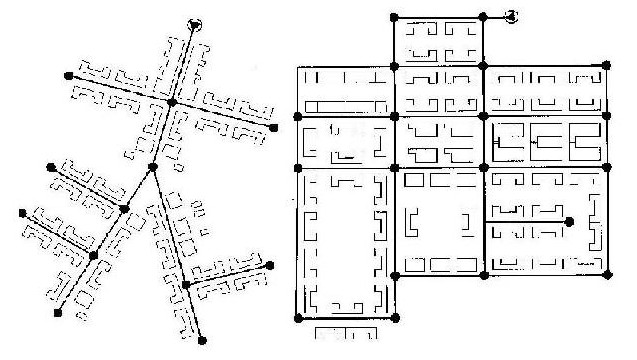
Disinfection systems: small community water systems should be designed for simple operation and management by local people. Households may collect the disinfectant in liquid form from a central distribution point and use it to disinfect their own containers. The chemical can be brought from outside or produced locally through a generator. It is important to clean and disinfect always new tanks and pipes before they are brought to use. New wells and small water bodies used for water supply should also be disinfected to avoid bacteria contamination. It is often not easy to feed the disinfectant at a constant rate. If the water bodies are open it is better to apply disinfection at household level. Water transmission refers to the transportation of the water from the source to the treatment plant and to the area of distribution. It can be realized through free-flow conduits, pressurized pipelines or a combination of the two. For small community water supplies pressurised pipelined are most common, since they are not very limited by the topography of the area to be traversed. Free-flow conduits (canals, aqueducts and tunnels) are preferred in hilly areas or in areas where the required slope of the conduit more or less coincides with the slope of the terrain. Routes needs always to be checked with community members. To design a water transmission system it is important to know the water demand on the maximum consumption day and the number of hours the transmission may operate each day. Pressure is relevant only for pressurised pipelines. Consumer connections to transmission pipelines should be limited, so the pressure can be kept close to the minimum. A few meters water column is required to prevent intrusion of pollution through faulty joints or parts. Long distances or specific topography can cause high pressures. To limit the maximum pressure it is possible to separate the routes in two sections using a break-pressure tank. Construction of surge tanks, air vessels or water towers as well as the selection of proper material can prevent the development of critical pressures like water hammers. The velocity in water transmission lines should be included between a minimum to prevent water stagnation and a maximum to control head losses and to reduce the effects of water hammer. Pressurised transmission mains generally have a flow included between 1 and 2 m/s. If the water has to be transported over long distances and/or higher elevations, transmission by pump is required. The pumping head is the sum of the static head plus the friction head loss for the design flow rate. The head loss for a specific flow rate can be calculated for different pipe diameters. The diameter chosen should represent the least-cost choice taking into account the capital investment, the maintenance costs and the energy costs for pumping. In small community water supplies often a considerable head is required. The pump most frequently selected are the centrifugal (radial-flow) type wet-pit pr dry-pit type. The wet-pit type has the pumps immersed in the water, the dry-pit has the pump in a dry room separated by a wall. The selection of the material has a strong influence on the investment cost. Ductile iron and steel are the strongest pipe materials and are the best choice when high pressures are expected. It is anyway recommended to keep the maximum pressure low in pipes because the costs of valve and fittings increase considerably for higher pipe pressure classes. Compared with metal pipes cement asbestos pipes are lighter and easy to handle. They are widely used in sizes up to 300 mm. Asbestos has no carcinogenic effect when used to supply drinking water, but it is dangerous if inhaled. For this reason alternative materials have been introduces, like PVC, PE or DI. PVC pipes have a good resistance to corrosion and are easy to joint, but they loose strength when exposed to direct sunlight for long periods. High density PE is very suitable for small diameter pipes because it can be supplied in coil, reducing the number of joints needed. Polyethylene does not deteriorate when exposed to direct sunlight. For pipelines of diameters up to 200 mm PVC and PE are preferable if high working pressures are not expected. If low pressure can be maintained these pipes are can be used also for diameters up to 500-600 mm. Cast iron, ductile iron and steel are used only for large diameter mains or where very high pressures are required. Water distribution systems transport water from the source or the water treatment point to the users. The flow varies greatly from the peak hours, when a lot of water is used for washing or drinking, to the minimum consumption hours, at night. In small community distribution systems it is better to built a balancing storage tank, because the supply of diesel or electricity to pumps is usually unreliable. In small communities water is generally supplied for domestic and household water requirements, including irrigation is some cases. A minimum pressure of 15 m of water column is generally sufficient to avoid intrusions of polluted seepage water. The possible layouts for water distribution systems are branched and looped. A scheme of these types of distribution is shown below. A. Branched distribution system B. Looped Network distribution system * Branched networks are predominantly used for small capacity water supplies delivering water mostly through standpipes. Their drawbacks are low reliability, danger of contamination, possibility of sediment accumulation. Furthermore a fluctuation of water demands cause large pressure variations in the systems. Their advantages are that they are easy to design, direction and flow rates can be easily determined for all pipes. Looped distribution networks are instead more difficult, since customer can be supplied from more than one direction. They have the advantage of a better hydraulics and the possibility of water supply also in the event of the mains is out if operation for cleaning or repair. Points at which the water is delivered to the users are called service connections. They can be house, yard or group connections or public standpipes. A house connection is a water service pipe with in-house plumbing, a yard connection is similar to a house connection, with the difference that it has no in-house piping: the tap is placed in the yard. Group connections are outside taps shared by a group of households. Public stand pipes are the most common service connection in small communities. They are made in brick, masonry or concrete and can have platform at different levels. Each tap should be situated at a suitable point to supply at least 40-70 people. The walking for the most distant user should be limited to 200 m (500 m in sparsely populated rural areas). Multiple stand pipe can provide water for up to 250-300 people. Problems arising from stand pipes are possible water wastage and the risk of formation of stagnant pools of dirty water with associated heath hazard. One way to deal with this problems is through payment of the water consumed. When a water distribution system is designed a possibility of increase in the water demand should be taken into account. The daily water demand varies during the year. The maximum is calculated by adding 10-30% to the average daily demand. A much greater variation take place during the same day (hourly variation), with two peaks, one in the morning and one in the evening. The peak factor by which multiply the average hourly demand depends on size and character of the community served. It tends to be high for small villages and lower for small towns. To balance the hourly fluctuations of the water demand, that a water treatment system will not be able to follow, water is stored in service reservoirs. To dimension them, the estimated hourly water demand (expressed as percentage of of the total demand over the peak day) is plotted in a graph together with the constant supply rate. The sum of the maximum difference between the two lines at the same hour gives the required volume of storage in case of sully 24 hours a day. The reservoir should be placed at a higher elevation than the distribution area, but as close as possible to it. If the area is flat elevated tanks has to be used. Elevated tanks are generally smaller and serve for minor balancing of demand variations, and more water is pumped directly into the network. Ground reservoirs of a few thousand cubic meters are normally made of reinforced concrete. Smaller ones can be of mass concrete or brick masonry. Water towers are made of steel, reinforced concrete or brickworks on concrete columns. Steel tanks are mostly placed on a steel or wooden support framework. The steps for designing a water distributions system generally are:
Computers programs using modelling has enhanced hydraulic design of distribution networks, enabling very precise and quick calculations often suitable for small communities or rural distributions systems and for large urban networks. The amount of water that can be billed will always be smaller that the amount supplied (unaccounted-for water). The water passing though the tap is lower than the amount supplied due to the presence of leakage. Leakage is a serious problem and should be avoided, reducing defects in pipes, improving the quality of the joints, avoiding corrosion, high pressures and extreme temperatures. Regular checks by technicians or caretakers could also help to contain the problem. Once a leakage is detected, by for instance measuring the water flow for a relevant period, finding its precise location can be a difficult problem. The most common devices used for this purpose are acoustic detectors and leak noise detectors. Pipes can be kept clean by flushing them with water and compressed air, or using a cylindrical swab pushed into the pipe and driven along by the water pressure. Pipe disinfection can be done either by cleaning or by chemical treatment.
Most the information and the (*) images are taken from: "Small community Water Supplies", IRC - International Water and Sanitation center, Edited by Jo Smet and Christine van Wijl, 2002
For further information: "Small community Water Supplies", IRC - International Water and Sanitation center, Edited by Jo Smet and Christine van Wijl, 2002 | |||||||||||||||||||||||||||||||||||||||||||||||||||||||||||||||||||||||||||||||||||||||||||||||||||||||||||||||||