

Resource recovery from brine
Concentrated brines can contain recoverable water, salts and other constituents. Recovery may complement brine management, but it is not automatically economical or environmentally preferable. Feasibility depends on feed composition, separation selectivity, product specifications, energy and chemical demand, residuals, transport and a real market or on-site use.
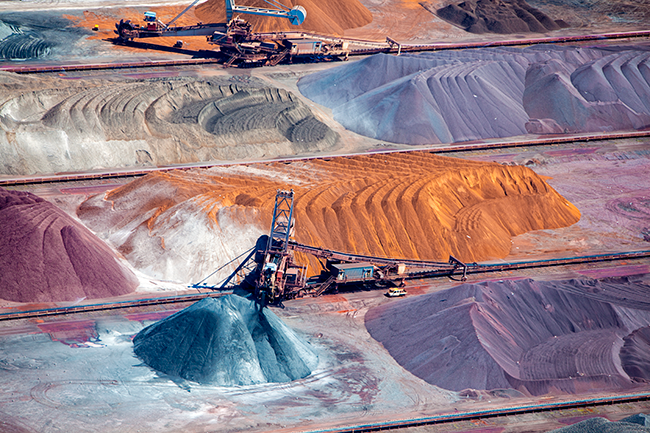
Start with the brine and the intended use
Characterise the source before selecting a recovery route. Relevant information includes flow and variability, major-ion composition, target constituents, suspended solids, organics, temperature and existing pretreatment. A constituent’s presence in brine does not alone make it recoverable: its concentration, chemical form, competing ions and the required product purity matter.
First identify whether the objective is water reuse, reduction of concentrate volume, recovery of one or more products, or a combination. These objectives can require different process boundaries. A recovery step should be evaluated alongside the remaining concentrate and solids-management route.
Illustrative recovery routes
| Potential target | Possible route | Key checks |
|---|---|---|
| Water | Membrane or thermal concentration and condensation | Energy use, scaling, volatile or entrained contaminants, and the required reuse quality |
| Sodium chloride or sodium sulfate | Selective pretreatment followed by evaporation and crystallization where the brine supports it | Competing salts, crystal purity, washing, product specifications and a confirmed outlet |
| Magnesium or calcium compounds | Controlled precipitation or crystallization, sometimes after selective separation | Reagent demand, co-precipitation, sludge handling, purity and downstream use |
| Lithium, boron or other low-concentration constituents | Feed-specific sorbents, ion exchange, membranes or other selective separation methods | Low concentration, selectivity, recovery yield, regeneration, lifetime, energy and residual streams |
These are examples of process families, not recommendations for a particular site. The presence of a target constituent does not establish that a recovery project is technically or commercially viable.
Screening a recovery project
- Confirm the resource: use representative analyses and flow data, including seasonal or operating variation.
- Define product requirements: identify quality limits, consistency, regulation, customer qualification and whether the material can be used on site.
- Test the separation: determine achievable recovery and selectivity in the real brine, including pretreatment and regeneration needs.
- Build the whole-system balance: include water and material yields, energy, chemicals, equipment, labour, cleaning, transport and the treatment of secondary residuals.
- Verify the outlet: use realistic local market volumes and logistics; treat revenue as uncertain until an offtake route is established.
- Compare alternatives: assess recovery against concentrate management and disposal options using the same system boundary and environmental assumptions.
Important: recovering a material does not by itself achieve ZLD. A project still needs a compliant route for all liquid, solid and gaseous residuals, and recovered water must meet its intended reuse specification.
Further reading
- European Commission: Desalination and brine valorisation — notes technical, logistical and supply-chain constraints on mineral recovery.
- U.S. Department of Energy: Water resource recovery basics — overview of resource recovery from water and wastewater streams.
- U.S. Government Accountability Office: Critical minerals from seawater — discusses scale-up and economic viability uncertainties for mineral extraction from seawater.
See also Zero liquid discharge (ZLD), evaporation and crystallization.