
Zero Liquid Discharge (ZLD): Treatment Processes and Design
Zero liquid discharge (ZLD) is a water-management approach designed so that no liquid wastewater stream leaves a defined facility or treatment boundary. A ZLD system recovers water for reuse and concentrates the remaining dissolved and suspended material into solid or semi-solid residuals for recovery or disposal. The exact boundary and residual streams must be defined for each project; “zero liquid discharge” does not mean that a plant produces no waste.
ZLD is considered when a liquid concentrate cannot be discharged or economically managed by conventional routes, when water reuse is a priority, or when site conditions and permits favor eliminating liquid effluent. It is not automatically required everywhere: applicable regulations, permits, disposal options and the wastewater composition determine whether ZLD is appropriate.
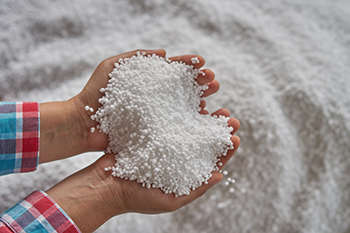
Important: ZLD is a treatment and residual-management objective, not a single process. Water recovered as distillate or permeate may need additional polishing before it meets the quality requirements for its intended reuse. Crystallized salts are not automatically pure or saleable products; their composition, leaching behavior, applicable waste classification and reuse requirements must be assessed.
Why consider ZLD?
Industrial wastewater may contain dissolved salts, suspended solids, metals, organics or other constituents that limit discharge or reuse. ZLD can reduce or eliminate liquid effluent at the selected system boundary and recover water. It can also produce concentrated or solid material from which selected substances may be recovered, if the composition and economics support it. Regulatory drivers differ by jurisdiction and industry, so project-specific permit review is essential.
- Reduce or eliminate a liquid concentrate stream requiring off-site management.
- Recover water for a defined process use, subject to product-water quality and polishing needs.
- Reduce the volume of liquid requiring storage or transport.
- Potentially recover salts or other materials when they can be separated to a suitable specification and a viable reuse route exists.
Where ZLD may be applied
ZLD can be considered for concentrated or difficult wastewater streams. Suitability depends on flow, composition, variability, pretreatment needs, energy and residuals management.
| Example stream | Project considerations |
|---|---|
| Reverse-osmosis, nanofiltration or other membrane concentrate | Scaling potential, recovery target, cleaning wastes and concentrate composition. |
| Cooling-tower blowdown | Salinity, antiscalant and biocide residuals, suspended solids and cycles of concentration. |
| Flue-gas-desulfurization wastewater | Chloride, sulfate, calcium, magnesium, suspended solids and trace constituents. |
| Mine water and mine drainage | Acidity or alkalinity, metals, sulfate, seasonal variation and the classification of resulting residues. |
| Produced water and other oil-and-gas wastewater | Salinity, hydrocarbons, organics, hardness and the applicable disposal or reuse requirements. |
| Regeneration brine and industrial process wastewater | Specific chemicals, batch variability, compatibility with treatment and possible recovery options. |
How a ZLD treatment train is assembled
A ZLD train is selected for the wastewater and the required discharge or reuse boundary. A common arrangement combines pretreatment and water recovery with brine concentration, followed by final evaporation and solids separation where needed. Not every project uses every step, and other residual streams must also be included in the mass balance.
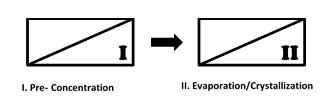
- Characterize and pretreat the feed. Measure the wastewater over representative operating conditions. Screening, clarification, filtration, softening, pH adjustment or removal of oils and organics may be needed to protect downstream equipment and control precipitation.
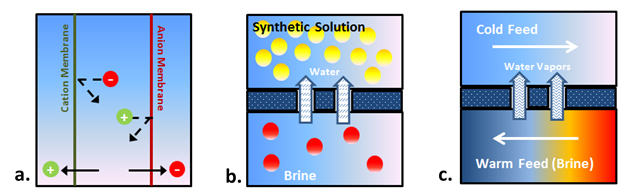
- Recover water and pre-concentrate. Depending on feed chemistry and target recovery, use membrane processes such as reverse osmosis, electrodialysis or another suitable concentration step. This reduces the flow sent to the most energy-intensive final stages, but it does not remove the need to manage the concentrate.
- Concentrate the remaining brine. Thermal evaporators or other technologies may raise the concentration further. Heat integration or mechanical vapor recompression can affect energy use, but performance depends on design and operating conditions.
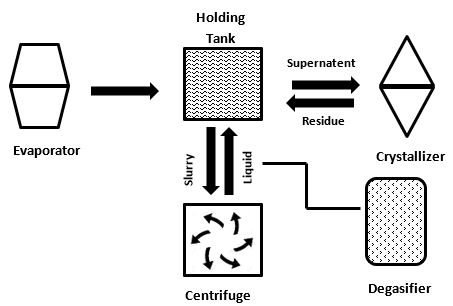
- Crystallize and separate residual solids. A crystallizer or dryer may be used to remove remaining water and produce a dewatered solid or slurry. The residuals may require characterization and permitted disposal; recovery or sale is conditional on product quality and an available route.
- Polish and reuse recovered water. Analyze the recovered permeate or condensate and add polishing if required for the intended process use. Include cleaning, wash, startup and other side streams in the overall water balance.
Technologies used in ZLD systems
Pre-concentration can reduce the volume entering thermal treatment. Selection is feed-specific: salinity alone does not determine performance, and fouling, scaling, selectivity, energy supply and the final residual route all matter.
| Technology | Typical role | Key considerations |
|---|---|---|
| Reverse osmosis (RO) | Recover water and concentrate lower- to moderate-salinity feeds before brine treatment. | Osmotic pressure and scaling limit recovery; pretreatment and concentrate management remain necessary. |
| Electrodialysis / electrodialysis reversal (ED/EDR) | Move ions through ion-selective membranes under an electric field to produce diluate and concentrate streams. | Performance depends on ionic composition and salinity. Neutral dissolved substances are not removed by ion transport alone; pretreatment and downstream water-quality needs must be considered. See EDR. |
| Forward osmosis (FO) | Transfer water across a membrane into a draw solution, which must then be regenerated to recover the water. | Overall energy and cost include draw-solution regeneration and depend on the selected draw chemistry and heat integration. See FO. |
| Membrane distillation (MD) | Use a vapor-pressure difference across a hydrophobic membrane to transfer water vapor, often with a thermal driving force. | Heat supply, heat recovery, membrane wetting and scaling affect performance. Waste heat may be usable when its temperature and availability suit the process. See MD. |
| Brine concentrator / evaporator | Evaporate water from a concentrate and recover condensate. | Energy demand, boiling-point elevation, corrosion, scaling and condensate quality need evaluation. Vapor recompression or heat integration may be considered. |
| Crystallizer or spray dryer | Further reduce liquid residuals and separate salts or solids. | Solid composition and moisture vary with feed and operation; pretreatment, dewatering, residual classification and a permitted final destination are part of the design. |
Feed analysis and design basis
Reliable design starts with a representative analysis and a clear definition of the system boundary, water-reuse target and residuals route. Include expected operating ranges and variability rather than relying on a single grab sample.
| Parameter group | Examples | Why it matters |
|---|---|---|
| Salinity and solids | TDS, conductivity, TSS, turbidity | Influence membrane operation, evaporation duty, pretreatment and solids handling. |
| Major ions and scaling constituents | Calcium, magnesium, sodium, potassium, chloride, sulfate, alkalinity, silica, barium, strontium | Determine saturation, precipitation, scale control and potential crystallized phases. |
| Acid-base conditions | pH, alkalinity, dissolved inorganic carbon | Affect speciation, precipitation, chemical demand and corrosion. |
| Organics and oil | TOC/COD, hydrocarbons, oil and grease | May foul membranes, affect condensate quality or require separate treatment. |
| Other contaminants | Metals, ammonia, nitrate, phosphate, fluoride and process-specific chemicals | May govern treatment steps, reuse suitability, worker precautions and residual classification. |
| Operating data | Flow, temperature, batch pattern, cleaning and regeneration streams | Define design capacity, operating flexibility and the complete water and solids balance. |
Use correct species and charge notation in water analyses. For example, strontium is Sr2+; boron in water occurs mainly as boric acid and, depending on pH, borate species rather than as B+. Report analytical basis and units consistently.
Energy, cost and residuals
ZLD can involve substantial capital, energy, chemical, maintenance and residual-management costs. A single energy-consumption or cost figure is not transferable between projects: feed composition, recovery, pretreatment, heat source, equipment arrangement, local utilities, scale and operating practice all matter. Any comparison should state its basis, boundary, date, assumptions and whether thermal energy is counted as delivered heat, primary energy or an electrical equivalent.
Evaluate the full life-cycle case, including:
- Feed equalization, pretreatment, membranes, evaporators, crystallizers and solids handling.
- Electricity, steam or other heat, and whether usable waste heat is available at the required conditions.
- Antiscalants, acids, alkalis, cleaning chemicals and replacement parts.
- Labor, maintenance, corrosion-resistant materials, downtime and performance variability.
- Recovered-water quality and the treatment needed before reuse.
- Characterization, transport, permitting and disposal or recovery of solids, sludges, spent media and side streams.
- Local discharge permits, water-supply constraints and the actual cost and availability of alternatives.
Do not assume that crystallized salts can be sold or reused. Mixed salts, trace contaminants and moisture can prevent beneficial use; additional separation may be needed. Confirm the residual's composition, applicable classification, acceptance criteria and end market before assigning a recovery credit.
Minimal liquid discharge as an alternative
Minimal liquid discharge (MLD) aims for high water recovery and a smaller, more manageable concentrate stream while retaining a liquid residual. It may be considered where the concentrate has a permitted or practical management route and the incremental cost or complexity of ZLD is not justified. MLD is not a fixed recovery percentage; define it against the project’s water balance and discharge boundary. See Lenntech information on MLD.
Sources and further reading
- U.S. EPA, Detailed Study of the Centralized Waste Treatment Category (2018) — crystallization, process description and limitations for high-TDS wastewater.
- U.S. Department of Energy, Water Resource Recovery Basics — water reuse, brine valorization and ZLD overview.
- U.S. Department of Energy, Desalination Basics — membrane and thermal desalination principles and energy context.
- EPRI, Current Practices: Solid Waste Management from Zero Liquid Discharge Wastewater Treatment — management of solid residuals.