

Fouling, Scaling & Biofouling Identification and corrective actions
Reverse osmosis (RO) and other membrane systems (NF, UF) rely on controlled feedwater quality and stable operating conditions. Over time, membranes may experience performance deterioration due to fouling, scaling, or biofouling.
Correctly identifying the dominant mechanism is essential to selecting effective corrective actions and preventing irreversible damage.
What are Fouling, Scaling and Biofouling?
- Fouling
Fouling is the accumulation of suspended solids, colloids or organic matter on the membrane surface or within flow channels.
It typically results in increased pressure drop and reduced permeate flow.
- Scaling
Scaling occurs when sparingly soluble salts precipitate on the membrane surface as concentration increases with recovery.
Common scalants include calcium carbonate, calcium sulfate, and silica.
- Biofouling
Biofouling is caused by the growth of microorganisms and the formation of biofilm on membranes and spacers.
It often leads to rapidly increasing pressure drop and unstable operation.
Why proper identification matters
Each fouling mechanism affects membrane performance differently and requires a specific response.
Incorrect diagnosis may result in ineffective cleaning, unnecessary downtime, or permanent membrane damage. Early identification improves system reliability and extends membrane lifetime.
Preventive measures
Scaling, fouling, and biofouling risks can be significantly reduced through appropriate preventive measures.
- Scaling potential may be limited by reducing hardness or alkalinity using softening, acid dosing, or scale inhibitors (antiscalants).
- Fouling can be mitigated through effective pretreatment to control turbidity, suspended solids, and organic matter.
- Biofouling risk is reduced by limiting nutrient availability, maintaining adequate disinfection upstream, and avoiding stagnant conditions.
Proper monitoring and stable operating conditions remain essential to ensure these measures remain effective over time.
Early diagnostic indicators
Normalized performance trends provide the first indication of membrane impairment:
- Fouling indicators
- Gradual decrease in normalized permeate flow
- Progressive increase in normalized pressure drop often in the first RO stage
- Stable salt rejection
- Scaling indicators
- Rapid increase in pressure drop, often at higher recovery (i.e. last RO stage)
- Sharp reduction in normalized permeate flow
- Frequently linked to feedwater hardness or silica
- Biofouling indicators
- Continuous pressure drop increase
- Fluctuating performance, especially during warm periods
- Limited or short-lived recovery after cleaning
Feedwater conditions that promote Fouling and Scaling
Membrane performance is strongly influenced by feedwater quality, including:
- Elevated turbidity or SDI
- Organic load (TOC / COD)
- High hardness or alkalinity
- Silica concentration
- Seasonal variations in source water quality
Understanding feedwater trends helps correlate performance changes with upstream conditions.
Scaling salts in Reverse Osmosis systems
Scaling of reverse osmosis membranes occurs when sparingly soluble salts become concentrated beyond their solubility limit within the membrane element. As recovery increases, dissolved ions concentrate in the boundary layer at the membrane surface, increasing precipitation risk.
Based on solubility behavior, the most common scaling salts encountered in industrial RO systems are listed below from lowest solubility (highest scaling tendency) to higher solubility:
- Calcium carbonate (CaCO₃)
- Calcium sulfate (CaSO₄)
- Silica (SiO₂)
- Strontium carbonate (SrCO₃)
- Barium sulfate (BaSO₄)
- Strontium sulfate (SrSO₄)
- Calcium fluoride (CaF₂)
- Calcium silicate (CaSiO₃)
- Magnesium silicate (MgSiO₃)
- Ca₃(PO₄)₂ (Calcium phosphate)
Salts with lower solubility will precipitate earlier as recovery increases and are therefore more critical to control through feedwater conditioning, recovery limitation, or chemical dosing. Mixed scaling is common, especially where silica, hardness, sulfate, and iron coexist.
Diagnostic approach
A structured troubleshooting approach is recommended:
- Review normalized permeate flow, pressure drop, and salt rejection versus baseline
- Check feedwater quality trends and recent operational changes
- Compare observed performance patterns with typical fouling or scaling indicators
- Define the most likely dominant mechanism before taking corrective action
When normalized data does not align with feedwater or operating conditions, advanced diagnostic tools such as membrane inspection or analysis may be considered.
Impact of process chemicals on RO membrane performance
Chemicals are commonly used to control scaling, fouling, and microbiological growth. When not properly managed, they may contribute to performance deterioration:
- Antiscalants
Underdosing may lead to rapid scaling, while overdosing or incompatible products may contribute to fouling. - pH adjustment chemicals (acids)
Poor pH control may accelerate membrane aging or destabilize performance trends. - Chlorine or other oxidizing disinfectants
Inadequate removal may cause irreversible membrane oxidation and rapid loss of salt rejection. - Dichlorination agents (e.g. sodium bisulfite)
Insufficient dosing may allow chlorine breakthrough, while overdosing may promote fouling.
Chemical-related issues often resemble fouling or scaling in performance data and typically do not respond to cleaning. Verification of dosing systems and sensors is therefore essential during troubleshooting.
Corrective actions – operational focus
Once the dominant mechanism is identified:
- Verify pretreatment and upstream process stability
- Adjust recovery or operating conditions if needed
- Correct chemical dosing and monitoring
- Prepare targeted cleaning actions
Early intervention reduces the risk of irreversible damage and repeated interventions.
Visual illustrations
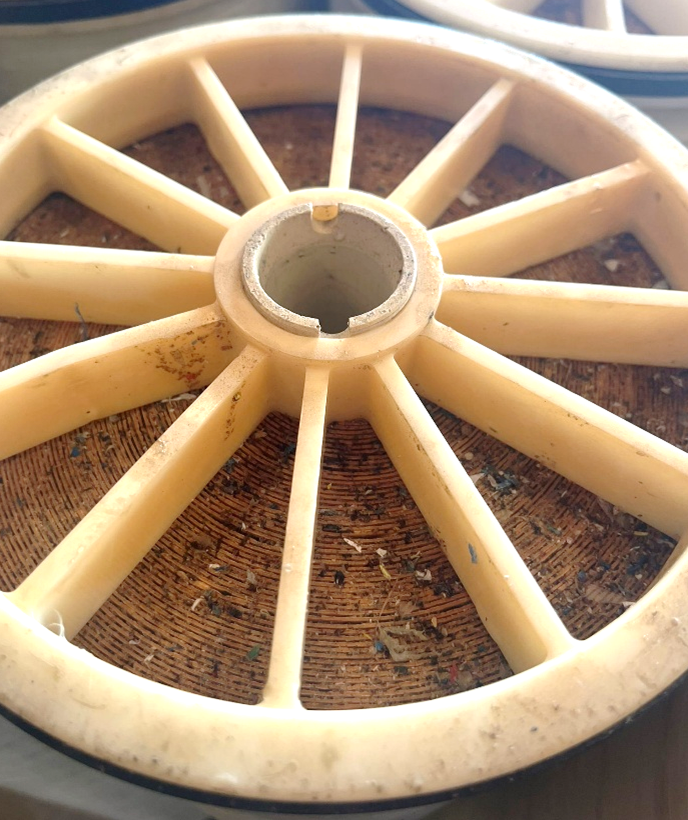
Particle fouling on RO first stage membrane
v
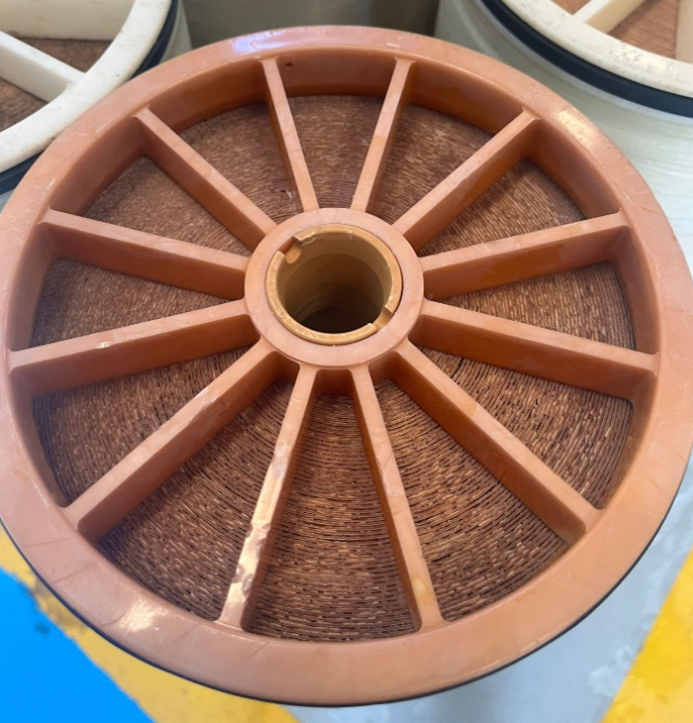
Metal fouling on RO membrane
v
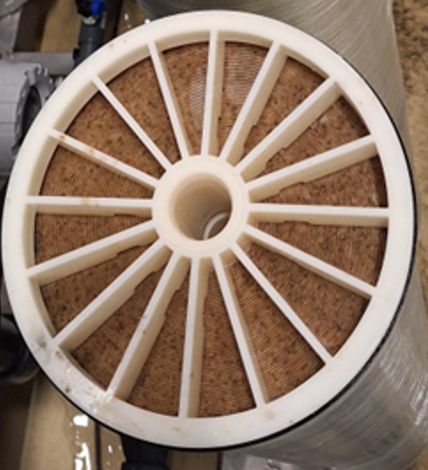
Organic, bacteria and metal fouling on RO membrane
v
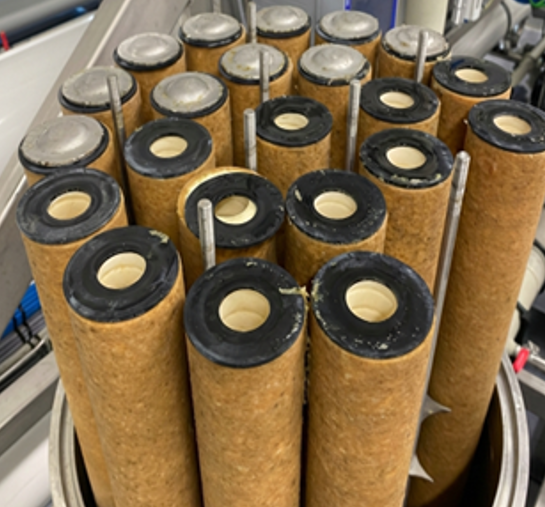
RO penetration cartridges protecting against fouling and biofouling in the system
v
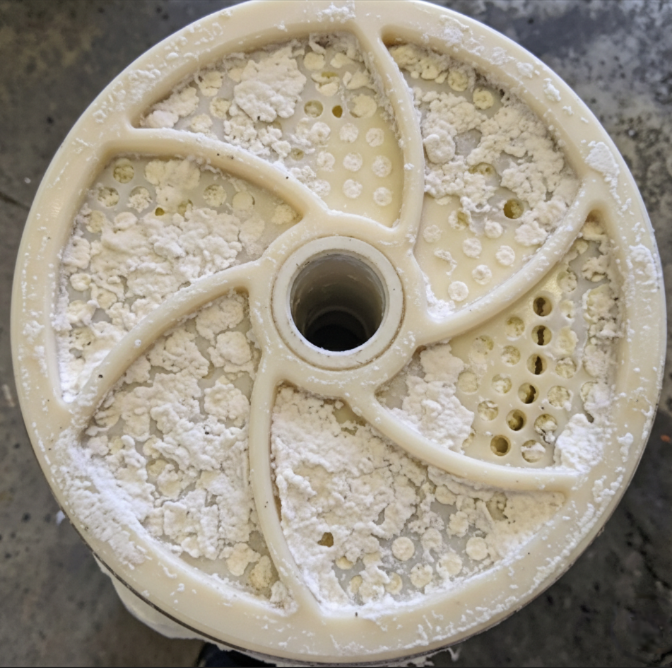
Heavy scaling on RO membrane
How Lenntech can support with troubleshooting
Lenntech supports operators by analyzing normalized performance data, feedwater quality, and operating conditions to identify fouling or scaling mechanisms.
When needed, Lenntech can coordinate membrane inspection and autopsy services, as well as provide on-site service and maintenance to support effective corrective actions and reliable long-term operation.
For more information or quotation, please contact us:  Feedback Form or call us on +31 152 610 900