
Waterborne diseases
|
General Information Water-borne diseases are any illness caused by drinking water contaminated by human or animal faeces, which contain pathogenic microorganisms. |
|
Water realated diseases:Anaemia |
|
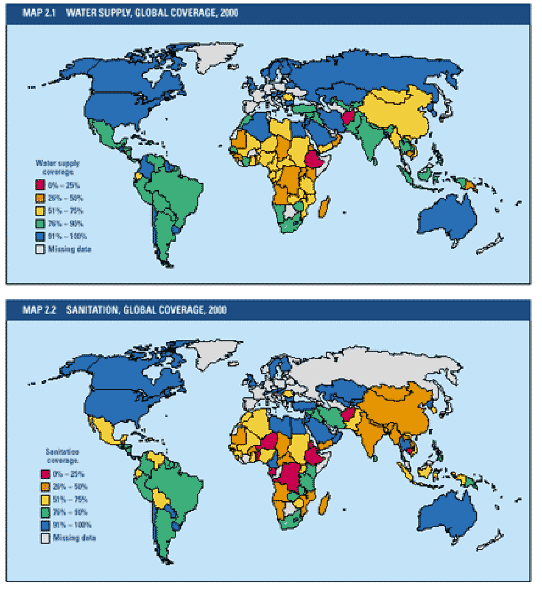
Dimension of the problemIn developing countries four-fifths of all the illnesses are caused by water-borne diseases, with diarrhoea being the leading cause of childhood death. The global picture of water and health has a strong local dimension with some 1.1 billion people still lacking access to improved drinking water sources and some 2.4 billion to adequate sanitation. Today we have strong evidence that water-, sanitation and hygiene-related diseases account for some 2,213,000 deaths annually and an annual loss of 82,196,000 Disability Adjusted Life Years (DALYs) (R. Bos, Dec. 2004). WHO estimates indicate that worldwide over 2 billion people are infected with schistosomes and soil transmitted helminthes and 300 million of these suffer serious illness as a result. An estimated 246.7 million people worldwide are infected by schistomiasis, and of these 20 million suffer severe consequences of the infection, while 120 million suffer milder symptoms. An estimated 80% of transmission takes place in Africa south of the Sahara (*). Diarrhoea occurs worldwide and causes 4% of all deaths and 5% of the health loss to disability. In Bangladesh alone, some 35 million people are exposed, on a daily basis, to elevated levels of arsenic in their drinking water, which will ultimately threaten their health and shorten their life expectancy. After the Tsunami attack in Asia on Sunday the 26th of December 2004 people faced the threat of water borne diseases linked to flooding, like Shigellosis, Cholera, Hepatitis A, Leptospirosis, Typhoid Fever, Malaria and Dengue fever.
|
|
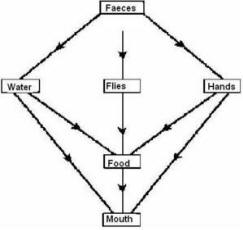
TransmissionWater borne diseases spread by contamination of drinking water systems with the urine and faeces of infected animal or people. This is likely to occur where public and private drinking water systems get their water from surface waters (rain, creeks, rivers, lakes etc.), which can be contaminated by infected animals or people. Runoff from landfills, septic fields, sewer pipes, residential or industrial developments can also sometimes contaminate surface water. This has been the cause of many dramatic outbreaks of faecal-oral diseases such as cholera and typhoid. However, there are many other ways in which faecal material can reach the mouth, for instance on the hands or on contaminated food. In general, contaminated food is the single most common way in which people become infected. |
|
|
The germs in the faeces can cause the diseases by even slight contact and transfer. This contamination may occur due to floodwaters, water runoff from landfills, septic fields, and sewer pipes. The following picture shows the faecal-oral routes of diseases transmission. The only way to break the continued transmission is to improve the people’s hygienic behaviour and to provide them with certain basic needs: drinking water, washing and bathing facilities and sanitation. Malaria transmission is facilitated when large numbers of people sleep outdoors during hot weather, or sleep in houses that have no protection against invading mosquitoes. Malaria mosquitoes, tropical black flies, and bilharzias snails can all be controlled with efficient drainage because they all depend on water to complete their life cycles. Click here for more information about contagion by pathogenic microorganisms. Prevention Clean water is a pre-requisite for reducing the spread of water-borne diseases. It is well recognised that the prevalence of water-borne diseases can be greatly reduced by provision of clean drinking water and safe disposal of faeces. The United Nations World Water Development Report 'Water for people Water for life' p.102 and following. Contact us for more information about water disinfection and treatment. Or check the following links. |
|