

Mercury - Hg
Mercury — chemical properties and water context
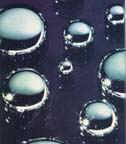
Mercury is a silvery metal that is liquid at room temperature. It is toxic, and its different chemical forms—including elemental mercury, inorganic mercury and methylmercury—have different behaviour and health implications.
| Atomic number | 80 |
|---|---|
| Standard atomic weight | 200.592 g/mol |
| Density | 13.5336 g/cm3 |
| Melting point | −38.829 °C |
| Boiling point | 356.619 °C |
| Electron configuration | [Xe] 4f14 5d10 6s2 |
Chemical properties
Mercury is in Group 12 and Period 6. It has a low melting point and a relatively high density. Elemental mercury can volatilize; inorganic mercury in drinking water is generally present in ionic form, while methylmercury formation can occur in aquatic environments under suitable conditions.
Uses and applications
Mercury has been used in measuring devices, lamps, electrical equipment and industrial processes, although many applications have been restricted or phased out because of its toxicity. Mercury can also enter water through natural deposits and industrial releases.
Mercury in water treatment
Mercury treatment must be selected for the specific species and water matrix. The World Health Organization notes that treatment of raw water not grossly contaminated with inorganic mercury can use coagulation, sedimentation and filtration, powdered activated carbon or ion exchange. Monitoring should use an analytical method appropriate to the mercury species and applicable drinking-water requirements.
Environmental and health context
Mercury can persist and transform in the environment. Microbial processes can convert inorganic mercury to methylmercury, which can accumulate in aquatic food webs. Preventing releases and safely managing mercury-bearing treatment residuals are important parts of control.
Back to the periodic table of elements
Sources and further reading
- CIAAW: Standard atomic weights
- Royal Society of Chemistry: Mercury properties and uses
- WHO: Mercury in drinking-water — fact sheet
Mercury page last reviewed: by Lenntech.