

Oxygen in water: dissolved oxygen, effects and treatment
Dissolved oxygen in water
Dissolved oxygen (DO) is molecular oxygen, O2, present in water. It is not the same as the oxygen chemically bound in water molecules (H2O). DO is commonly reported in milligrams per litre (mg/L) or as a percentage of saturation.
What controls oxygen solubility?
The saturation concentration is the amount of oxygen water can hold at equilibrium with the surrounding air. It depends mainly on water temperature, salinity and atmospheric pressure. Cold water holds more oxygen than warm water, and saline water holds less than freshwater at the same temperature. At higher altitude, lower atmospheric pressure reduces the saturation concentration.
As a reference, freshwater in equilibrium with air at 25°C and one atmosphere holds about 8.3 mg/L of oxygen. This is a saturation value, not a prediction for every river, lake or treatment process. Actual concentrations also reflect mixing, biological activity and oxygen-consuming reactions. The USGS DOTABLES tool calculates saturation for specified temperature, pressure and salinity conditions.
Measurements may also be reported as percent saturation:
DO saturation (%) = measured DO (mg/L) ÷ saturation DO (mg/L at the same conditions) × 100
Does oxygen react with water?
Under ordinary environmental conditions, oxygen gas dissolves in water but does not react with the water itself. Dissolved O2 can act as an electron acceptor in oxidation reactions. In water treatment and natural waters, it can oxidize dissolved ferrous iron and manganese, reduced sulfur compounds and some organic matter. The reaction rate and products depend on conditions such as pH, temperature and the substances present; precipitated iron or manganese may need to be removed by filtration or settling.
Why dissolved oxygen matters in rivers and lakes
Most aquatic animals and many microorganisms need dissolved oxygen for respiration. Oxygen enters surface water by transfer from the atmosphere and by photosynthesis. Wind, waves and turbulence promote air–water exchange. Plants and algae can raise DO during daylight through photosynthesis, while respiration and decomposition consume oxygen, often lowering concentrations overnight.
When excess nutrients stimulate algal growth, decomposition of the resulting biomass can consume large amounts of oxygen. Stratification can also limit oxygen replenishment to deeper water. These processes may cause hypoxia (very low DO) or anoxia (little or no DO), affecting aquatic organisms. See eutrophication of water bodies for more background.
DO thresholds are not universal: tolerance varies among species, life stages, temperature and exposure duration. As general screening values, the U.S. EPA notes that concentrations below 5 mg/L may stress fish and below 3 mg/L may be too low to support fish. Local standards and site-specific conditions should guide interpretation.
Oxygen in water treatment
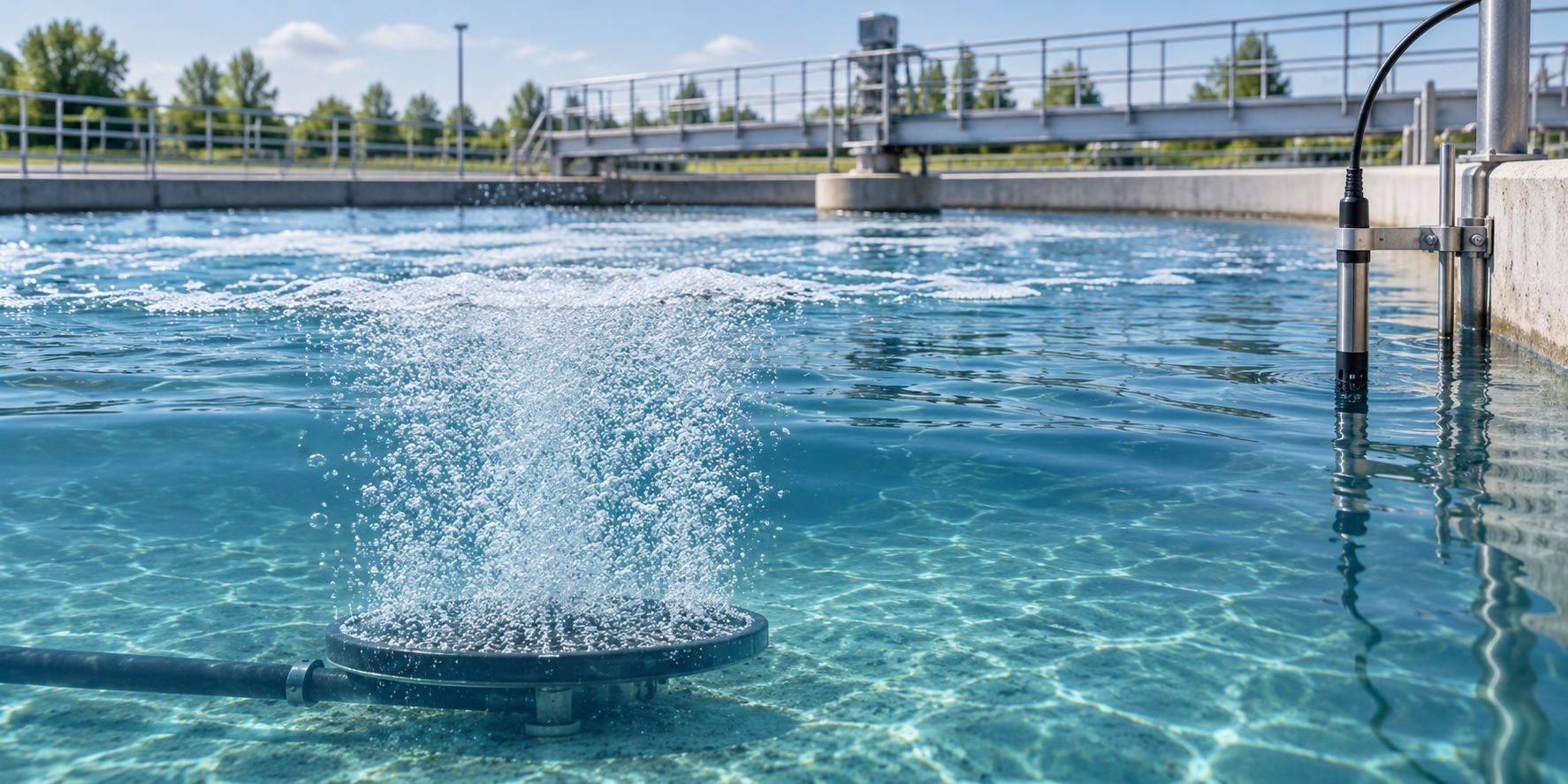
Aeration adds oxygen. Aeration transfers oxygen from air into water. It is used to support aerobic biological treatment and can help oxidize iron, manganese or reduced compounds. Performance depends on water chemistry and equipment; oxidation alone does not remove the resulting particles. Learn more about aeration in water treatment.
Deaeration removes dissolved gases. In boiler and some industrial systems, dissolved oxygen can contribute to corrosion. Deaerators commonly use steam and heat to strip dissolved gases; other systems may use vacuum or chemical oxygen scavengers selected for the process. The target depends on equipment design and operating conditions. See the U.S. Department of Energy’s guide to deaerators in industrial steam systems.
Measuring dissolved oxygen and oxygen demand
DO is measured with a calibrated probe or by a laboratory titration method. Record temperature with the DO result and, where relevant, salinity and barometric pressure; these are needed to interpret percent saturation. Measurements can vary with depth and time of day, so sampling conditions matter.
Biochemical oxygen demand (BOD) is different from a direct DO measurement: it estimates oxygen consumed during a specified test as microorganisms break down material in a sample. A common BOD5 test incubates the sample for five days at 20°C. BOD indicates oxygen demand; it is not a direct measure of the mass or toxicity of pollutants.
Last reviewed: 31 October 2026 by Lenntech.
Sources and further reading
- U.S. Geological Survey: Dissolved oxygen and water
- U.S. Geological Survey: DOTABLES dissolved-oxygen solubility calculator
- NOAA: Monitoring estuaries — dissolved oxygen, temperature and salinity
- U.S. EPA: Dissolved oxygen as a water-quality indicator
- U.S. EPA: Dissolved oxygen and biochemical oxygen demand