

Boron (B) and water
Boron occurs naturally in rocks and soils and can enter groundwater as water moves through borate- and borosilicate-bearing materials. It is also present in some industrial and household products. In water, boron is mainly found as boric acid or borate, with the balance between them depending chiefly on pH.
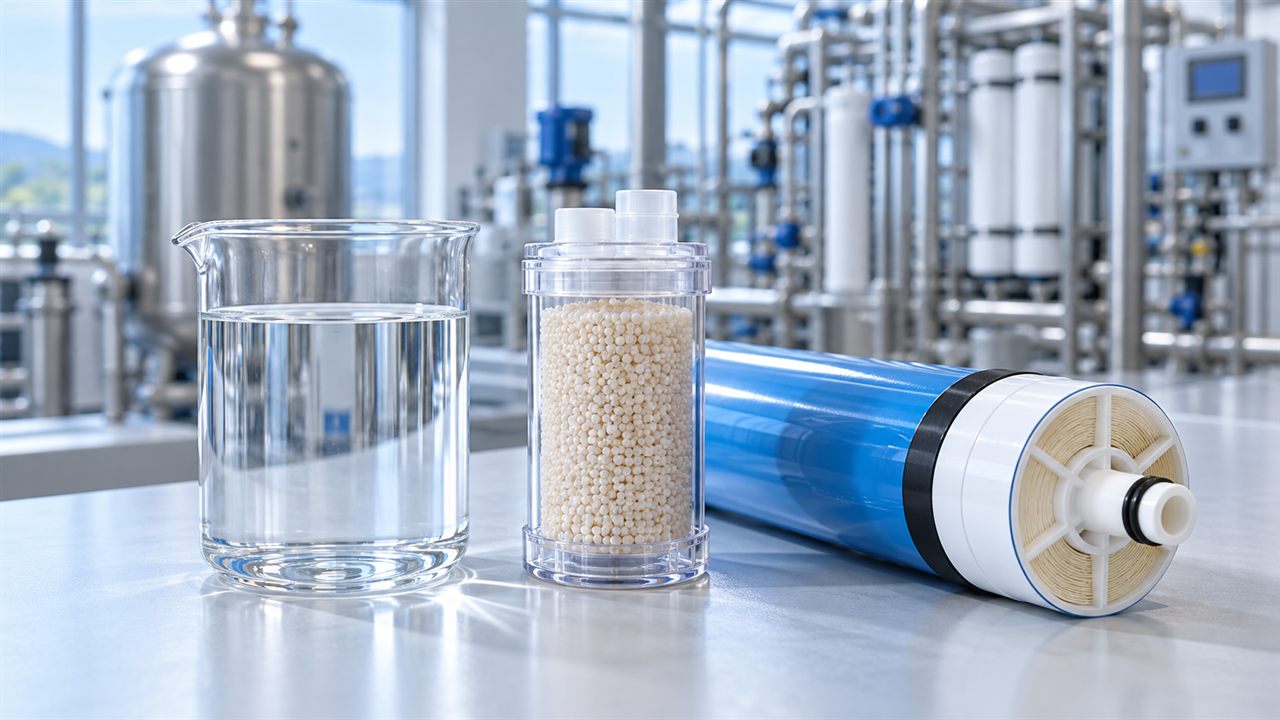
Boron in water
At the pH of most natural waters, dissolved boron is predominantly neutral boric acid, B(OH)3. As pH rises above about 9, the negatively charged borate ion, B(OH)4−, becomes the predominant form. Both forms are soluble, but their different charge and size affect how readily treatment processes remove them.
Natural sources include weathering and leaching from rocks and soils that contain borates or borosilicates. Boron can also enter surface water through wastewater discharges. Boron compounds are used in products and processes such as glassmaking, detergents and flame retardants.
Environmental considerations
Boron is an essential micronutrient for plants in small amounts, but excessive concentrations can harm sensitive plants and crops. Effects vary by species and exposure conditions, so a single concentration should not be treated as a universal toxicity threshold.
Drinking water and health
The World Health Organization (WHO) guideline value for boron in drinking water is 2.4 milligrams per litre (mg/L). The European Union Drinking Water Directive sets a parametric value of 1.5 mg/L, with 2.4 mg/L specified for supplies where desalinated water is predominant or geological conditions may lead to high boron in groundwater. Applicable requirements depend on the jurisdiction.
WHO’s guideline is based on toxicological evidence that includes reproductive-tract and developmental effects in laboratory animals. The guideline is a drinking-water value; it should not be interpreted as a claim that ordinary boron levels in food or water cause these effects.
Boron removal from water
Conventional drinking-water processes such as coagulation, filtration and chlorination do not usually remove boron effectively. Reverse osmosis and ion exchange using boron-selective resins are among the treatment options used for boron reduction.
Because boric acid is neutral and relatively small at the pH of most source waters, standard reverse-osmosis membranes may reject it less effectively than charged borate. Depending on the water and treatment target, process options can include a second reverse-osmosis pass, pH adjustment, a reverse-osmosis membrane selected for boron rejection, or boron-selective ion exchange. Performance depends on source-water chemistry and system design; bench or pilot testing can help establish operating conditions. Reverse osmosis concentrate and ion-exchange regeneration waste also need to be considered in process design.
Last reviewed: 31 October 2026 by Lenntech.
Sources and further reading
- WHO: Boron in drinking-water — chemical fact sheet
- European Union: Directive (EU) 2020/2184 on the quality of water intended for human consumption
- Health Canada: Boron — analytical and treatment considerations
- Environment and Climate Change Canada / Health Canada: Draft assessment of boric acid, its salts and precursors