

Waterborne diseases
Contagion by pathogenic microorganisms
Infectious diseases caused by pathogenic bacteria, viruses and protozoan parasites are among the most common and widespread health risk of drinking water. People are introduced to these microorganisms through contaminated drinking water, water drops, aerosols and washing or bathing.
Some waterborne pathogenic microorganisms spread by water can cause severe, life-threatening diseases. Examples are typhoid fever, cholera and Hepatitis A or E. Other microorganisms induce less dangerous diseases. Often, diarrhoea is the main symptom (figure 1). People with low resistance, mainly elderly people and young children, are vulnerable to these diseases as well.

Figure 1. Diarrhoea is an important symptom of many waterborne diseases.
No acces to clean drinking water
Worlwide, 1,2 billion people do not have access to clean and safe drinking water, and 2,4 billion people lack sanitation. Every year, 5 million people die of waterborne diseases.
Developed countries
Most waterborne diseases occur worldwide. In developed (western) countries, contagion is prevented by drinking water purification and by hygienic measurements. But even in developed countries, people can fall ill from waterborne diseases. This is caused by using insufficiently disinfected water, by implementing non-hygienic food preparation and by insufficient personal hygiene.
Developing countries
In developing countries, waterborne diseases are a major problem which contributes to the vicious circle that people are in. In many developing countries, there is a lack of medicine to treat ill people. Vaccination is usually very scarce as well. Many people weaken because of waterborne disease and, as a result, are more susceptive to other infections. Their physical capacity decreases and they cannot work and provide their families with money and food. A lack of sufficient nutritional food weakens people, especially children, even further. They become even more susceptible to diseases. Children run behind at school, because they cannot be educated when they are ill. Waterborne diseases frustrate the economic development of many people. The appearance of HIV in developing countries makes more people susceptive to infectious diseases. During wars and natural disasters (floods) many people are infected with waterborne diseases. Diseases are easily spread because water treatment and sewage no longer function or are lacking completely.
To improve the economical progress of developing countries, water contamination and spread of infectious diseases must be handled. This is achieved through (drinking) water treatment, sewage, waste and sewage water treatment and education on personal and food hygiene.
Occurence of waterborne diseases
It is im possible to represent the number of waterborne microbiological infections (figure 2). This has several causes. Diseases are misdiagnosed or not reported. Sometimes it is difficult to demonstrate the source of a water related disease. Both swimming in contaminated water and the microbiological or chemical quality of drinking water can cause illness.
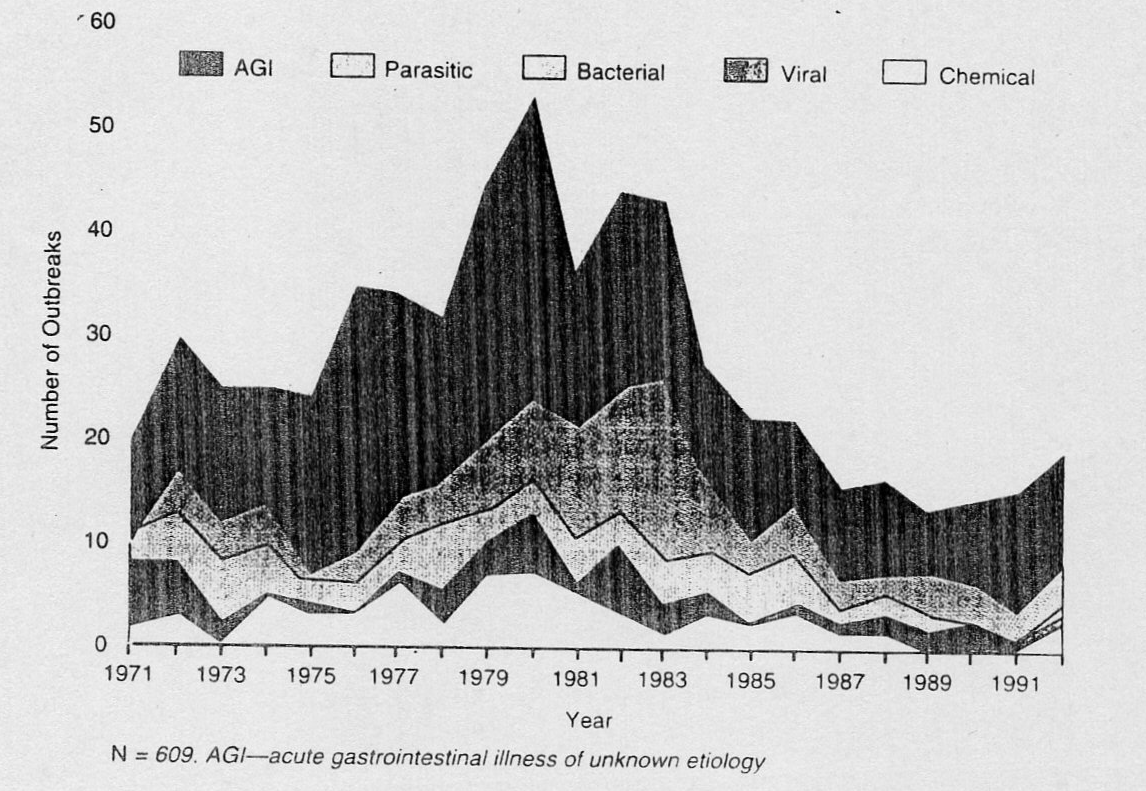
Figure 2: the number of waterborne diseases in the United States from 1971 to 1992
Disinfection remains important
Groundwater usually has a good microbiological quality, because it is prefiltered through various ground layers. Those ground layers function as a natural filter; microorganisms and other particles are removed when the water seeps down. Afterwards, the water still needs treatment, because not all pollutions can be removed biologically. Groundwater can be contaminated by sewage water or waste water pollutions.
Even when water treatment is applied, one has to watch out for outbreaks of waterborne diseases. Water that is used for drinking water purposes can be prepared from surface water, groundwater or recycled water. This water can be contaminated by pathogenic microorganisms and other pollutants. Sufficient disinfection is needed to prevent diseases.
New waterborne diseases
Infection routes change throughout the years. In the last twenty years a number of pathogenic diseases have appeared, even in developed countries, that cannot be prevented by traditional water treatment.
For example: in 1993 in Milwaukee, USA, 400.000 people fell ill from using drinking water that was contaminated by Cryptosporidium cysts. In the year 2000, 2.300 people fell ill in Walkerton, Canada, because of E. coli O157:H7. Other pathogenic microorganisms that can be found in drinking water are caliciviruses, Heliobacter bacteria, Mycobacteria and Giardia Lambia. In the future more pathogenic microorganisms will emerge and spread through water, because of agricultural magnification, increased population growth, increased migration and climate change. Pathogenic microorganisms can also emerge because they built up resistance to disinfectants.
Click here for information and details about water borne diseases.
More information on water disinfection?:
Introduction water disinfection Necessity water treatment History of drinking water treatment
What is water disinfection? Necessity of drinking water disinfection History of water disinfection Waterborne diseases Factors that influence disinfection Conditions of water disinfection Regulation drinking water disinfection EU USA
Swimming pool treatment Swimming pool pollutions Swimming pool disinfection Swimming pool disinfection & health
Cooling tower water Cooling tower water pollutions Cooling tower water disinfection Cooling tower water legislation
Chemical disinfectants Chlorine Sodium hypochlorite Chloramines Chlorine dioxide Copper silver ionization Hydrogen peroxide Bromine Peroxone Peracetic acid
Disinfection byproducts Types of disinfection byproducts Research on health effects of disinfection byproducts
