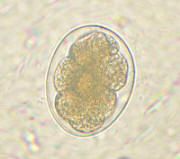

Hookworm Infection
| Anaemia Arsenicosis Ascariasis Botulism Campylobacteriosis Cholera Cryptosporiodiosis Cyanobacterial toxins Dengue Diarrhoea Dracunculiasis Fluorosis Giardiasis Hepatitis Hookworm infection Japanese encephalitis Lead poisoning Legionellosis Leptospirosis Lymphatic filariasis Malaria Malnutrition Methaemoglobinemia Onchocerciasis Polio Ring Worm or Tinea Scabies Schistomiasis Trachoma Trichuriasis Typhoid |
|
Hookworm infection is contracted from contact with soil contaminated by hookworm, by walking barefoot or accidentally swallowing contaminated soil. |
|
The first signs of hookworm infection are itching and a rash at the site where the larvae penetrate the skin. These signs may be followed by abdominal pain, diarrhoea, loss of appetite and weight loss, and anaemia. Chronic heavy hookworm infection can damage the growth and development of children. The loss of iron and protein retards growth and mental development, sometimes irreversibly. Hookworm can also cause difficulty breathing, enlargement of the heart, and irregular heartbeat. Hookworm infections have been known to be fatal, particularly in infants. They occur mainly in tropical and subtropical climates and affect about 1 billion people, about one-fifth of the world's population. One of the most common species of hookworm, Ancylostoma duodenale, is found in southern Europe, northern Africa, northern Asia, and parts of South America. Click here to learn for more information about waterborne diseases, dimension of the problem, transmission, prevention. Sources: | ||