

Neon - Ne
Neon (Ne) is a noble gas best known for the red-orange light it emits in an electrical discharge. In normal conditions it is colourless, chemically unreactive and present at trace levels in air.
Chemical properties · Uses and occurrence · Health effects · Environmental effects · Water and treatment
Chemical properties of neon
| Symbol / atomic number | Ne / 10 |
|---|---|
| Group / period / block | 18 / 2 / p |
| Standard atomic weight | 20.1797(6) |
| Electron configuration | [He] 2s2 2p6 |
| Elemental form | Monatomic gas |
| Gas density (20 °C, 1 bar; calculated) | 0.828 g L−1 |
| Melting point | −248.59 °C |
| Boiling point | −246.046 °C |
| Electronegativity (Pauling) | Not assigned |
| Non-bonded atomic radius | 0.154 nm |
| First ionisation energy | 2080.7 kJ mol−1 |
| Stable isotopes | 20Ne, 21Ne and 22Ne |
| Discovery | William Ramsay and Morris Travers, 1898 |
| CAS registry number | 7440-01-9 |
Atomic weight follows CIAAW. Intervals reflect natural isotopic variation; parentheses indicate uncertainty in the final digits. Other properties follow RSC unless noted. Atomic radii depend on their definition. Gas density is an ideal-gas estimate at 20 °C and 1 bar, calculated from ρ = pM/RT using conventional atomic weights; it is not a liquid density.
Properties, uses and occurrence
Neon has a filled outer electron shell and is very unreactive under ordinary conditions. It belongs to the same group as helium and argon. Its low boiling point allows specialised cryogenic applications.
Neon occurs in air at about 18 parts per million by volume and is recovered during industrial air separation. Ramsay and Travers identified it in 1898 while studying gases from liquid air.
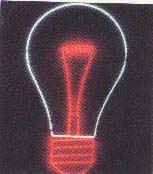
Electrical discharge through neon produces its characteristic red-orange glow, used in signs and indicators. Signs commonly described as “neon” can use other gases or phosphors to produce other colours; not every illuminated sign contains neon.
Health effects and safe handling
Neon is not regarded as chemically toxic in the way that reactive gases are, but a release can displace oxygen and cause asphyxiation, particularly in enclosed spaces. Chemical inertness does not make an oxygen-deficient atmosphere safe.
Compressed neon presents pressure hazards. Refrigerated liquid neon is extremely cold and can cause severe cold burns; warming liquid also expands into gas. Appropriate ventilation, pressure-rated equipment and cryogenic handling practices are therefore essential.
Neon in the environment
Neon's low chemical reactivity distinguishes it from reactive atmospheric pollutants. Nevertheless, an assessment of a gas release must consider the quantity, pressure and ventilation rather than claiming that it can never have an effect.
Neon in water and groundwater studies
Small amounts of atmospheric neon dissolve in natural waters. Its role in specialist groundwater studies is as a physical tracer, rather than a nutrient or disinfectant.
For example, dissolved neon can help estimate atmospheric helium in groundwater for tritium–helium-3 dating. This correction helps distinguish helium from air from helium produced by radioactive decay. Interpretation requires appropriate sampling and specialist analysis; neon concentration alone is not a general test of drinking-water safety.
Neon is not a conventional water-treatment chemical. Choose water analyses and treatment according to the actual contaminants and intended use, rather than the mere presence of a naturally dissolved noble gas.
Neon page last reviewed: by Lenntech.
Back to the periodic table of elements.