

Zirconium - Zr
Zirconium (Zr) is a chemical element with atomic number 40. This page summarises its properties, uses and environmental context, with notes for water and process-treatment engineers.
Properties · Uses and occurrence · Health · Environment · Water and treatment
Chemical properties of zirconium
| Symbol / atomic number | Zr / 40 |
|---|---|
| Group / period / block | 4 / 5 / d |
| Standard atomic weight | 91.222(3) |
| Electron configuration | [Kr] 4d2 5s2 |
| Common oxidation state(s) | +4 |
| Density (20 °C) | 6.52 g cm−3 |
| Melting point | 1854 °C |
| Boiling point | 4406 °C |
| Electronegativity (Pauling) | 1.33 |
| Non-bonded atomic radius | 0.223 nm |
| First ionisation energy | 640.074 kJ mol−1 |
| Representative isotopes | 90Zr, 91Zr, 92Zr, 94Zr, 96Zr |
| CAS registry number | 7440-67-7 |
Standard atomic weight follows CIAAW. Parentheses indicate uncertainty in the final quoted digits. Other physical and atomic data follow the Royal Society of Chemistry. Non-bonded atomic radii are method-dependent.
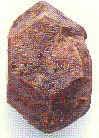
Zirconium: properties, uses and occurrence
Zirconium alloys are used in nuclear technology and chemical equipment; zirconium oxide is used in ceramics and refractories. Zirconium occurs mainly in the minerals zircon and baddeleyite. Natural zirconium has five stable isotopes.
Health and safety
The health and safety profile depends on the zirconium compound and physical form. Fine metal powder can present a fire hazard; this is different from the behavior of stable zirconium oxide or mineral zircon.
Zirconium in the environment
Zirconium is not commonly found as a free metal in the environment. Mineral particles and manufactured zirconium compounds can behave differently, so analytical results should identify the measured fraction and chemical form where possible.
Zirconium in water and treatment
Zirconium(IV) is strongly hydrolysed in water and can form polymeric or particulate species; complexing ligands and pH affect its behavior. If zirconium is present in a process stream, determine dissolved and total concentrations and characterize the ligand and solids matrix before choosing separation or recovery steps. Do not use the corrosion resistance of bulk zirconium metal to predict the behavior of dissolved or particulate zirconium compounds.
Zirconium page last reviewed: by Lenntech.
Back to the periodic table of elements.