

Manganese - Mn
Manganese (Mn) is a hard, brittle transition metal used in steelmaking, alloys and batteries. It is also an essential nutrient. In water treatment, manganese matters both as a naturally occurring contaminant and as a component of oxidants and filter media. Its chemical form determines how it behaves and how it can be removed.
Chemical properties · Applications · Manganese in water and treatment · Health effects · Environmental effects
| Symbol / atomic number | Mn / 25 |
|---|---|
| Standard atomic weight | 54.938 043(2) |
| Group / period / block | 7 / 4 / d |
| Electron configuration | [Ar] 3d5 4s2 |
| Electronegativity (Pauling) | 1.55 |
| Density | 7.3 g cm−3 at room temperature |
| Melting point | 1246 °C |
| Boiling point | 2061 °C |
| Covalent radius | 0.129 nm |
| Non-bonded radius | 0.205 nm |
| Selected oxidation states in compounds | +2, +3, +4, +6 and +7 |
| Stable natural isotope | 55Mn |
| First ionisation energy | 717.3 kJ mol−1 |
| Identification / metal isolation | Carl Wilhelm Scheele / Johan Gottlieb Gahn, 1774 |
Physical and atomic data follow the Royal Society of Chemistry; atomic weight, isotope and historical details follow CIAAW. Atomic weight is dimensionless; the corresponding molar mass is approximately 54.938043 g mol−1. The number in parentheses indicates uncertainty in the final digit. Ionic radii depend on oxidation state and coordination.
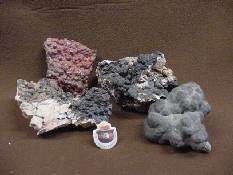
Manganese: occurrence and history
Manganese occurs widely in rocks, soils and sediments. Important minerals include pyrolusite (MnO2) and rhodochrosite (MnCO3). It occurs in several oxidation states, so manganese metal, dissolved Mn(II), solid oxides and permanganate have different properties.
Carl Wilhelm Scheele identified manganese as a distinct element in 1774. Johan Gottlieb Gahn isolated the metal in the same year. Manganese compounds had already been used in pigments and glassmaking long before the metal was isolated.
Applications of manganese
- Iron and steel: manganese is used for alloying, deoxidation and control of sulphur during production.
- Other alloys: manganese is an addition in certain aluminium alloys.
- Batteries and materials: manganese oxides are used in dry-cell batteries; manganese compounds also have applications in glass, ceramics and catalysts.
- Water treatment: potassium permanganate is an oxidant, while manganese-oxide-coated media can assist removal of dissolved manganese. The oxidant and the filter medium perform different functions.
Manganese in water and water treatment
For related Lenntech information, see manganese removal by physical and chemical processes and the iron and manganese treatment overview.
Dissolved manganese and particles
Groundwater and low-oxygen reservoir water can contain dissolved Mn(II). Oxidation can produce manganese oxide particles that contribute to dark deposits, staining and discoloured water. Deposits can accumulate in distribution systems and later be released. A clear appearance alone does not establish a low manganese concentration.
Water analysis should distinguish dissolved and particulate manganese where this affects process selection. Sample preparation and the analytical method influence what a result represents. Total manganese is also relevant when evaluating overall removal.
Removal options
- Oxidation and solids separation: convert dissolved Mn(II) into oxide particles, then remove them by suitable filtration or clarification. Oxidation alone does not remove manganese from the water.
- Adsorption and catalytic filtration: oxide-coated media capture Mn(II) and support its oxidation. Oxidant dosing, media condition and backwashing affect performance.
- Biological filtration: manganese-oxidising microorganisms can support removal in suitably operated filters.
- Ion exchange or reverse osmosis: these can be options for dissolved manganese, particularly in appropriately selected smaller systems. Feed-water conditions, maintenance and residual streams need assessment.
Oxidation kinetics depend on pH, temperature, oxidant and water chemistry. Aeration alone may be too slow under normal treatment conditions. Testing should establish contact time and separation requirements. Permanganate dosing needs control because excess reagent can add residual manganese.
Sequestration is not removal. It binds manganese in solution to help control deposition or colour, but leaves the element in the water. Any health-based treatment target therefore needs to be assessed separately from appearance.
Health effects of manganese
Manganese supports several enzymes involved in metabolism and normal physiological function. Foods such as whole grains, nuts, legumes and tea contribute to intake. Human deficiency is very rare, and its signs are not firmly established. Nutritional adequacy and excessive exposure are separate questions.
High or prolonged exposure can affect the nervous system. Inhalation of manganese-containing dust or welding fumes is an important occupational concern. Manganese poisoning can cause a movement disorder called manganism, with Parkinson-like symptoms; describing this simply as Parkinson's disease is inaccurate. Exposure route, concentration and duration matter.
Elevated manganese in drinking water is also a health concern, particularly for infants. WHO's 2022 drinking-water guidelines give a provisional value of 0.08 mg/L (80 µg/L) for total manganese, intended to protect bottle-fed infants and consequently the general population. It is provisional because of substantial uncertainty. This WHO value is guidance, not a universal legal limit; applicable national requirements may differ.
For nutritional context, see recommended daily intake of vitamins and minerals. Dietary reference values are not drinking-water limits. Manganese's nutritional role does not justify elevated concentrations in drinking water.
Environmental effects of manganese
Natural weathering supplies manganese to soils and waters; mining, industrial activities and waste streams can contribute additional inputs. Changes in oxygen availability and pH influence whether manganese remains dissolved or associates with solids. Treatment transfers manganese to backwash water, sludge, spent media or concentrate, which also require appropriate management.
Plants need manganese for photosynthesis and other functions. A manganese-containing complex helps oxidise water during photosynthesis, releasing oxygen and hydrogen ions. Plant availability generally increases as soil becomes more acidic: strongly acidic or poorly drained soils can favour toxicity, whereas higher-pH soils can favour deficiency. Effects depend on soil conditions and plant species.
Manganese page last reviewed: by Lenntech.
Back to the periodic table of elements.
Sources and further reading
- RSC: manganese properties, applications and history.
- CIAAW: manganese atomic weight and isotope.
- USGS: manganese uses and mineral information.
- NIH: manganese nutrition and health effects.
- NIOSH: welding fumes and manganese exposure.
- WHO: manganese drinking-water guideline (2022).
- Health Canada: manganese chemistry and drinking-water treatment.
- US Forest Service: iron and manganese removal (PDF).
- AWWA: managing manganese in drinking-water systems.
- University of Minnesota Extension: manganese in soils and plants.