

Fluorine - F
Fluorine (F) is the most electronegative element. Elemental fluorine gas (F₂) is highly reactive and hazardous; fluoride ions in minerals and water are chemically different and require their own assessment.
Chemical properties · Uses and occurrence · Health effects · Environmental effects · Water and treatment
Chemical properties of fluorine
| Symbol / atomic number | F / 9 |
|---|---|
| Group / period / block | 17 / 2 / p |
| Standard atomic weight | 18.998403162(5) |
| Electron configuration | [He] 2s2 2p5 |
| Usual elemental form | F2, a pale yellow gas |
| Gas density (20 °C, 1 bar; calculated) | 1.56 g L−1 |
| Melting point | −219.67 °C |
| Boiling point | −188.11 °C |
| Electronegativity (Pauling) | 3.98 |
| Non-bonded atomic radius | 0.147 nm |
| First ionisation energy | 1681.0 kJ mol−1 |
| Stable isotope | 19F |
| Isolation | Henri Moissan, 1886 |
| CAS registry number (F₂) | 7782-41-4 |
Atomic weight follows CIAAW. Intervals reflect natural isotopic variation; parentheses indicate uncertainty in the final digits. Other properties follow RSC unless noted. Atomic radii depend on their definition. Gas density is an ideal-gas estimate at 20 °C and 1 bar, calculated from ρ = pM/RT using conventional atomic weights; it is not a liquid density.
Properties, uses and occurrence
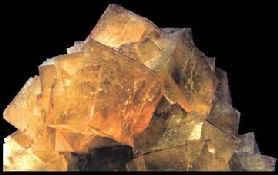
Fluorine belongs to the halogens, alongside chlorine, bromine and iodine. Because of its reactivity, it occurs naturally in compounds rather than as free fluorine gas. Fluorite and other fluoride-bearing minerals are important sources.
Fluorine chemistry is used in fluoropolymers, specialised chemicals and nuclear-fuel processing. A fluorine-containing compound does not automatically have the properties or hazards of elemental fluorine: molecular structure and exposure matter.
Health effects: fluorine gas and fluoride
Fluorine gas is a powerful oxidiser and a severe inhalation, eye and skin hazard. It reacts with water and many other materials. Handling requires specialist equipment and controls; elemental fluorine gas is not a drinking-water additive.
Fluoride helps prevent dental caries at appropriate exposure. Excess intake during tooth development can cause dental fluorosis; prolonged high intake can cause skeletal fluorosis. Exposure assessment should consider drinking water, food, dental products and other sources rather than assuming that more fluoride is always beneficial.
WHO's drinking-water guideline value is 1.5 mg/L as fluoride. This is not a recommended target for fluoridation. Applicable national requirements, local conditions and total intake must be considered. Read more about fluorosis.
Fluorine in the environment
Fluoride can enter groundwater through contact with fluoride-bearing minerals. Its concentration varies with geology and water chemistry. Industrial releases can also contribute fluoride to air, soil and water.
Environmental behaviour depends on the chemical form. The reactivity of F2, the movement of dissolved fluoride and the properties of individual organic fluorine compounds are different questions; a single statement about “fluorine” cannot describe them all.
Fluoride in water and treatment
For ordinary water-quality assessment, the relevant dissolved species is generally fluoride ion, F−, rather than elemental fluorine. Confirm the concentration and reporting units with a suitable analysis before selecting treatment.
Activated alumina adsorption and reverse osmosis are established fluoride-removal options. Activated alumina performance depends strongly on pH, media condition and competing substances. Membrane selection, water chemistry and operating conditions affect reverse-osmosis performance.
Conventional coagulation and filtration should not be assumed to provide sufficient fluoride removal. Validate the chosen process against the required treated-water quality and plan for spent media, regeneration waste or membrane concentrate. A mineral-water composition lists fluoride as one constituent; it does not by itself establish whether the water is suitable for every use.
Fluorine page last reviewed: by Lenntech.
Back to the periodic table of elements.