

Chromium - Cr
Chromium (Cr) is a hard, silvery metal valued for its role in stainless steel, alloys and surface finishes. Its behaviour in water and its health effects depend strongly on chemical form. Chromium metal, chromium(III) and chromium(VI) should be distinguished when interpreting analyses or selecting treatment.
Chemical properties · Applications · Chromium in water and treatment · Health effects · Environmental effects
| Symbol / atomic number | Cr / 24 |
|---|---|
| Standard atomic weight | 51.9961(6) |
| Group / period / block | 6 / 4 / d |
| Electron configuration | [Ar] 3d5 4s1 |
| Electronegativity (Pauling) | 1.66 |
| Density | 7.15 g cm−3 at room temperature |
| Melting point | 1907 °C |
| Boiling point | 2671 °C |
| Covalent radius | 0.130 nm |
| Non-bonded radius | 0.206 nm |
| Common oxidation states in compounds | +2, +3 and +6 |
| Naturally occurring isotopes | 50Cr, 52Cr, 53Cr and 54Cr |
| First ionisation energy | 652.9 kJ mol−1 |
| Discovery / isolation | Nicolas-Louis Vauquelin, 1797 / 1798 |
Physical and atomic data follow the Royal Society of Chemistry; atomic weight, natural isotopes and discovery dates follow CIAAW. Atomic weight is dimensionless; the corresponding molar mass is approximately 51.9961 g mol−1. The number in parentheses indicates uncertainty in the final digit. Ionic radii depend on oxidation state and coordination.
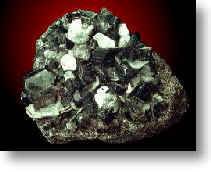
Chromium: properties and occurrence
Chromium develops a protective oxide film that contributes to corrosion resistance. In stainless steel, chromium helps form the passive surface layer; resistance still depends on alloy grade, water chemistry and service conditions. Chromium occurs principally in chromite ore, commonly represented as FeCr2O4, and is processed into ferrochromium, chromium chemicals or metal.
Nicolas-Louis Vauquelin discovered chromium in 1797 while investigating crocoite, a lead chromate mineral, and isolated the metal in 1798. The name comes from the Greek word for colour, reflecting its many coloured compounds.
Applications of chromium
- Stainless steel and alloys: chromium improves corrosion and oxidation resistance and contributes to hardness and wear resistance.
- Surface finishes: chromium plating provides decorative or functional coatings.
- Chemicals and materials: chromium compounds are used in pigments, catalysts, glass, ceramics and leather processing. The chromium species used and any species formed during processing affect exposure and waste treatment.
Chromium in water and water treatment
See Chromium in water (Cr + H2O) for related information on reactions, occurrence and removal.
Chromium(III), chromium(VI) and total chromium
Chromium(III), or Cr(III), is trivalent. Its dissolved concentration can be limited by precipitation and binding to particles, depending on pH and complexing substances. Chromium(VI), or Cr(VI), is hexavalent. In water it commonly occurs as negatively charged chromate-related ions. It can be mobile in groundwater, so chromium cannot be assumed to remain fixed in soil or sediment.
Total chromium measures chromium across the forms included by the analytical method; it does not reveal the Cr(VI) concentration. Where speciation matters, use an appropriate Cr(VI) method and follow its sampling and preservation requirements. Geological sources as well as industrial contamination can contribute chromium to water.
Treatment options
- Reduction followed by removal: a reducing agent, such as ferrous iron, converts Cr(VI) to Cr(III). Subsequent precipitation or coagulation and solids separation remove chromium from the water. Reduction alone changes its oxidation state; it does not remove the element.
- Anion exchange: suitable resins capture negatively charged Cr(VI) species. Resin selection, competing anions, breakthrough and spent resin or regenerant management affect performance.
- Reverse osmosis and nanofiltration: membrane processes can remove chromium, with performance depending on the species, membrane and feed water. The concentrate retains the rejected contaminants.
- Cr(III) precipitation and coagulation: pH adjustment and solids separation can be effective, but complexing agents in industrial wastewater can change removal behaviour.
Process selection should be supported by water analysis and treatability testing. Check both the required chromium endpoint and residual streams. Oxidants can convert some remaining Cr(III) back to Cr(VI) under suitable conditions, so treatment and downstream disinfection need to be considered together.
Health effects of chromium
Chromium(VI)
IARC classifies chromium(VI) compounds as carcinogenic to humans (Group 1). Occupational inhalation evidence establishes a lung-cancer hazard. Cr(VI) exposure can also injure the respiratory tract and cause skin irritation, ulcers or allergic dermatitis. The actual risk depends on the compound, dose, route and duration of exposure.
EPA's 2024 assessment identifies Cr(VI) as carcinogenic to humans by inhalation and likely to be carcinogenic to humans by oral exposure. Drinking-water exposure should therefore not be dismissed simply because much of the human evidence concerns workplaces. These hazard assessments do not mean that every exposure causes cancer.
Examples of Cr(VI) compounds include chromium trioxide and chromates of calcium, lead, strontium and zinc. Exposure controls should address the actual chemicals, dusts and fumes present.
Chromium(III) and nutrition
Cr(III) occurs in foods and has a different toxicological profile from Cr(VI). It should not be described as harmless at every dose. Chromium's essentiality in humans remains debated: US dietary reference values include Adequate Intakes established in 2001, while EFSA concluded in 2014 that convincing evidence of essentiality was lacking and did not set an intake recommendation. NIH notes that no clinically defined chromium deficiency state exists.
For general context, see recommended daily intake of vitamins and minerals. Nutritional reference values for Cr(III) are not drinking-water limits and do not apply to Cr(VI).
Environmental effects of chromium
Weathering releases chromium naturally, while metal processing, plating, leather production and waste disposal can add to environmental concentrations. Chemical form and environmental conditions determine transport and biological availability. Cr(III) often binds to solids or precipitates, whereas Cr(VI) can remain dissolved and migrate.
Changes in pH and oxidation–reduction conditions can alter this behaviour. Chromium is an element and is not destroyed by chemical reduction or adsorption: treatment changes its form or transfers it to another stream. Environmental management therefore includes control of discharges and appropriate handling of chromium-bearing sludge, media and concentrates.
Chromium page last reviewed: by Lenntech.
Back to the periodic table of elements.
Sources and further reading
- RSC: chromium properties and applications.
- CIAAW: chromium atomic weight, isotopes and history.
- USGS: chromium resources, processing and uses.
- IARC: chromium, nickel and welding — chromium carcinogenicity evaluations.
- EPA IRIS: chromium(VI) toxicological assessment.
- NIH: chromium nutrition and dietary reference values.
- Health Canada: chromium in drinking water — chemistry, analysis and treatment.
- EPA: drinking-water treatment technologies, including anion exchange.
- NTP: hexavalent chromium compounds — Report on Carcinogens (PDF).