

Carbon - C
Carbon (C) underpins organic chemistry and appears in very different materials, from graphite and diamond to activated carbon. For water treatment, distinguish the adsorbent material from dissolved organic and inorganic carbon.
Chemical properties · Uses and occurrence · Health effects · Environmental effects · Water and treatment
Chemical properties of carbon
| Symbol / atomic number | C / 6 |
|---|---|
| Group / period / block | 14 / 2 / p |
| Standard atomic weight interval | [12.0096, 12.0116] |
| Electron configuration | [He] 2s2 2p2 |
| Forms | Graphite, diamond, graphene and fullerenes, among others |
| Density (near room temperature) | Graphite: about 2.2; diamond: 3.513 g cm−3 |
| Atmospheric-pressure phase change | Sublimes at very high temperature; RSC lists about 3825 °C |
| Electronegativity (Pauling) | 2.55 |
| Non-bonded atomic radius | 0.170 nm |
| First ionisation energy | 1086.5 kJ mol−1 |
| Stable isotopes | 12C and 13C |
| Radioactive isotope used in dating | 14C |
| History | Known since antiquity |
| CAS registry number | 7440-44-0 |
Atomic weight follows CIAAW. Intervals reflect natural isotopic variation; parentheses indicate uncertainty in the final digits. Other properties follow RSC unless noted. Atomic radii depend on their definition.
Forms, uses and occurrence
Carbon is a nonmetal whose bonding allows a very wide variety of compounds. It combines with hydrogen, oxygen, nitrogen and other elements in biological molecules and industrial materials.
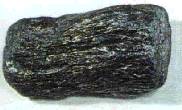
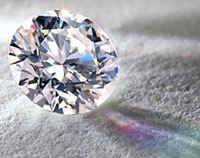
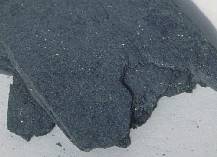
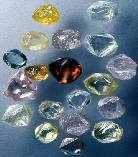
Its allotropes have different structures and properties. Graphite is used in electrodes and lubricating applications; diamond is used in cutting and abrasive tools. Activated carbon is a specially processed porous material used for adsorption, rather than simply a synonym for graphite or charcoal.
Carbon occurs in living matter, fossil resources, the atmosphere and carbonate minerals. Limestone and marble commonly contain calcium carbonate. Gypsum is a hydrated calcium sulfate, not a carbonate. Carbon-14 occurs at trace levels and is radioactive; it should not be grouped with the stable isotopes.
Health effects of carbon and its compounds
Carbon is fundamental to organic molecules in the body, but this does not make every carbon-containing material safe. Exposure assessment must distinguish solid allotropes, industrial dusts and individual compounds.
IARC classifies carbon black as possibly carcinogenic to humans (Group 2B), based on sufficient evidence in experimental animals and inadequate evidence in humans. This classification applies to carbon black, not automatically to diamond, graphite or every carbon material.
Carbon monoxide is a colourless, odourless toxic gas that can cause severe poisoning and death. Its hazards differ from those of carbon dioxide or a solid carbon sample. Dust, combustion products and process chemicals therefore need separate assessment.
Carbon in the environment
Carbon cycles among air, water, soil, organisms and rocks. Fossil-fuel use and land-use change alter this cycle. Increasing atmospheric carbon dioxide contributes to climate change; uptake of carbon dioxide by seawater changes carbonate chemistry and increases ocean acidity.
It is therefore misleading to say that carbon and its compounds have no environmental effects. The effects depend on the material, the quantity released and the receiving environment. See the carbon cycle for further background.
Carbon in water treatment
Activated carbon adsorption can remove many taste- and odour-producing substances, selected organic contaminants and disinfection by-product precursors. Performance depends on the carbon, target compounds, competing substances and bed operation. Exhausted media need replacement or regeneration, and removed contaminants remain in the spent material.
Adsorption is attachment to a surface, distinct from absorption into a bulk material. A carbon bed is not a universal purifier: select and validate it for the target contaminants. Further information: activated carbon.
Dissolved inorganic carbon includes carbon dioxide, bicarbonate and carbonate. These forms are central to alkalinity and pH control. Alkalinity describes acid-neutralising capacity; it is not the same as pH. See carbonate and bicarbonate in irrigation water.
Organic carbon measurements answer a different question from alkalinity or dissolved inorganic carbon. Choose analyses and treatment around the actual objective, such as contaminant adsorption, biological treatment or control of water chemistry.
Carbon page last reviewed: by Lenntech.
Back to the periodic table of elements.
Sources and further reading
- RSC: carbon properties, uses and history
- CIAAW: carbon atomic weight and isotopes
- IARC: evaluation of carbon black
- CDC: carbon monoxide hazards
- EPA: activated carbon and drinking-water treatment
- USGS: alkalinity and carbonate chemistry
- NOAA: carbon dioxide and ocean acidification
- US National Park Service: gypsum composition