

Silver - Ag
| Atomic number | 47 |
|---|---|
| Group / period / block | 11 / 5 / d |
| Relative atomic mass | 107.8682 |
| Density at 20 °C | 10.5 g/cm3 |
| Melting point | 961.78 °C |
| Boiling point | 2162 °C |
| Electron configuration | [Kr] 4d10 5s1 |
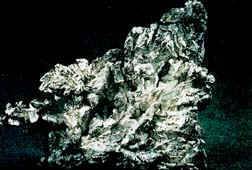
Silver
Silver is a soft, lustrous metal and an excellent electrical conductor. It is used in electrical contacts, batteries, mirrors, alloys and jewellery. Sulfur compounds in air can tarnish its surface by forming silver sulfide.
In water, silver can occur as dissolved ions, complexes, fine particles or compounds such as silver sulfide. Mobility depends on water chemistry and suspended or sorbing materials. Silver-bearing wastewater can arise from photographic processing, electronics manufacture and metal finishing.
Silver in water treatment
Water-treatment context: Select treatment based on silver speciation and stream characteristics. Sorption and precipitation can reduce dissolved silver in some waters; ion exchange and reverse osmosis have also been used to recover silver from particular rinsewaters. Characterize spent media, concentrate and sludge for silver content.
Elemental metals and dissolved metal species behave differently in water. Water chemistry and the exact compound or complex must be considered when assessing treatment.
Back to the periodic table of elements
Sources and further reading
Silver page last reviewed: by Lenntech.