

Ultrapure water production for electrolyser feed water for green hydrogen
High-purity water is an essential feedstock for electrolytic hydrogen production. A suitable treatment system delivers the water quality required by the electrolyser manufacturer and helps control contamination during storage, distribution and recirculation.
Water and energy in green hydrogen production
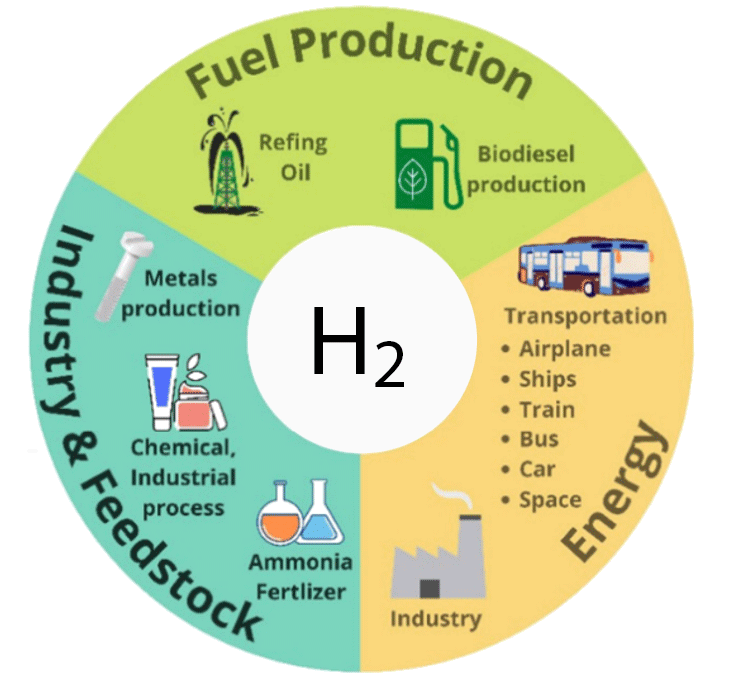
Water electrolysis uses electricity to split water into hydrogen and oxygen. When supplied with renewable electricity, it is a route to green hydrogen. Hydrogen is used in chemical production, refining, energy storage and fuel cells.
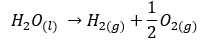
The overall reaction is:
Hydrogen contains approximately 33.3 kWh/kg on a lower-heating-value basis, or 39.4 kWh/kg on a higher-heating-value basis. These are chemical-energy values, not the electricity a fuel cell will deliver. Electrical output depends on conversion efficiency, and producing hydrogen by electrolysis requires an energy input.
How much water is needed?
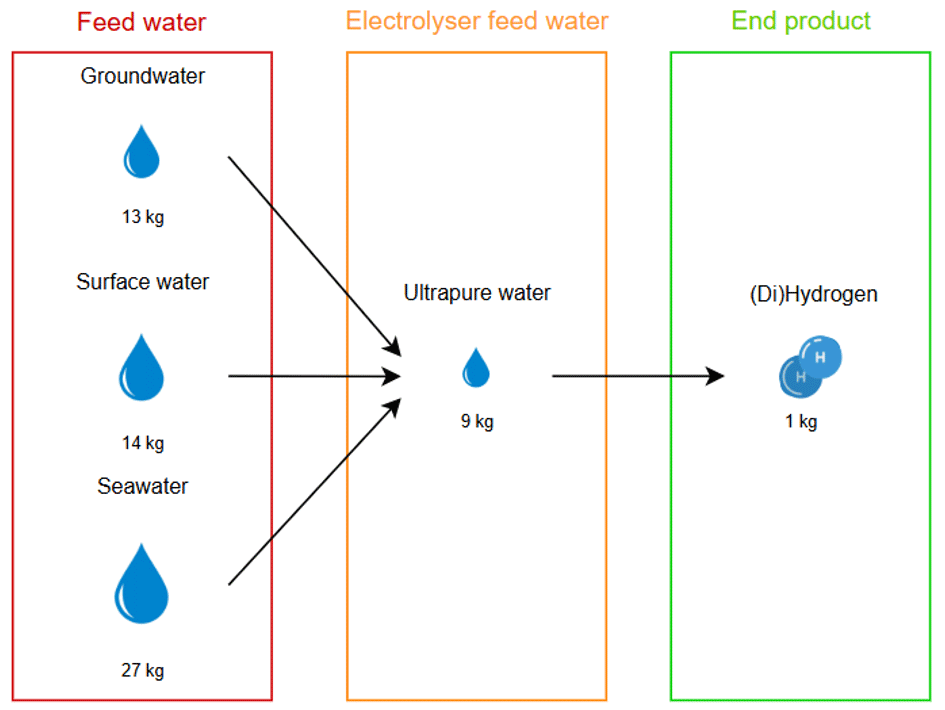
The reaction consumes approximately 9 kg of water per kg of hydrogen and produces approximately 8 kg of oxygen. This is the stoichiometric requirement. Actual high-purity make-up water can be higher because of purge, carry-over and other process losses.
Raw-water demand also includes treatment reject streams, filter backwashing, regeneration and any cooling-water requirements. A fixed ratio such as 15–30 kg of raw water per kg of hydrogen is therefore not a universal design value. Source-water quality, treatment recovery, water reuse and the cooling system determine the site water balance.
For a defined treatment boundary: raw-water feed = high-purity product-water demand ÷ overall treatment recovery. Use the net recovery of the whole treatment train, including internal recycle, rather than multiplying unrelated equipment ratings.
For example, 9 kg of product water at 75% overall recovery requires 12 kg of raw water, before additional electrolyser losses or cooling. Water withdrawn from a source, water consumed and water discharged should be reported separately.
Define the water-quality specification first
Feed-water requirements depend on the electrolyser technology and model. PEM, alkaline and AEM systems do not necessarily require the same quality. The term “ultrapure water” alone is insufficient to define a treatment guarantee: use the manufacturer's current limits at the specified sampling point and temperature.
| Parameter | What to establish |
|---|---|
| Conductivity or resistivity | The required limit, reference temperature and measurement location. |
| Specific impurities | Limits for substances such as chloride, sodium and silica, where specified. |
| Organic contamination | The total organic carbon (TOC) limit and any additional requirements. |
| Particulates and biological contamination | Filtration, storage hygiene and monitoring appropriate to the system. |
| Dissolved gases | Whether carbon dioxide or other gases need to be controlled. |
Conductivity is useful for monitoring ionic contamination, but it does not by itself demonstrate compliance with organic, particle or microbiological requirements. Weakly ionised substances such as carbon dioxide and silica also need consideration when designing the polishing stage.
Selecting a treatment train
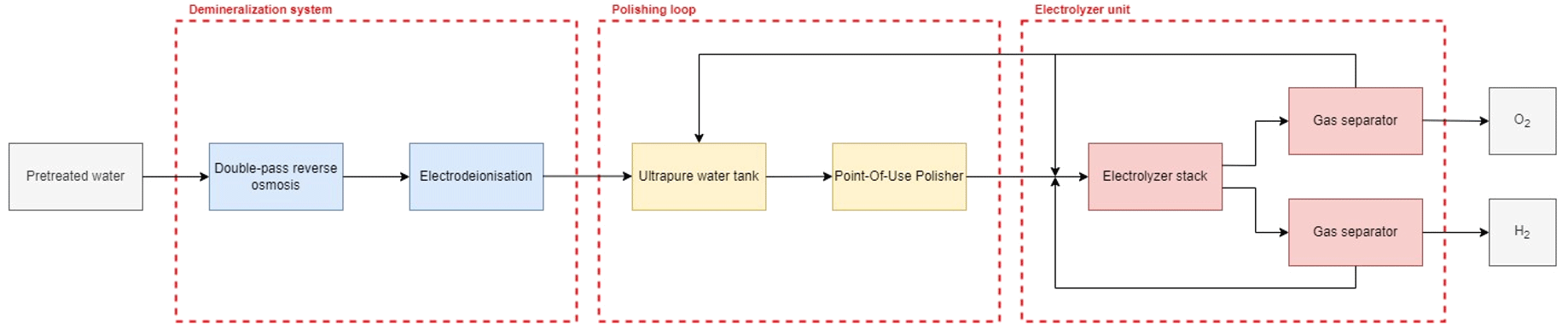
Treatment starts with the raw-water analysis and the required product-water specification. Depending on the source, pretreatment may include multimedia filtration, ultrafiltration, fine filtration and measures to control scaling, fouling or oxidants before reverse osmosis.
Reverse osmosis removes much of the dissolved salt load. Single- or double-pass RO may be followed by electrodeionisation (EDI) or ion exchange for further demineralisation. Double-pass RO plus EDI is one established configuration, rather than a requirement for every electrolyser. Dissolved carbon dioxide, hardness and silica loads must be checked against the selected EDI module's feed-water limits.
Storage and point-of-use polishing
Water can pick up contaminants from tanks, piping, air ingress or maintenance. Where recirculation is used, impurities can accumulate. Compatible materials, suitable storage and distribution arrangements, and monitoring help maintain quality at the point of use.
A point-of-use or recirculation polisher may remove residual ionic contamination, including impurities released within the electrolyser circuit. Its location, flow and capacity should be selected with the electrolyser supplier. It is a safeguard, not a replacement for an adequately designed upstream treatment system.
Energy and operating costs: compare like with like
Water purification and electrolysis have different duties. Purification energy is commonly expressed per cubic metre of water produced; electrolysis energy is commonly expressed per kilogram of hydrogen. Comparing the figures requires a clearly defined water balance and system boundary.
As an illustrative calculation, assume purification uses 3 kWh/m3 of product water and the electrolyser receives 10 litres of that water per kg of hydrogen. Purification then uses 0.03 kWh/kg H2. Against an assumed electrolysis electricity demand of 55 kWh/kg H2, this is approximately 0.05%. These assumptions are not a performance guarantee and exclude cooling and other site services.
Actual treatment energy and cost depend on salinity, treatment pressure, recovery, purification requirements, consumables and waste handling. Electrolyser electricity demand depends on technology, operating conditions, degradation and which auxiliaries are included. Fixed percentages for water-treatment CAPEX, stack CAPEX or electricity OPEX should not be applied to every project.
Although water treatment may be a relatively small part of a project's overall cost, inadequate water quality can impair performance, damage components and increase maintenance or downtime. Treatment selection should consider reliability and the required water quality as well as capital cost.
Lenntech water-treatment solutions
Lenntech can provide solutions covering raw-water pretreatment through to point-of-use polishing. Available technologies include:
- Multimedia filtration
- Ultrafiltration and fine filtration
- Reverse osmosis
- Electrodeionisation
- Ion exchange
- UV treatment
The selected combination depends on source-water quality, product-water requirements, demand profile and the overall water balance.
Read more about green hydrogen production, electrolysis and water requirements.