

Environmental and sustainbility aspects of Direct Lithium Extraction
Environmental performance has become a central factor in lithium‑project development as water availability, land use, and long‑term ecosystem impacts are increasingly scrutinized by regulators, communities, and investors. Conventional lithium recovery from brines — particularly through evaporation‑pond systems — can place significant pressure on natural resources due to large surface areas, extended residence times, and high water losses.
Direct Lithium Extraction (DLE) has been developed as an alternative approach that supports more sustainable lithium recovery by reducing water consumption, minimizing land occupation, and enabling closed‑loop brine management. These characteristics make DLE an important technology for aligning lithium production with modern environmental and social expectations.
Water management and reduced consumption
- Elimination of evaporation losses
Traditional evaporation‑based lithium extraction relies on natural water evaporation to concentrate lithium salts, resulting in the permanent loss of large water volumes. DLE systems avoid this step entirely by extracting lithium directly from the liquid phase. As a result, total water consumption is significantly reduced, particularly in arid regions where brine extraction often competes with limited freshwater resources.
- Closed‑loop water use
Many DLE configurations allow treated brine to be reinjected into the reservoir following lithium removal. This approach supports circular water management, maintaining the hydraulic balance of the brine system and reducing surface discharge volumes. Closed‑loop operation also limits long‑term depletion of underground brine resources.
Reduced land footprint
- Compact facilities
Evaporation ponds may cover several square kilometers depending on production capacity. In contrast, DLE installations consist of modular process units concentrated within a much smaller industrial footprint. Compact layouts reduce disturbance to surrounding landscapes and simplify site remediation at the end of project life.
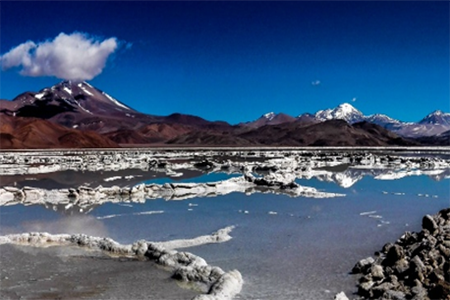
Illustration of evaporation ponds in mining industry
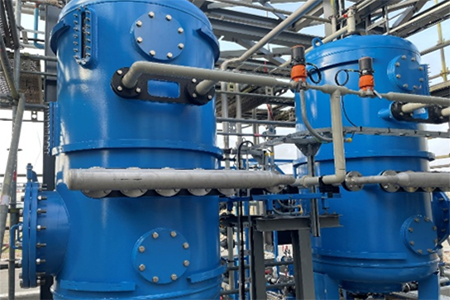
Illustration of evaporation ponds in mining industry
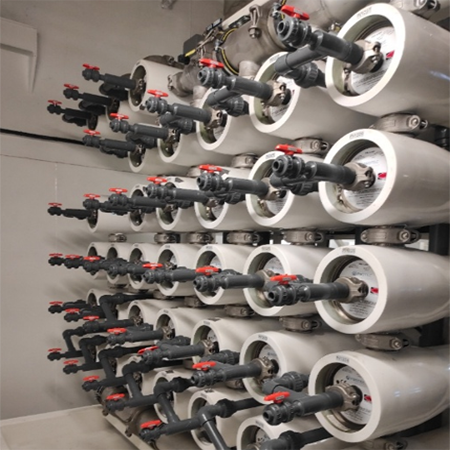
Illustration of membrane pressure vessels for water purification
- Applicability to industrial sites
Because DLE does not require large surface ponds, it can be integrated into existing industrial facilities such as geothermal plants or oil and gas operations. This reuse of established infrastructure further limits land transformation and environmental impact.
Brine reinjection and environmental stability
Reinjecting treated brine after lithium extraction helps preserve the original chemical and volumetric characteristics of subsurface reservoirs. This minimizes changes to groundwater flow patterns and reduces long‑term risks associated with large‑scale brine removal.
By avoiding extensive open‑air brine handling, DLE reduces the formation of salt residues and limits exposure of hypersaline fluids to surrounding soil and ecosystems. This contributes to improved environmental stability in sensitive regions.
Chemical and energy efficiency
- Improved selectivity
DLE technologies selectively target lithium, reducing the need for intensive downstream purification and excessive reagent consumption. Improved selectivity lowers the overall chemical footprint of lithium production.
- Energy integration opportunities
When applied to geothermal brines, DLE can be combined with existing heat and power systems. This integration supports energy efficiency and reduces the carbon intensity of lithium recovery by leveraging renewable energy sources already available on site.
Alignment with ESG and regulatory frameworks
Sustainability performance is increasingly linked to project financing, permitting, and long‑term viability. DLE supports compliance with environmental, social, and governance (ESG) criteria by:
- Reducing freshwater consumption
- Limiting land disturbance
- Enabling closed‑loop brine management
- Improving predictability of environmental performance
These factors are particularly relevant for projects in regions experiencing water scarcity or heightened environmental oversight.
How Lenntech supports your project
The environmental advantages of Direct Lithium Extraction can only be realized through careful system design, appropriate pretreatment, and controlled brine handling. Lenntech combines expertise in water treatment, process engineering, and environmental optimization to support sustainable post-DLE process implementation across diverse project conditions.
Lenntech offers:
- Brine characterization and post‑DLE concept assessment, including laboratory testing to evaluate lithium separation and polishing requirements
- Design of post‑DLE treatment systems, including multimedia filtration (MMF), ion‑exchange, ultrafiltration (UF), electrodialysis (ED / EDR), nanofiltration (NF) or reverse osmosis (RO) where applicable
- System piloting and validation to define operating parameters and optimize combinations of membrane and IEX technologies for specific lithium‑rich brines
- Integration of IEX and membrane technologies downstream of core DLE units to improve lithium selectivity, stability, and product quality
- Modular and scalable post‑DLE treatment units, suitable for high‑salinity environments and integration into existing DLE process lines
- Water and brine management solutions, supporting recirculation, reuse, or reinjection strategies after lithium separation
Lenntech supports DLE projects by engineering, supplying, and commissioning post‑DLE treatment systems, providing solutions that complement primary lithium extraction technologies and help operators achieve consistent, efficient, and sustainable lithium recovery.
For more information or quotation, please contact us:  Feedback Form or call us on +31 152 610 900