|
Aquifers distribution in Britain
What is happening?
Which areas are effected?
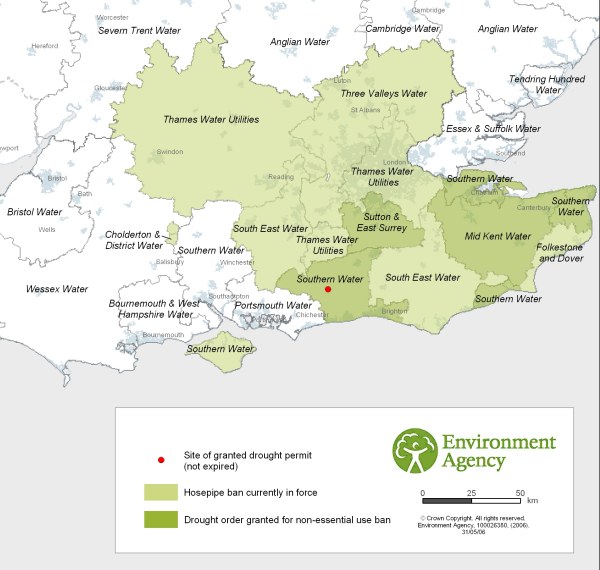
Water restriction in England
The water companies responsibility
Can you save water?
Climate change, linked to the emission of greenhouse gasses such as carbon dioxide (CO2), is disrupting weather patterns. More rain is falling in some places, and less in others. In the industrialized world even plentiful water sources may be strained by the demands of agriculture, industries and millions of people living in the same area. Water resources in South East England are subjected to acute pressures due to high population density and low rainfall. It has also forecasted that this region is the most likely to be affected by climate change.
South East England has the largest population of any English region, at more than 8 million in 2004. In this area lower rainfall can be experienced as a drought. Due to the law water table level in the aquifers of South East England the water companies of this area imposed some water restrictions to the consumers. Water is an important resource that everybody should learn to preserve. To save water takes a little effort and make a big difference for the environment.
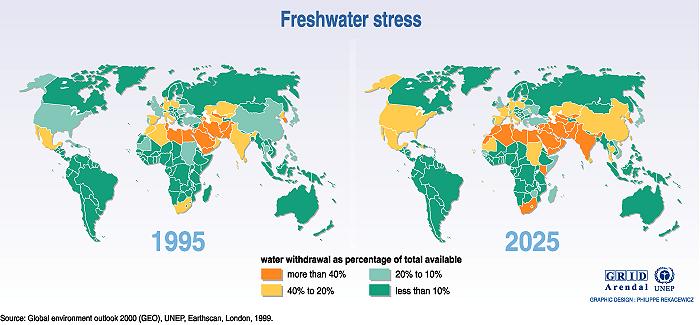
Global environment outlook (GEO), UNEP, Earthscan, London, 1999
What is a drought?
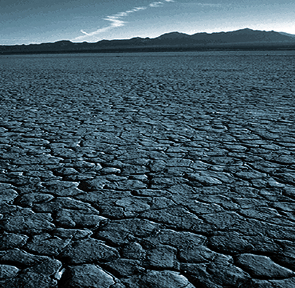
A drought can be defined as a prolonged period of unusually dry weather in an area where some rain might normally be expected. Droughts involve water shortages, crop damage, steam flow reduction and depletion of groundwater and soil moisture.
|
|
Why do droughts happen?
Quite often droughts are the combined result of climate and human activities in the area. Drought can occur in many areas, but some areas are more susceptible of severe drought than others. In particular, severe droughts tend to occur between latitudes 15 and 20, in areas adjacent to the permanently arid and continental regions. These regions are permanently arid because warm tropical air masses descend to hearth surface and become hotter and drier. If and when the predominant westerly wind system shifts poleward, this bring high pressure anticyclonic conditions of the permanently arid regions to areas where the climate is usually dominated by seasonally wet low pressure weather systems, and drought follows.
The effects of water shortage and drought are often complicated and intensified by human activity and mismanagement. Human impacts are evident in various ways, including causing desert to spread by falling trees for firewood and building houses, and by poor farming techniques.
What are the environmental impacts of a drought?
Droughts produce a series of impacts, which usually extend far beyond the area that is experiencing the actual water shortage. These impacts are both direct and indirect.
Direct impacts are: -
Lower flows in rivers lead to lower levels of dissolved oxygen and lower dilution of effluent discharges; -
Aquatic and marginal plants can find it hard to survive when flows are low and the edge of river dries out; -
Low flows lead to a reduction in fish spawning areas and can reduce fish migration. Algae bloom increase and this can kill fishes and turn the water green. They can also be dangerous for the animals which drink from rivers; -
Drought can effect also natural vegetation and crops away from rivers and wetlands
Indirect impacts arise via the direct impacts. Lower yields, for example, mean reduce income for farmers and forestry owners, with increasing in food prices and unemployment. One of the most serious impacts of prolonged drought is enforced mass migration. This happens particularly in arid developing countries, i.e. in Western Africa mass migration has generally involved a movement southwards to the wetter regions, which are often already seriously overcrowded.
Aquifers distribution in Britain
|
British ground water is held in three major aquifer systems, with most of the important aquifers lying south-east of a line joining Newcaslte-upon-Tyne and Torquay. An aquifer is an underground water-bearing layer of porous rock through which water can flow after it has passed downwards (infiltration) trough the upper layers of soil. The principal aquifers of the UK are found in the lowlands of England. The most important are the Chalk, the Permo-Triassic sandstones, the Jurassic limestones and the Lower Greensand. On average 7000 million liters of water are extracted from these aquifers each day. Approximately 50% of this vast amount of water comes from the chalk aquifers, 35% from Triassic sandstone and the remaining from smaller aquifers, the most important of these being the limestones. London is built on a thick layer of clay. Below the clay the chalk and Paleogene sands form a major groundwater reservoir. The availability of such a convenient source of water made a significant contribution in the economic development of the city. Between 1800 and 1965 the aquifers in the central part pf the London basin provided about 5700 million cubic meters of water. Due to this high exploitation the water level gradually fell and saline water from the tidal river Thames intruded in some highest parts of the Aquifer. Over 40 years ago an operation of artificial recharge started in the void space in the aquifer made available by the fall in water level. |
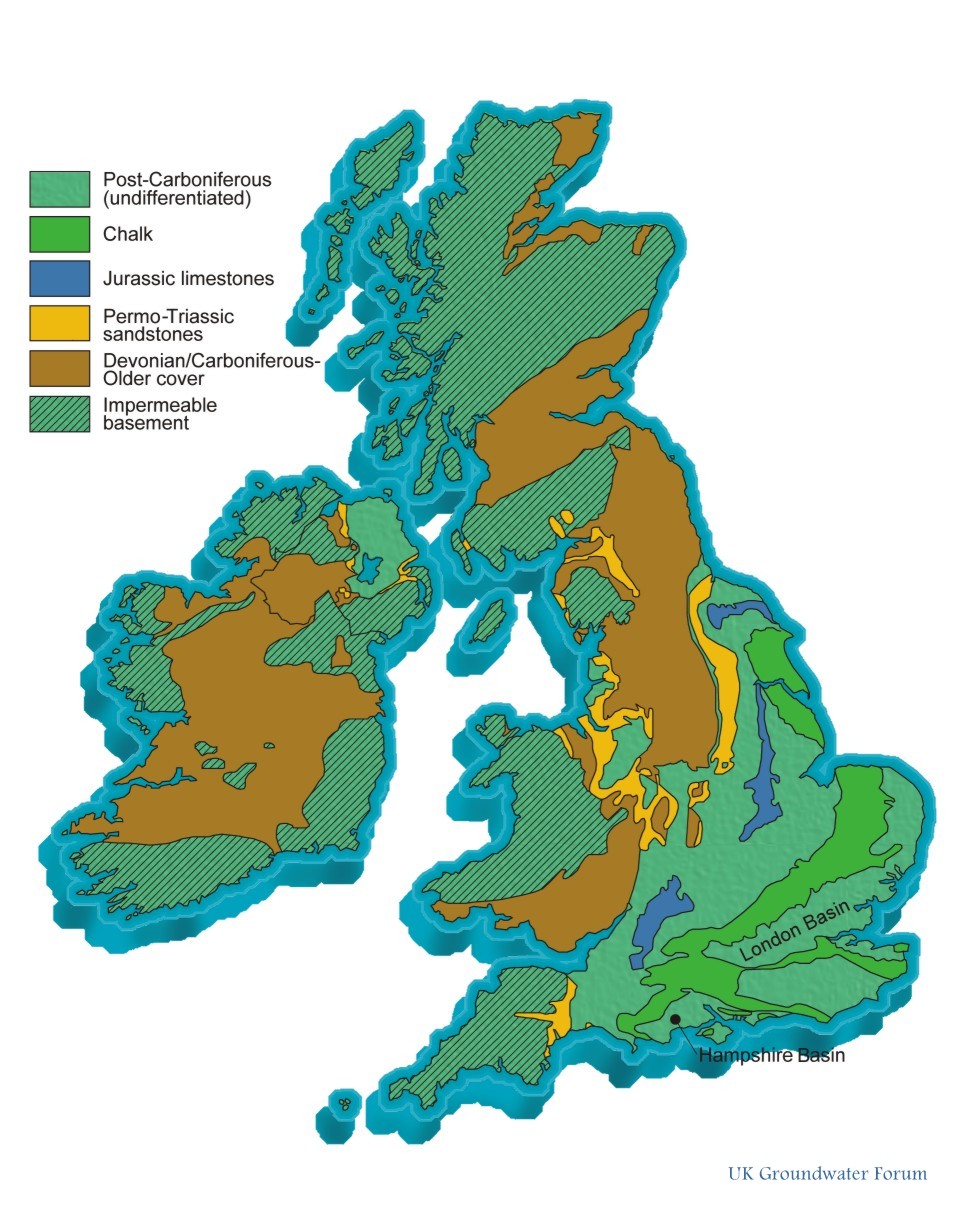
UK Groundwater Forum
British Geological Survey "The aquifers of the UK"
http://www.groundwateruk.org/archive/the_aquifers_of_the_uk.pdf |
During hot dry summers, times of high demand of water, the stored water is pumped from the aquifers, treated once again and then distributed. Artificial recharge now provided Londoners with 100 million liters of water per day at times of drought.
|
|
What is happening?
The current shortage is the result of two consecutive dry winters that have led to a limited recharge of reservoirs and aquifers. This pattern has been particularly prevalent in southeast England, which has been significantly below average since November 2004. Between October 2005 and April 2006 aquifers received approximately three quarters of the normal rainfall. With two winters below average rainfall, the water of the water table in several catchments has dropped close to minimum levels or below previous recorded minimum levels. | 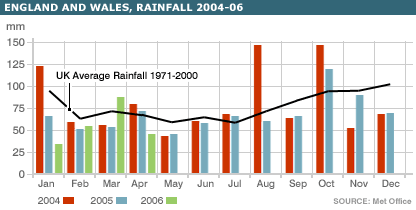
BBC NEWS: http://news.bbc.co.uk/2/hi/science/nature/4985760.stm |
Beside this South-East already very high demand of water has risen in the last few years to levels not seen before due to increased use in gardens, washing of vehicles, power showers, and to additional commercial and domestic developments in the south-east. These peaks in demand coincide with a time of no recharge, so whatever is stores has to be supplied to the customers by the end of summer.
Moreover more than 3.5 billion liters of water were lost daily through broken and leaking pipes in England and Wales last year, according to OfWat (the office of Water Service). That is more than 15 billion liters supplied by the UK water system each day and more that the entire amount of bottled water drunk by British people in a year.
This situation has led to enforce some water restrictions. It is likely that these restrictions will not be lifted until there has been a significant level of rainfall, resulting in a marked rise in water table levels.
South-East England, the area are subjected to water restriction, is supplied by the following water companies:
However most of England and Wales has had a dry winter. The Northern England has had rainfall that approached average levels.
| Level one – Hose pipe ban
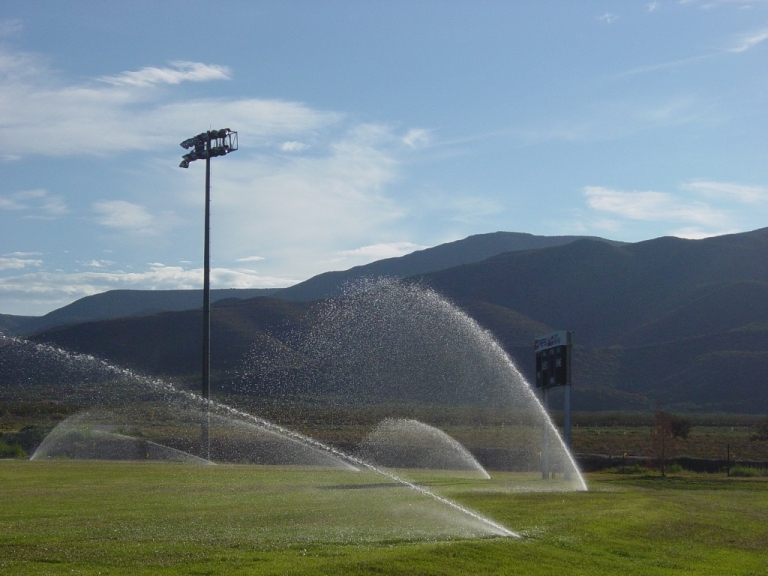
Water companies can impose a ban on domestic use of hosepipe and sprinklers. They do not need permission from the government or the Environmental Agency. Swimming pools can still be filled and business such as car washes and garden centres are exempt. |
 |
Level two – Drought orders
Water companies impose the level two of drought restrictions with the permission from the government or the Environmental Agency.
The restrictions imposed by the non-essential use Drought Order are: - The watering by hosepipe, sprinkler or similar apparatus of gardens, including lawns, verges and other landscapes areas, allotments, parks and of any natural or artificial surfaces used for sport or recreation, whether publicly or privately owned.
- The filling of privately owned swimming pools other than for medical treatment.
- The filling of ornamental ponds other than fish and wildlife garden ponds.
- The washing by hosepipe, sprinkler or similar apparatus of roads vehicles, boats, railway rolling stock or aircrafts for any reason that safety and hygiene.
- The cleaning of exterior building other than windows and cleaning of industrial premises.
- The cleaning of windows by hosepipes or sprinklers.
- Operation of ornamental fountains and cascades, including those where the water is recycled.
The restrictions only apply to the private use of water. It do not apply to the commercial use of water.
Level three – Emergency drought orders
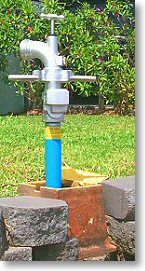
Water companies on permission of the environment secretary for emergency can put emergency drought orders into force. This could mean water supplies to homes being shut off and standpipes set up in streets or water rationing by cutting off supplies to homes and businesses at certain times of day. |
 |
British water companies as Thames Water has failed to cut its average daily leakage rate for three years in a row. At the same time Thames Water has reported and increase in profits and bonuses. Meanwhile its customers are subjected to hose pipe bans and have to pay higher and higher water bills. Customer are unhappy and they are at some extent refusing to respect the ban or to pay their water bills. Some critics are also addressed to OfWat for not being strict enough with water companies that failed to reach the imposed quality targets.
How can you save water?
Saving water at home, in the garden or at work takes very little effort, but makes a big difference.
At home:
In the home and English person use on average 160 liters of water per day for cooking, washing, drinking. Some tips that help to reduce the domestic water consumption follows: -
Don not clean or peel vegetable under a running tap. You can use a bowl and use the leftover water for watering house plants. -
Don not fill the kettle, but only boil as much water as you need. This will help you to reduce the electricity bills too. -
Use the washing machine only when you have a full load. Half-load programs use more than half the water and energy of a full load. -
When you buy a new dishwasher or washing machine, choose one that is energy efficient; this saves on water and electricity. -
Take a shower rather than a bath. This can save over 300 liters of waters in a week. Be careful though because a power shower can use more water than a bath. -
Approximately one-third of water used in the home is flushed away. Fitting a save-a-flush (a bag of harmless crystals) in your toilet can save up to 1 liter per flush. This corresponds to almost 2.000 liters per person per year. -
Close the water when you brush you teeth and use a glass of water to rinse them after brushing. Try not to leave the tap running also when you shave or wash your hands. -
Check if your cistern is leaking by putting a little food colouring in the cistern. If the colouring begins to appear in the bowl when the toilet has not been flushed, you should get the cistern checked. -
Put your cotton wool and tissues in a waste bin, rather then flushing them down in the toilet. -
Wash your car with a bucket and sponge. -
Fix leaking taps. -
Keep a bottle or jug of water in the fridge instead of running taps until the water runs cold. -
Lag your pipes and leave your heating on a low setting when you are out to avoid bursts in cold weather. -
Buy a water meter and by turning off the water and taking two readings in several minutes. If the readings are different there may be a leak.
In your garden: -
Allow your grass to grow a little longer during dry periods. Lawns can survive long periods of dry weather if the grass is not cut too short. -
Water your garden in early morning or evening. This will reduce the amount of water lost to evaporation. -
There is no need to water well-established trees and shrubs. Leave them alone unless the show obvious signs of wilting. -
Collect rainwater in water butts and use a watering can instead of a hose. -
Regularly weed your garden. -
Water directly around the roots of plants. The water you pour on the leaves often evaporates in high proportions. -
Mulches such as wood chips, bark and gravel help to prevent water evaporation and also suppress weed growth. -
Have a meter fitted if you use a sprinkler. -
Move all pot plants and hanging baskets to the north side of the house, or into the shade.
Sources
Books Web pages
BBC:
http://news.bbc.co.uk/1/hi/uk/4985976.stm
http://news.bbc.co.uk/2/hi/science/nature/4985760.stm
Thames Water
http://waterwise.fortune-cookie.com/domestic/top-tips.asp
Mid Kent water:
http://www.midkentwater.co.uk/household/efficiency/index.htm
http://www.midkentwater.co.uk/drought/index.htm
Environment Agency UK:
http://environment-agency.gov.uk/subjects/waterres/1014767/?version=1&lang=_e
UK Groundwater forum:
http://www.groundwateruk.org/html/depth.htm
|