
Fenton's reaction
H.J.H Fenton discovered in 1894 that several metals have a special oxygen transfer properties which improve the use of hydrogen peroxide. Actually, some metals have a strong catalytic power to generate highly reactive hydroxyl radicals (.OH). Since this discovery, the iron catalyzed hydrogen peroxide has been called Fenton's reaction. Nowadays, the Fenton's reaction is used to treat a large variety of water pollution such as phenols, formaldehyde, BTEX, pesticides, rubber chemicals and so on.Applications of the Fenton's reaction: This process may be use to wastewater, contaminated soils and sludges with the following actions:
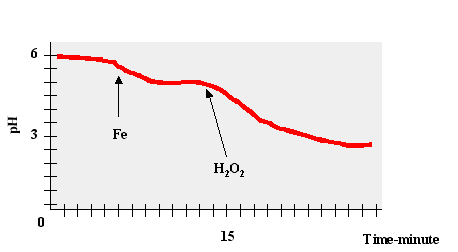
How does the Fenton's reaction work ? After addition of the iron and the hydrogen peroxide, they are going to react together to generate some hydroxyl radicals as it shows in the following equations: Fe2+ + H2O2 ----> Fe3+ + .OH + OH- Fe3+ + H2O2 ----> Fe2+ + .OOH + H+ The typical range for the iron dose is 1 part of Fe per 5-25 parts of H2O2. After that the hydroxyl radicals are going to react with the pollutants to oxidize its. Actually the hydroxyl radicals can react according 4 kinds of reactions with the pollutants:
During the Fenton's reaction all the parameters are adjusted to promote the two first kind of reaction between the pollutant and the hydroxyl radicals. Requirements of the reaction:
Resource: US Peroxide |