
Gas purification techniques
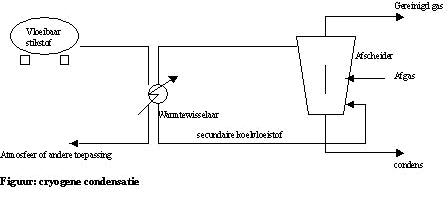
Cryogenic condensation | |
| Cryogenic condensation is generally carried out as an indirect condensation. The cooling medium of the gases to treat it has been broken away from by a heat exchanging surface. At cryogenic solvents removal it always the intention is the condensed using solvent again. To improve the dissidence of solvents a number of points of interest needs to be succeeded: |
|
|
Attention must be paid to the material choice for corrosion of the heat exchangers. The typical cooling elements of copper and aluminum have been made. Moreover are the cooling elements that may have been made of stainless steel . Stainless steel gives generally few problems with corrosion. For cryogenic condensation stainless steel has been generally designated because this has generally no potential cracking (corrosion) problems and no problems with compatibilities with organic substances. At use of carbon steel extra attention must be paid for corrosion, response with organic components and friability if the temperature under the transition temperature of that metal sits. Specifically for brine coolers must be paid attention for corrosion since NaCl, CaCl2 and KCl in the solution sit. Here one must be chosen for adapted material.
The functioning degree depends on the component and the condenser
The disadvantages are:
Cryogenic condensers are applied on:
Click here for overview over scrubber technologies For more books and reading information see our website: | |