

Eutrophication of water bodies By Lara Fabrizi
Eutrophication is the enrichment of a water body with nutrients, especially nitrogen and phosphorus, that can increase the growth of algae and aquatic plants.
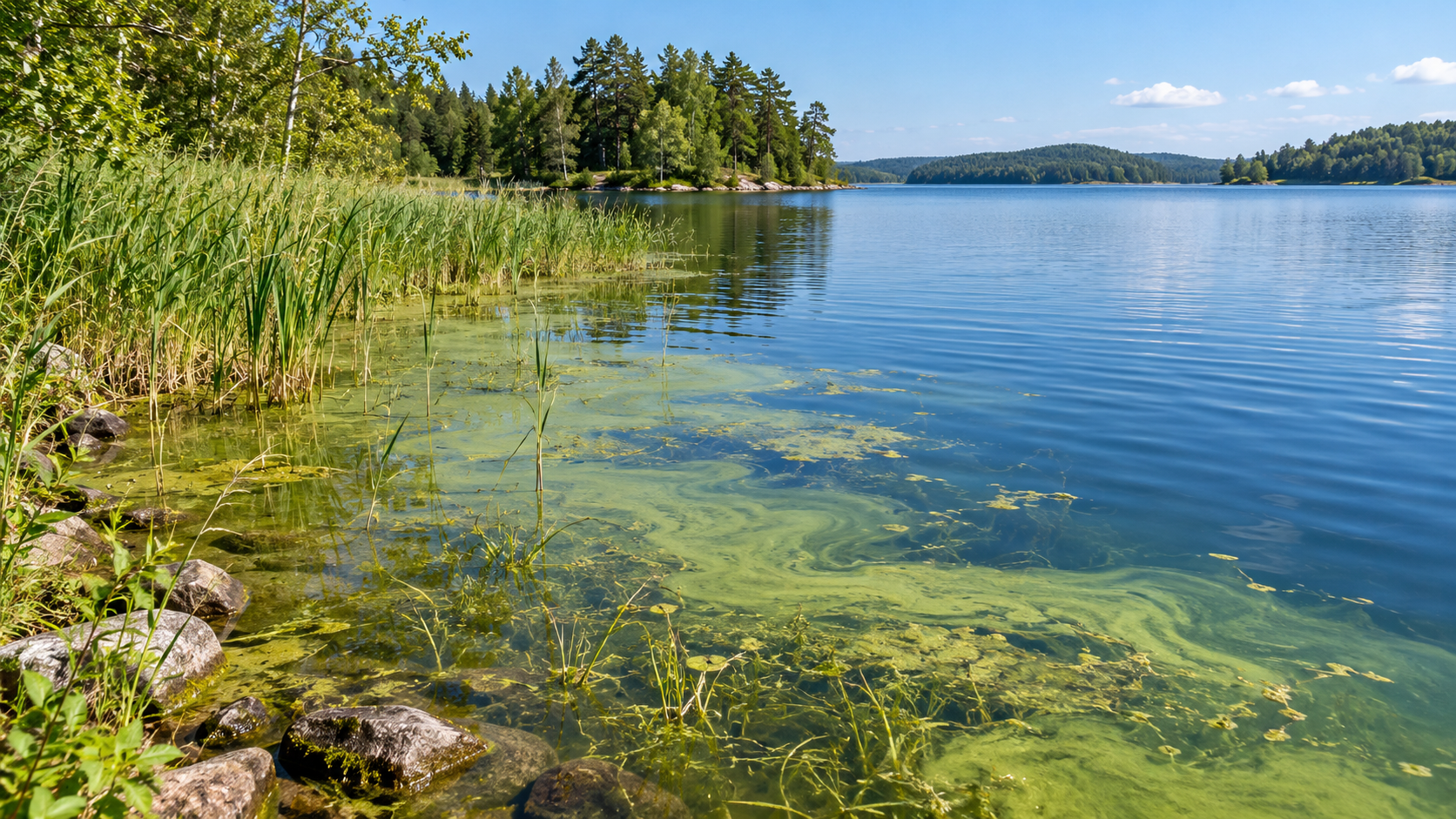
What causes eutrophication?
Nitrogen and phosphorus are essential for aquatic life. Eutrophication can occur naturally over long periods as nutrients accumulate, but human activities can accelerate the process by adding excess nutrients. Common sources include fertilizer and manure runoff, wastewater discharges, urban stormwater and atmospheric deposition.
Responses vary between water bodies. Light, temperature, water flow, depth and the balance of nitrogen and phosphorus all affect whether nutrient inputs lead to blooms or plant overgrowth.
Effects on water quality and aquatic life
Excess nutrient availability can increase algal and aquatic-plant biomass. Dense growth can reduce light penetration, change habitat and interfere with water use. When the resulting organic matter respires or decomposes, oxygen can be consumed; in poorly mixed or stratified waters this may contribute to low dissolved oxygen (hypoxia), especially near the bottom or overnight. Some cyanobacteria (often called blue-green algae) can produce toxins, but not every bloom is toxic.
These effects can stress or kill fish and other aquatic organisms, alter species composition and affect the taste, odour or treatment of water. The severity depends on the organisms present and local conditions.
Reducing nutrient inputs
Long-term management focuses on reducing nutrient loads across the contributing watershed. Measures can include more efficient fertilizer use, erosion and runoff controls, improved wastewater nutrient removal, and management of stormwater and manure. The most effective mix depends on the sources and hydrology of the affected water body.
Related topics
- Algae: description and types
- Eutrophication: sources, effects and solutions
- Solutions: nutrient limitation, algae filtration, ultrasonic irradiation and other approaches
- Conclusions · References · Eutrophication books overview
Further reading
- European Environment Agency: Nutrients in Europe’s transitional, coastal and marine waters
- OSPAR Commission: Eutrophication
For further information, contact Lenntech.