|
There are two ultrafiltration module configurations:
|
Pressurized system or pressure-vessel configuration: TMP (transmembranous pressure) is developed by a feed pump that increases the feed water pressure while the permeate stays at atmospheric pressure. Generally, pressure-vessels are standardized which allows the design of membrane systems to proceed independently of the characteristics of specific membrane elements.
|
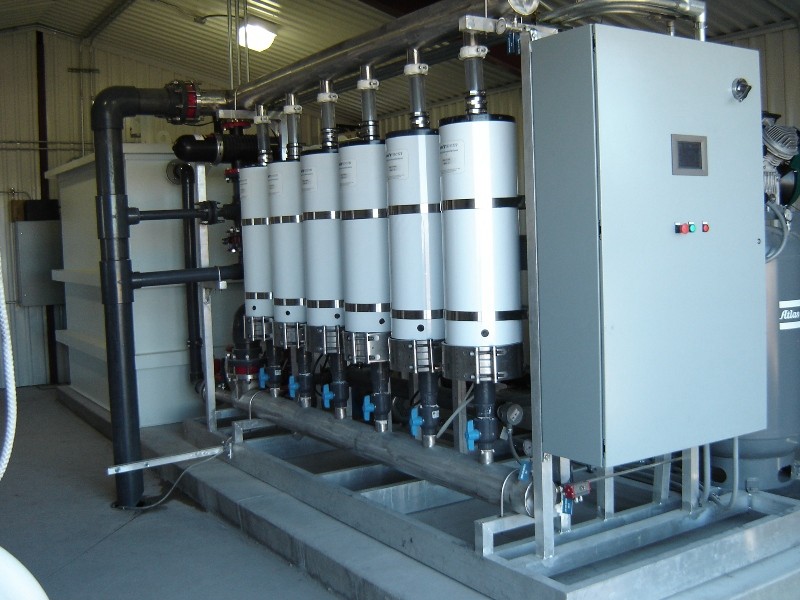 |
|
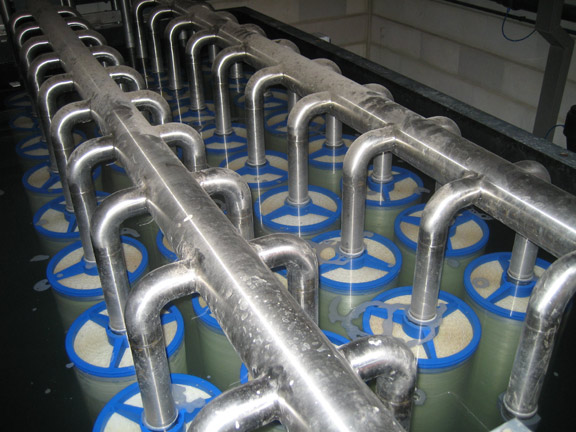
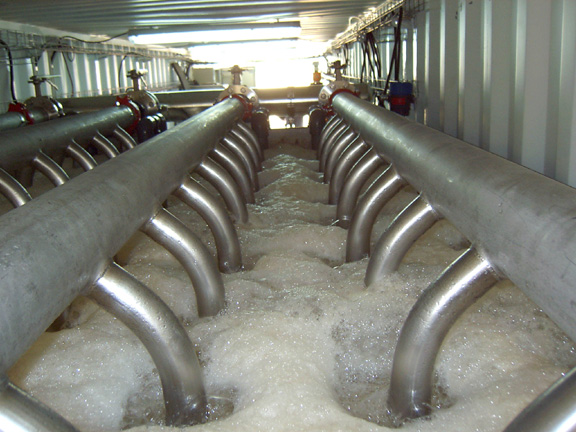
Immersed system: membranes are suspended in basins containing feed water and open to the atmosphere, so pressure on the influent side is limited to the pressure provided by the water column. TMP is developed by a pump that develops suction on the permeate side. They are configured with multiple basins with their own permeate pump so that one basin can be isolated and washed or repaired.
|
|
Advantages |
Drawbacks |
| Pressurized |
-Dead-end or cross flow
-High trans-membrane flow at 20°C
|
-Restricted turbidity in the feed water (20 NTU, according to Zenon study)
|
| Immersed |
-Dead-end only
-MBR can be used
-Aspiration modules i.e. filtrate is “sucked”
|
-Limited TPM, so low flow
-Wash frequently
-Need for an intermittent turbulence along the membrane using air
|
Source: Water Treatment Handbook, Degrémont Suez, 7th edition
|